Guides
How to Become an Agricultural Drone Dealer in 2026
A step-by-step 2026 guide to starting an agricultural drone dealership: start-up budget, demo unit, training, first order, parts stock and the terms to agree.
- Prepared by
- DEWKITE Sales Team
- Published
- Reading time
- 4 min
- Sources
- 3
Key takeaways
- 1In 2026 most new agricultural drone dealers start small: one demo unit, two trained people, a parts shelf and a demo plan for the first spray season.
- 2Budget example (not a quote): about US$ 25,000–45,000 to open, of which the demo drone set is the largest item.
- 3The order that works: register the business → agree supplier terms → demo unit and training → demos with local growers → first mixed order → regular parts supply.
- 4Dealers earn on three things, not one: drone sales, spare parts and service, and training or spraying work for customers.
- 5Get the warranty split, parts lead times, area arrangements and price levels in writing before your first order.
Contents
Short answer: To become an agricultural drone dealer in 2026, register a company, choose a supplier that will give you a demo unit, training and a parts list, then spend your first season running demos and contract work before you hold stock. A realistic starting budget is about US$ 25,000–45,000 (example, not a quote). Dealers that last earn from three lines at once: drone sales, parts and service, and training or spraying work.
The start-up account first
Before the steps, here is what a small dealership usually spends in its first year. All figures are planning examples in US dollars; replace them with your own quotes.
| Item | Example amount | Why it matters |
|---|---|---|
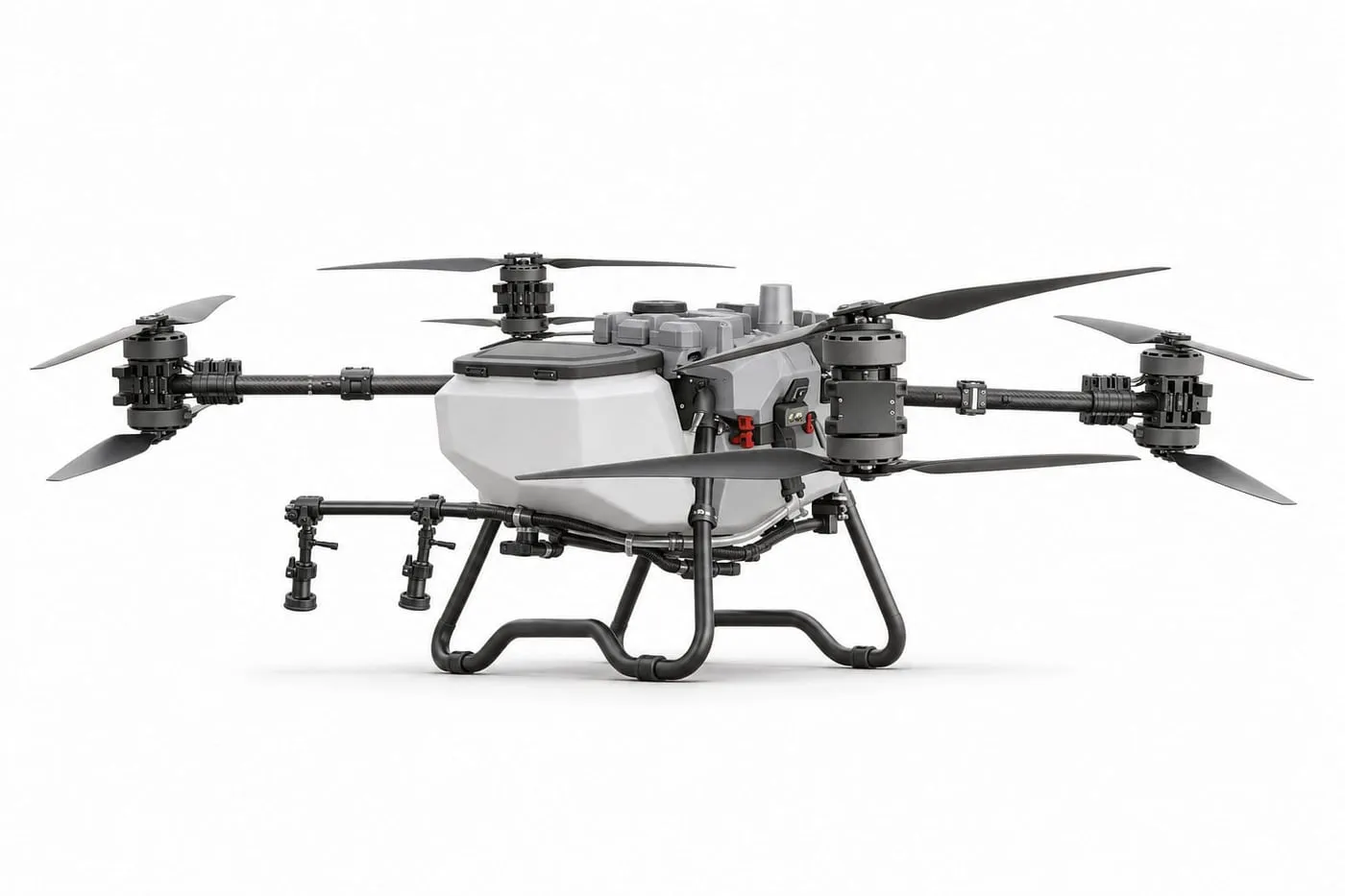
| Demo drone set (one 50–100 L machine, 2–3 battery sets, charger) | 12,000–30,000 | Growers buy after they see it spray their own crop |
| Generator and field kit (mixing tank, water pump, trailer fittings) | 2,000–4,000 | Heavy drones need 7 kW-class charging at the field edge |
| Starter parts shelf (propellers, nozzles, pump parts, arms) | 1,500–3,000 | Repairs in days, not weeks, keep your name good |
| Training for two people | Often included by the supplier | One pilot, one technician as a minimum |
| Registration, permits, insurance | 1,000–4,000 | Depends entirely on your country |
| Marketing and demo days | 1,500–4,000 | Fuel, travel, farmer meetings, trade shows |
| Total, example | 18,000–45,000 | Excluding your vehicle and premises |
For reference prices by size, see the reference price line on each Agri series product page; they are public FOB listing ranges, and the final price is always on a quotation.
Step 1: Decide who your customers are
A dealership is easier to build around one customer type. Spray contractors want big tanks and fast parts. Large farms and estates want reliability and training for their own staff. Cooperatives and input shops want a simple machine and a service promise. Write down the three crops and the typical field size within two hours of your base; that tells you which size class to demo.
Step 2: Check the rules before you spend
Three regulators usually matter: the civil aviation authority (drone registration, pilot or operator licence, sometimes a dealer or importer licence), the crop-protection regulator (who may apply pesticides from the air) and customs (import documents for drones and lithium batteries). Ask each one in writing what applies to a dealer and what applies to the operator. Our Nigeria and South Africa pages show what that list looks like in two markets.
Step 3: Choose a supplier and agree the terms
Compare suppliers on what happens after the sale, not only on price. Ask each one:
- Will you supply one demo unit at the start, and what is the minimum order after that?
- What does the warranty cover, for how long, and who pays freight on warranty parts?
- What is the lead time for parts, and is there a recommended parts list per model?
- Is training for pilots and technicians included, and where does it happen?
- How are area arrangements and price levels set, and can they change with volume?
- Can you sell under your own brand later?
At DEWKITE the minimum order is one unit, training is part of the start, and parts are listed by model; the dealer program page lists the details.
Step 4: Demo unit and training
Order one machine in the size your customers need most, plus enough batteries to fly a full morning. Send two people to training: a pilot who will run demos and a technician who will do first-line repairs. In the first weeks, fly your own trial blocks and keep simple records: hectares, litres, batteries and problems. Those records become your sales material.
Step 5: Run demos and contract work
The first season is about proof. Offer paid contract spraying on a few farms instead of free demos everywhere; it covers your costs and shows growers real results. Use the planning rule in our hectares-per-hour guide so you never promise brochure rates.
Step 6: First order and parts supply
After the season, order the mix your customers asked for, with spare kits for each model. A useful rule of thumb (example): keep parts worth about 10 % of the value of the drones you sold on the shelf in the first year, weighted towards propellers, nozzles and pump parts. Our spare parts list gives quantities by fleet size.
What a dealer earns from
| Income line | Typical share of the work | Notes |
|---|---|---|
| Drone sales | Largest single amount | Price competition is strongest here |
| Parts and repairs | Steady, all year | Customers return every season |
| Training and setup | Small, but builds trust | Often packaged with the sale |
| Contract spraying | Seasonal | Good in year one, while sales grow |
For a worked example of the margins, see our dealer profit margin guide.
Questions dealers ask
- How much money do I need to become an agricultural drone dealer?
- As a planning example, US$ 25,000–45,000 covers a demo drone set with batteries and charger, a starter parts shelf, training, a pickup-ready trailer kit and the first months of marketing. Heavy 100–150 L demo machines push the figure up; a 30–50 L demo machine keeps it lower.
- Do I need a licence to sell agricultural drones?
- Selling the drone and flying it are usually different things. Many aviation authorities register the drone and license the pilot or operator; some also register dealers or importers. Ask your civil aviation authority and your crop-protection regulator before you order.
- Can I become a dealer without a shop?
- Yes. Many start from a workshop or a farm-machinery yard. What matters is a place to store, charge and repair drones, and someone customers can call in the season.
- How long does it take to sell the first drones?
- Plan for one spray season. Growers buy after they see a drone work in their own crop, so the first season is mostly demos, contract spraying and training.
- Which drone size should a new dealer start with?
- Match the farms around you: 30–50 L machines for mixed and smaller farms, 60–100 L for contractors and large farms, 150 L for estates and big contractors. One demo machine plus brochures for the rest of the range is enough at the start.
References
- [1]E-agriculture in action: drones for agriculture. FAO and ITU.
- [2]Drones for Spraying Pesticides – Opportunities and Challenges. The Ohio State University CFAES.
- [3]G1274 Economics of Drone Ownership for Agricultural Spray Applications. University of Missouri Extension.