Guides
Drone Spraying Bananas (2026): Replacing Aerial Fungicide Runs
Banana plantation drone spraying in 2026: why black Sigatoka makes it a repeat-job crop, Ecuador's 150 kg rule, smallholder rental and a fleet-hours example.
- Prepared by
- DEWKITE Sales Team
- Published
- Reading time
- 3 min
- Sources
- 3
Key takeaways
- 1Black Sigatoka needs fungicide on a repeating cycle through the year, which makes bananas a repeat-job crop for drone contractors.
- 2Ecuador's DGAC resolution of 2023 lets banana producers use drones over 150 kg take-off weight for fumigation, with conditions on multiple drones and vehicle use.
- 3In Davao, the Philippines, two companies bought 30 drones to rent to smallholder banana farmers in 2019.
- 4Example: 500 ha with 100 L machines at about 78 ha a day takes about 6.4 machine-days per round.
- 5Drones can fly where a plane cannot: near rivers, houses and small plots, without a runway.
Contents
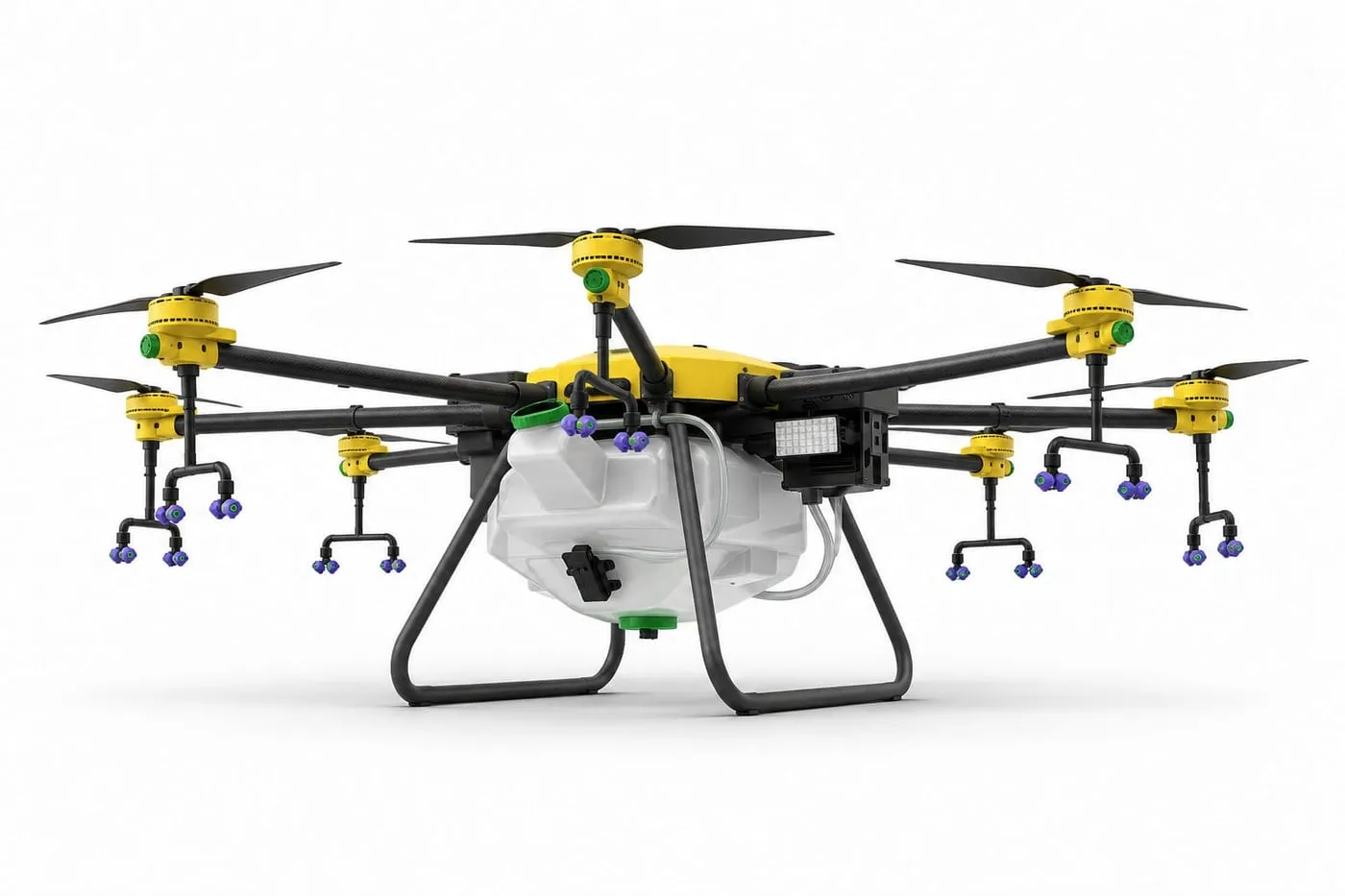
Short answer: Bananas are a repeat-job crop: black Sigatoka calls for fungicide on a cycle through the year, and exporters have long used small planes for it. In 2026 big multirotors such as Agri 100 and Agri 72 are an alternative for small blocks, fields next to rivers and homes, and smallholders with no runway. Check the product label and local rules first, as Ecuador’s 2023 rule shows how fast regulations change.
What does a banana fungicide programme look like in numbers?
| Item | Example assumption | Note |
|---|---|---|
| Area | 500 ha plantation | Example |
| Rounds a year | 30 | Assumption; large plantations run dozens |
| Machine | Agri 100, 12 m effective swath | 12 m x 6 m/s x 50 % is about 13 ha/h |
| Daily area | ~78 ha (6 flying hours) | Estimate |
| Time per round | ~6.4 machine-days | 500 / 78 |
Example (estimate): two Agri 100 machines finish a 500 ha round in about three to four days, or one machine in about a week. Over 30 rounds that is about 190 machine-days, so a plantation or contractor plans for three to four machines plus spares. All are assumptions, so do not quote them as results.
Which method fits which block?
| Item | Small plane | Drone | Ground |
|---|---|---|---|
| Needs runway | Yes | No | No |
| Near houses and rivers | Drift concern | Easier, lower altitude | Slow |
| Small plots | Weak | Good | Slow |
| Large blocks | Strong | Needs several machines | Slow |
Ecuador’s banana association said larger drones cover more hectares in less time and can treat near rivers and homes. A Primicias report in 2022 quoted a company that said drone spraying was 50 times faster than knapsack, which is a company claim, not an independent measure.
Are drones legal for bananas in Ecuador?
Under DGAC resolution DGAC-DGAC-2023-0037-R, banana producers may use drones with a take-off weight above 150 kg, as reported by FreshPlaza in May 2023 (from El Comercio). The reported conditions: no several drones at once unless the maker’s rules allow it, and no hand operation from a moving vehicle. Always read the current official text. For the Philippines, Cameroon and other markets, follow local rules; see the Philippines page.
How do smallholders use drones?
BusinessWorld reported in August 2019 that two companies in Davao bought 30 drones to rent to smallholder banana farmers, with FEDCO’s chief executive involved. Renting means a smallholder pays per job and a dealer builds a service. Read drones for cooperatives.
How does the banana canopy affect spraying?
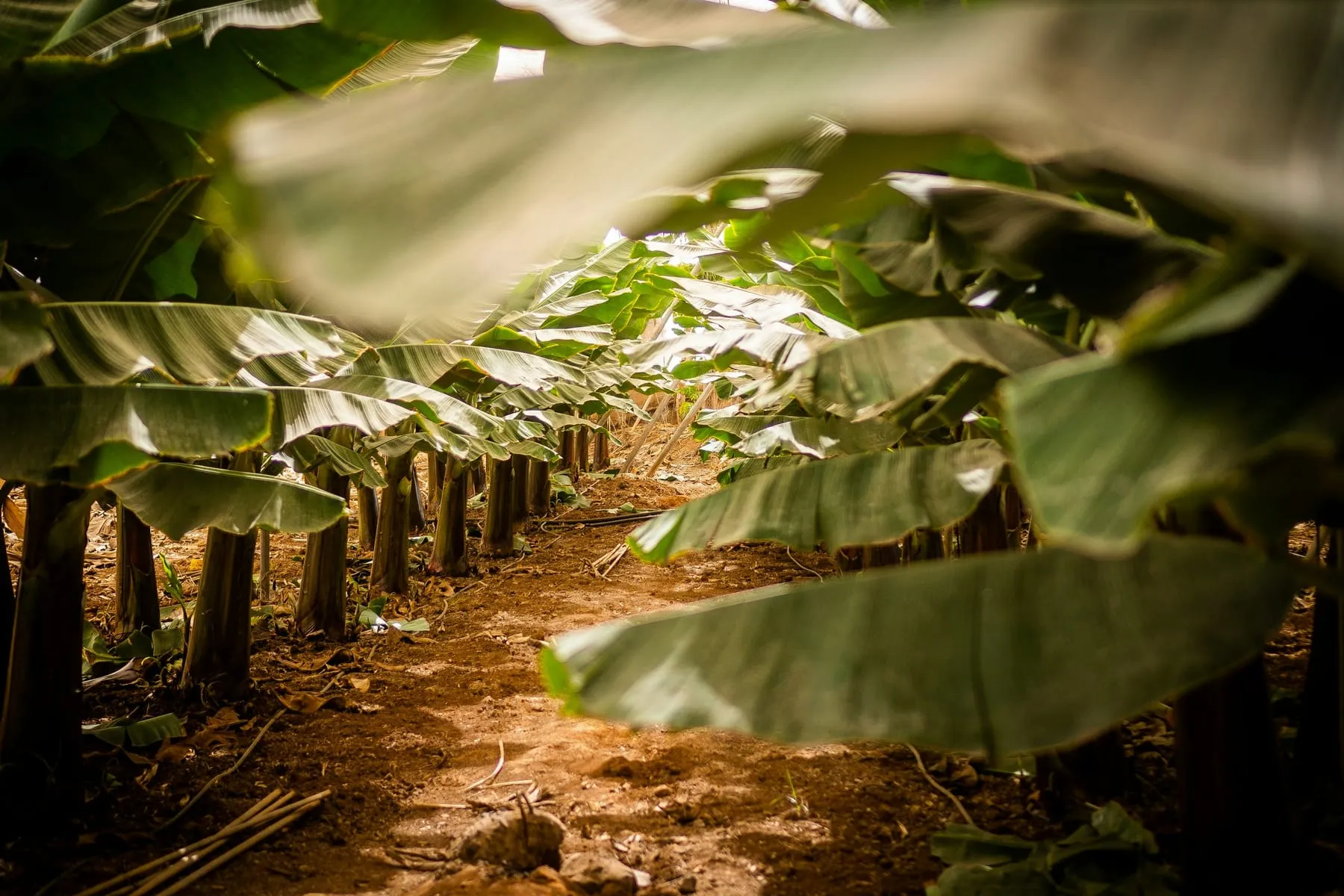
Tall plants with wide leaves and bagged bunches shade the lower canopy. Vendors say large drones give enough deposit for control, but we found no independent penetration figures, so test on water-sensitive paper and tune height and speed before signing a contract. See orchard spraying for similar canopy lessons.
What does a dealer sell to banana customers?
Export plantations need spare parts, trained pilots and maintenance. Smallholder groups need a service point or rental. Both need fast parts supply during the wet season; read the dealer programme and drone spraying service.
Best for …
Best for large export plantations: Agri 100. Repeat rounds reward its estimated 78 ha a day and 100 L tank.
Best for contractors who want high pressure: Agri 72. Eight rotors, high-pressure nozzles and 72 L, listed at US$15,400-16,400.
Best for smallholder rental fleets: Agri 50. A rentable middle size, 50 L, listed at US$8,900-21,100.
Questions dealers ask
- Can drones spray banana plantations?
- Yes. Large drones are used for fungicide in Ecuador and Philippine banana areas, and Ecuador changed its rules in 2023 to allow machines over 150 kg. Check the product label and local rules.
- How often is black Sigatoka sprayed?
- Large exporting plantations spray on repeating cycles through the year, often dozens of rounds. We do not give an exact number because it depends on weather, variety and local programme.
- Are drones cheaper than aerial spraying for bananas?
- We did not find a verified public cost comparison. A drone has no runway need and fewer pilot costs, but run your own per-hectare numbers against local aerial prices.
- Are drones legal for banana spraying in Ecuador?
- Resolution DGAC-DGAC-2023-0037-R allows drones above 150 kg MTOW for banana producers, with conditions such as no operation from a moving vehicle. Confirm the current text with DGAC.
- How many hectares of banana can a drone spray per day?
- A 100 L machine is estimated at about 78 ha in a six-hour flying day, using a 12 m swath.
References
- [1]Ecuadorian banana producers can now use drones weighing more than 150 kilos to fumigate their crops. FreshPlaza, 2023.
- [2]Banana smallholders to start using drones for aerial spraying. BusinessWorld, 2019.
- [3]Arroceros, maiceros y bananeros aumentan uso de drones para fumigar. Primicias, 2022.