Short answer: KwaZulu-Natal is South Africa’s sugar heartland, with 10 of the country’s 12 sugar mills and a grower base of mostly small-scale farmers. In 2026 that makes it a spray-service market: contractors, co-operatives and mill growing arms hire work by the hectare, and a dealer supports them with machines, parts and training. Several local drone firms already compete there, so differentiate on heavy-lift and service.
The sugar belt in numbers
| Item | Figure (South African Sugar Association) | What it means for a drone business |
|---|---|---|
| Mills | 12 in total; 10 in KwaZulu-Natal, 2 in Mpumalanga | Dense local demand near each mill |
| Growers | 26,740 represented: 25,653 small-scale, 1,087 large-scale | Many small fields; contractor model fits |
| Milling companies | Illovo, Tongaat Hulett, RCL FOODS, UCL, Umfolozi, Gledhow | Possible corporate buyers and partners |
| Jobs | About 65,000 direct, about 270,000 indirect | Strong social weight; programmes support growers |
| Output | About 2.2 million tonnes of sugar a year, about 70% sold in the customs union | A stable base industry |
| Refining | One independent refinery in Durban | Port-adjacent infrastructure |
The association also notes that 21% of the industry’s own land has moved to black owners since 1994, which keeps development programmes active.
Who grows sugarcane in KwaZulu-Natal?
Mostly small-scale growers, with a minority of large estates and mill-owned farms. That split matters. A drone dealer who lists large estates as customers sells a few machines, while one who builds a network of contractors serves thousands of small farms. Growers’ associations (SAFDA and SACGA) are the doorway to the small-scale side.
Can a spray drone work on tall sugarcane?
Be honest about canopy. Early growth stages and weed or pest work suit drones best, while dense mature cane limits penetration. Product labels under Act 36 decide what may be applied, so do not say a drone can apply a ripener or herbicide without checking the label. SASRI at Mount Edgecombe, Durban, is the research body to approach for trial design. We do not state its position on drones. Read our sugarcane spraying guide for the trial checklist.
What about timber?
The government’s forestry page gives about 1.27 million hectares of afforested land nationally and says forestry makes up 4.4% of KwaZulu-Natal’s regional GDP (the page does not state a year). That is a macro figure only. We found no source on drone work in plantations, so treat timber as a topic to explore with a local contractor, not a ready market.
What does a service business need?
| Need | Detail |
|---|---|
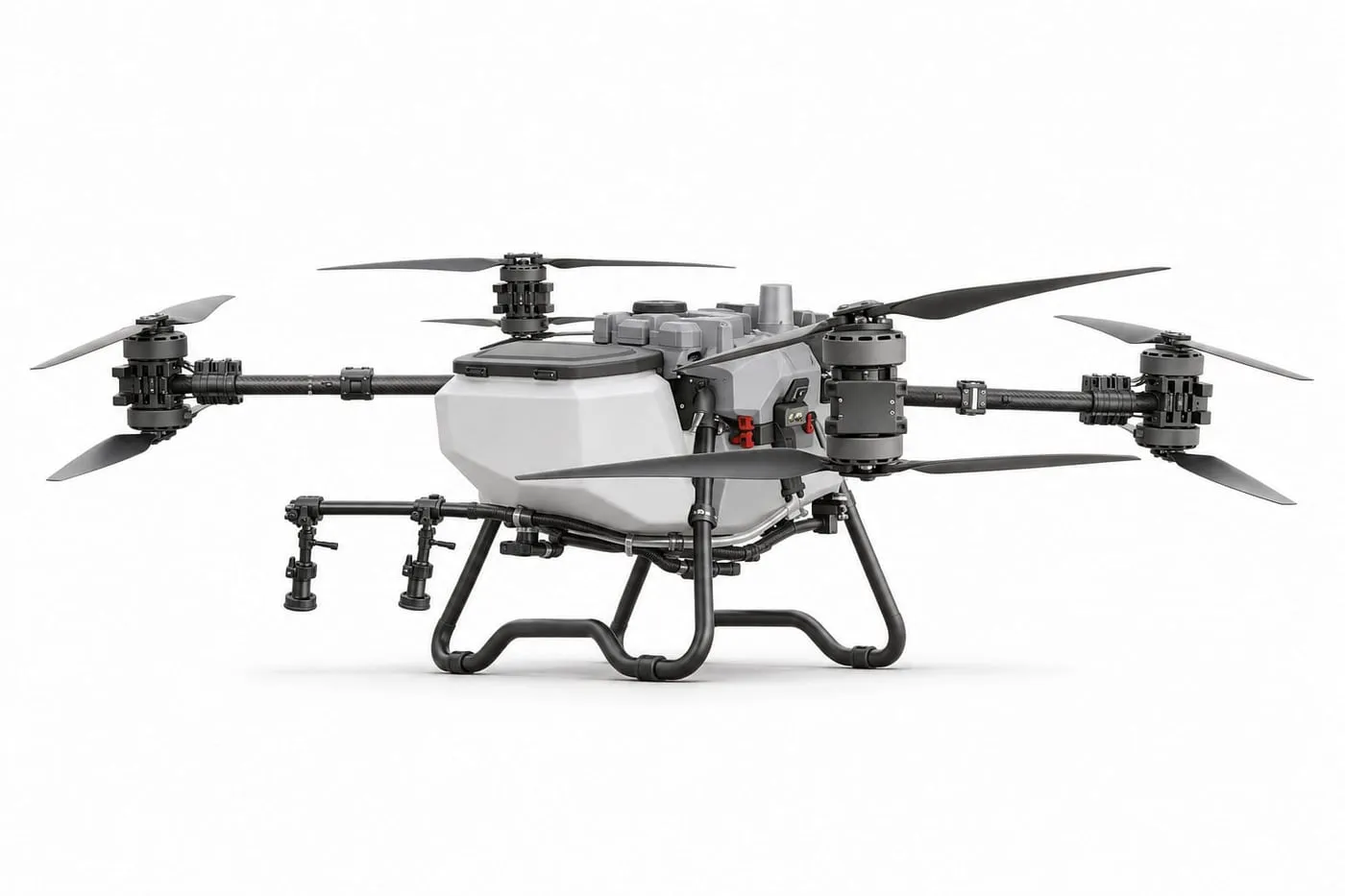
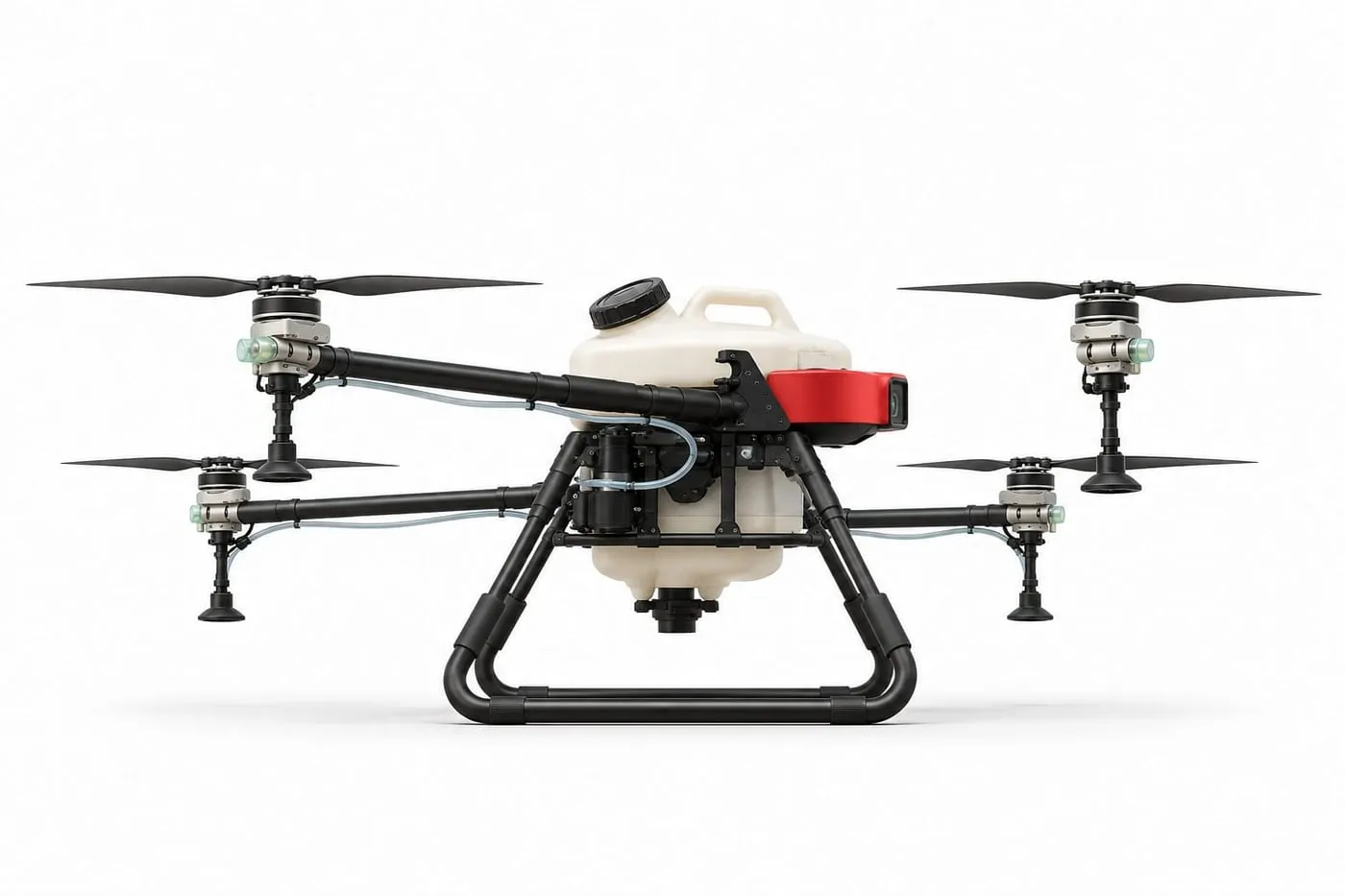
| Machine | Agri 50 at 22 ha/h for mixed fields; Agri 100 at 35 ha/h for large blocks |
| Approvals | SACAA pilot and operator rules; pesticide labels under Act 36; see the South Africa page |
| Competition | At least four local drone firms appeared on the first page for this search |
| Edge | Heavy-lift tanks, local parts, training and a 12-month main-part warranty |
Example (reference figures): a 500 ha cane block with one Agri 100 at 35 ha/h takes 500 / 35 = about 14.3 flying hours per pass. A small co-operative block of 120 ha with an Agri 50 at 22 ha/h takes about 5.5 hours per pass. Because tall cane lowers the real work rate (our assumption), plan on a margin and record actual hectares per day on the first jobs.
First-year plan
- Meet a mill growing office or a SAFDA branch and agree a trial block.
- Import one demonstration drone and check the label of every product used in the trial.
- Run side-by-side tests with the grower’s current method and publish hectares per day.
- Add a second machine and parts after the first season.
The dealer program supplies from one unit.