Guides
Drone Spraying Soybeans in 2026: Fungicide Windows and Contractor Economics
Soybean spraying with drones in 2026: fungicide windows, pests, Embrapa trial findings, whether fungicide pays, and a fleet example for a 5,000 ha farm.
- Prepared by
- DEWKITE Sales Team
- Published
- Reading time
- 3 min
- Sources
- 4
Key takeaways
- 1The strongest selling point for soybean drones is speed inside a window and access after rain, not a lower price.
- 2Embrapa Soja trials in Brazil found 5 and 10 L/ha by drone did better against stink bugs than a knapsack at 75 L/ha, because the downwash pushes product into the canopy.
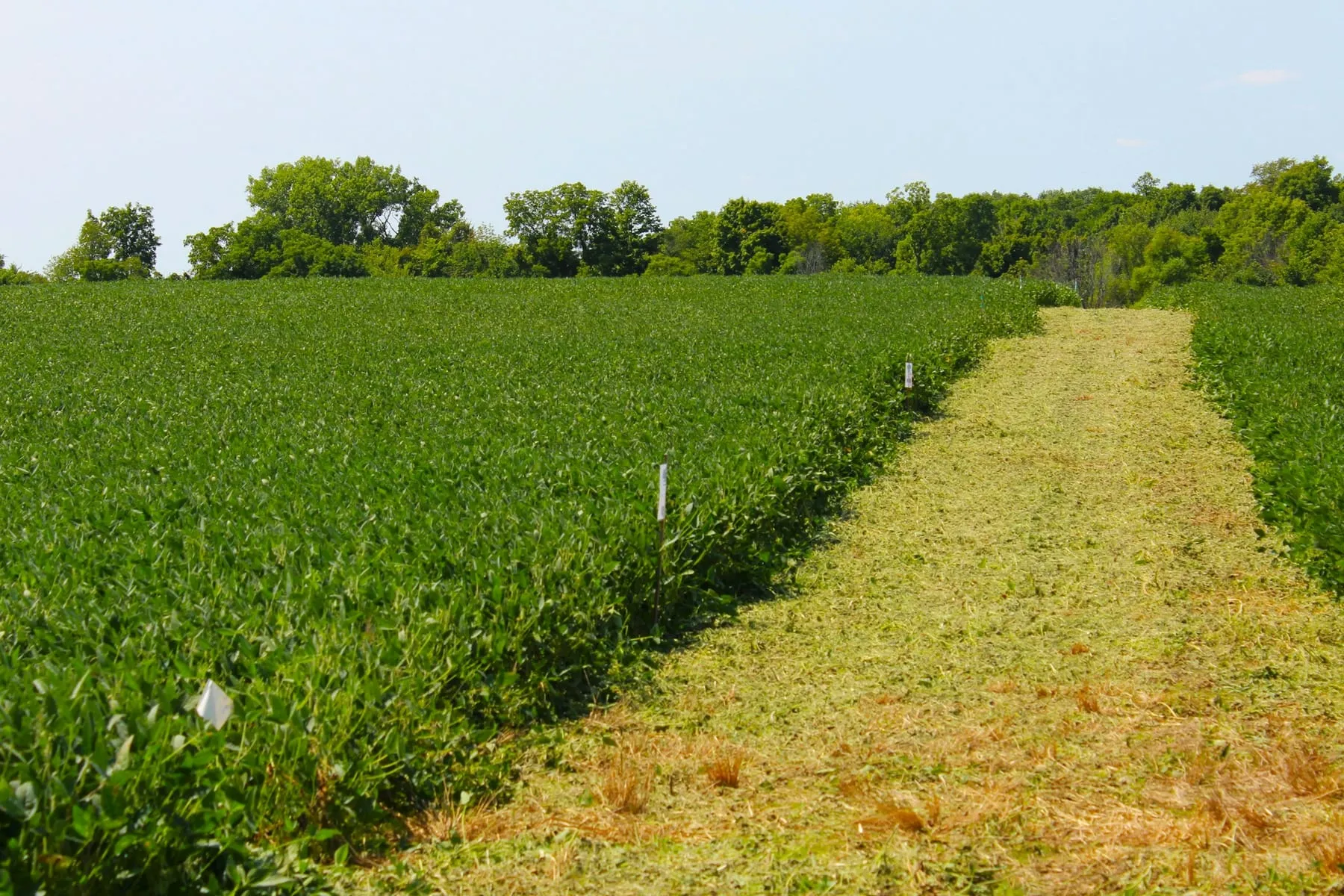
- 3A seven-year Missouri study found fungicide on soybeans averaged only +1.8 bu/ac, against a spray cost of US$30-40/ac, so many farms lost about US$15/ac.
- 4Example: 5,000 ha in a 10-day window needs about seven 100 L machines or ten 50 L machines.
- 5Brazil registered 2,287 agricultural drones by August 2023, up 266 % in a year, so competition is growing fast.
Contents
Short answer: Soybean drones are worth buying for timing and access: they spray inside a short window and on wet soil where a tractor cannot go. Large farms run 50-100 L fleets; contractors use many battery sets. Do not sell drones as a guaranteed fungicide profit: a seven-year Missouri study found soybean fungicide often costs more than it returns.
What jobs are there in soybeans?
| Job | Timing | Drone value | Evidence |
|---|---|---|---|
| Fungicide (rust, leaf diseases) | Set by local advice | Speed in the window | Missouri trials sprayed at R3 |
| Insects (stink bugs, loopers) | Pest threshold | Downwash carries product into canopy | Embrapa 2020/21 trials |
| Other sprays | Label | Check local rules | Follow product label |
Embrapa Soja tested drones in the 2020/21 season against the brown stink bug and a caterpillar (Rachiplusia nu) and found that 5 and 10 L/ha by drone beat a knapsack at 75 L/ha. Researchers said a drone can spray after rain when tractors cannot enter, and noted that places with dense coverage needs, such as rust, still need work on swath edges.
Does fungicide pay in soybeans?
| Source | Result |
|---|---|
| Missouri study, 7 years, R3 spray, ground application | Average +1.8 bu/ac; at US$10.20/bu about US$18.36 return |
| Same study, cost | US$30-40/ac to spray, so many farms lost about US$15/ac |
| Same study, range | Best +12 bu/ac, worst -3 bu/ac |
Be straight with customers: a drone changes how you spray, not whether the disease is there. Scout first and sell the service as insurance for high-risk seasons.
How many drones does a large farm need?
Example (estimate): a farm with 5,000 ha of soybeans and a 10-day window must treat 500 ha a day. One Agri 100 manages about 78 ha a day, so the farm needs about seven. With Agri 50 at about 52 ha a day, the count rises to about ten. These are examples; replace them with your measured rates.
| Machine | Ha per day | Machines for 500 ha a day | Comment |
|---|---|---|---|
| Agri 150 | ~80-90 | ~6 | Fewest refills |
| Agri 100 | ~78 | ~7 | Spreading option |
| Agri 50 | ~52 | ~10 | Lowest entry cost |
How fast is Brazil growing?
The Brazilian government reported 2,287 registered agricultural drones in August 2023, up 266 %, with 8,737 spray drones imported between 2020 and 2023. Agrolink put the number at about 3,000 in 2021 and about 35,000 in 2025. That growth shows demand, and also that local competitors and dealers exist, so a new dealer needs service strength.
How do dealers and contractors earn?
Large farms buy machines, parts and training. Mid-sized farms buy the service. Dealers also sell compliance help: flight permits and pesticide rules differ by country, so check your local rules and the label. For how to price a job see cost per hectare, and for fleet maths see fleet size.
Best for …
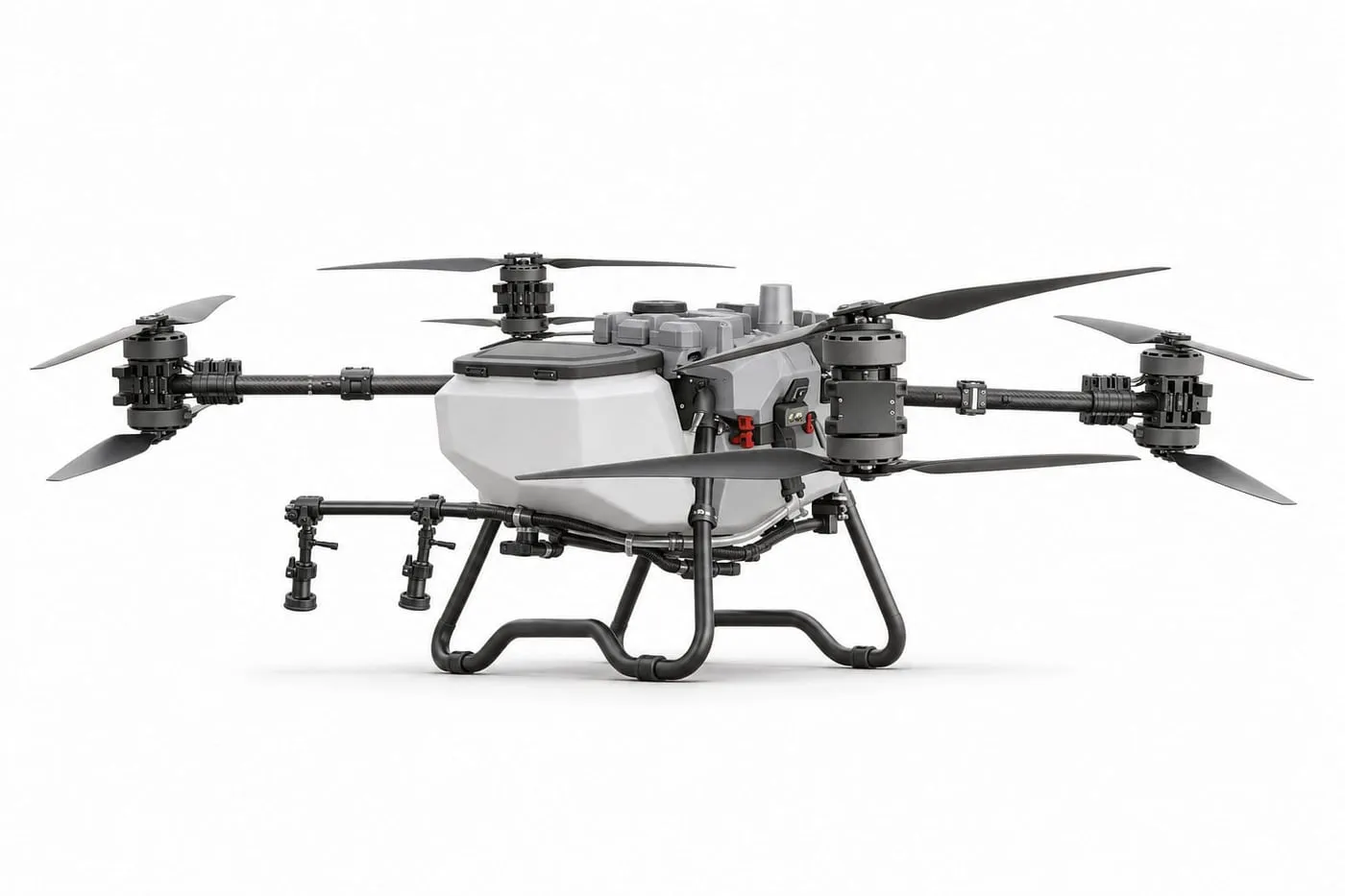
Best for the largest farms: Agri 150. The 150 L tank cuts refill trips on 500 ha days, and the rated rate is 40 ha/h.
Best for contractors moving daily: Agri 100. A good balance for farm-to-farm moves, with an estimated 78 ha a day.
Best for medium farms: Agri 50. About 52 ha a day in our estimate, at a reference price of US$8,900-21,100.
Also read corn spraying drones, spraying as a service and the dealer programme.
Questions dealers ask
- Can you spray soybeans with a drone?
- Yes. Embrapa Soja has trialled drones on soybean pests since 2020, and Brazilian farms use them for fungicide, insecticide and other jobs. Follow the product label.
- When should you spray fungicide on soybeans?
- Timing depends on disease risk and local advice. The Missouri study sprayed at R3; Brazilian programmes set windows by rust pressure. Ask your agronomist, not your drone dealer.
- Is drone spraying cheaper than a ground sprayer for soybeans?
- Not always. The advantage is speed and access to wet fields. US contractor price in the Missouri economics paper was about US$16/ac.
- How many drones does a 5,000 ha soybean farm need?
- In our example estimate, about seven 100 L machines or ten 50 L machines for a 10-day window.
- How many hectares can a drone spray per day in soybeans?
- Roughly 52 ha with an 8 m swath and 78 ha with a 12 m swath, in a six-hour flying day. Field layout moves the figure.
References
- [1]Drones sao capazes de melhorar pulverizacao para controle de pragas da soja. Revista Cultivar, 2022.
- [2]Pulverizacao com drones na agricultura e destaque na Reuniao de Pesquisa de Soja. Agencia Gov / EBC, 2023.
- [3]Study finds fungicide use on soybeans often costs farmers more than it pays. Missouri Soybean Merchandising Council / MU Extension.
- [4]Pulverizacao com drones avanca nos canaviais. Agrolink, 2026.