Guides
Solar Panel Cleaning in 2026: Drone vs Robot vs Manual Crew
Drone, robot or manual crew for solar panel cleaning in 2026? Cost per MW, how many washes make a robot pay, water use and which method fits which site.
- Prepared by
- DEWKITE Sales Team
- Published
- Reading time
- 4 min
- Sources
- 6
Key takeaways
- 1The number of washes per year decides which method is cheapest: desert plants washed daily suit fully automatic robots, while roofs and awkward sites washed one to four times a year suit drones and crews.
- 2Example: a fully automatic robot costing €2.4–8.2 per m² equals 27–91 manual washes at €0.09 per m² per wash, so at two washes a year it needs 13 to 46 years to pay back.
- 3Per MW (at 0.183 kWp per m²) that is about €13,000–45,000 for an automatic robot against about €490 per manual wash.
- 4Wet cleaning is generally preferred for cleaning effect and lower risk of damage, and dry cleaning is mostly used where water is scarce.
- 5Whichever method is cheapest, the module maker's own washing limits come first, and going over its pressure value can void a warranty.
Contents
- 01The business account first: when does a robot pay back?
- 02What is the best method of cleaning solar panels?
- 03Is drone solar panel cleaning cheaper than cleaning robots?
- 04How much water does each method use?
- 05Can brushes or high pressure damage panels?
- 06Which method fits which site?
- 07What should a service company or dealer take from this?
Short answer: In 2026 the number of washes per year decides whether a drone, a robot or a manual crew is cheapest. Fully automatic robots pay back where panels are washed very often, such as desert plants. Drones and crews win where panels are washed one to four times a year, or where access is the problem. On the study figures below, a robot equals 27 to 91 manual washes.
The business account first: when does a robot pay back?
Robot break-even in years = (robot cost per m² ÷ price of one manual wash per m²) ÷ washes per year. We use €2.4–8.2 per m² for fully automatic cleaning (a 2019 literature review) and €0.09 per m² per wash for a manual crew (a Spanish plant model). Both are reference figures, and the sum ignores maintenance, power and finance.
| Washes per year | Years for a robot to equal manual cost (low–high) |
|---|---|
| 2 (roofs, temperate sites) | 13–46 |
| 4 | 7–23 |
| 12 (monthly) | 2.2–7.6 |
| 52 (weekly) | 0.5–1.8 |
| 365 (daily, desert) | 0.07–0.25 (27–91 days) |
For scale, the same figures per MW at 0.183 kWp per m² (5,464 m² per MW) are about €13,000–45,000 for an automatic robot and about €490 per manual wash.
Example: a 10 MW plant has about 54,600 m² of modules. One manual wash costs about €4,900, and a robot fleet costs about €131,000–448,000. At four washes a year (€19,700) the robots need 7 to 23 years to catch up; at weekly washing, under two years.
What is the best method of cleaning solar panels?
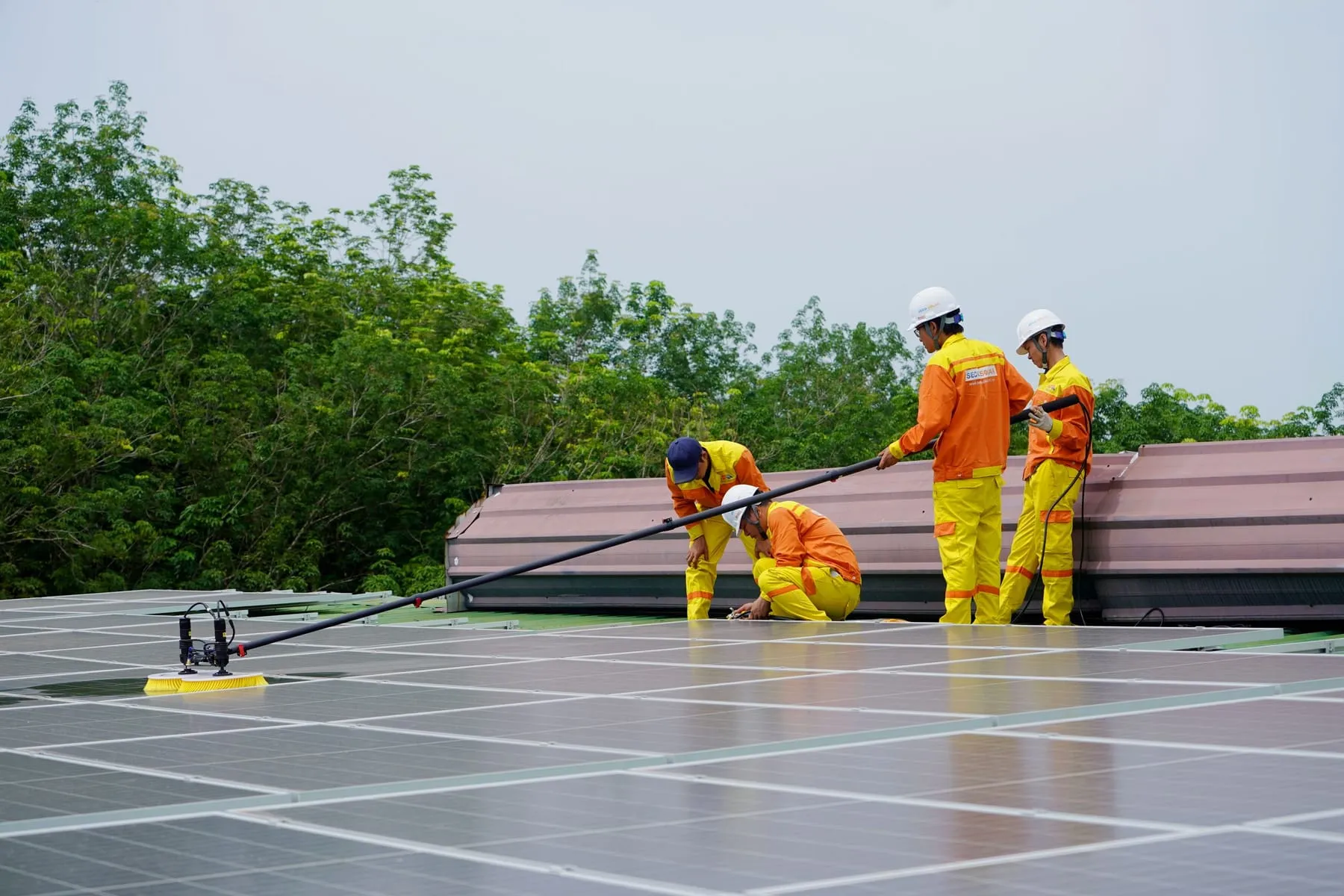
The IEA groups cleaning equipment into manual, truck-mounted, semi-automatic (moved from row to row) and fully automatic (one unit per row, often solar-powered). A drone is a fifth option for sites where those methods struggle.
| Method | Cost structure | Reference figure | Water | Best sites | Watch out |
|---|---|---|---|---|---|
| Manual crew | Pay per wash | €0.09 per m² per wash (about €490 per MW) | Wet | Small plants, cheap labour | Walking on panels, slow on large plants |
| Truck-mounted | Pay per wash | No public price found | Tank on truck | Large plants with wide row spacing | Access lanes |
| Semi-automatic robot | Hardware plus labour to move it | No public price found | Wet or dry | Mid-size to large ground plants | Labour per row move |
| Fully automatic robot | One-off hardware | €2.4–8.2 per m² (about €13,000–45,000 per MW) | Mostly dry | Desert plants; designed in at build | Capital, repair at remote rows |
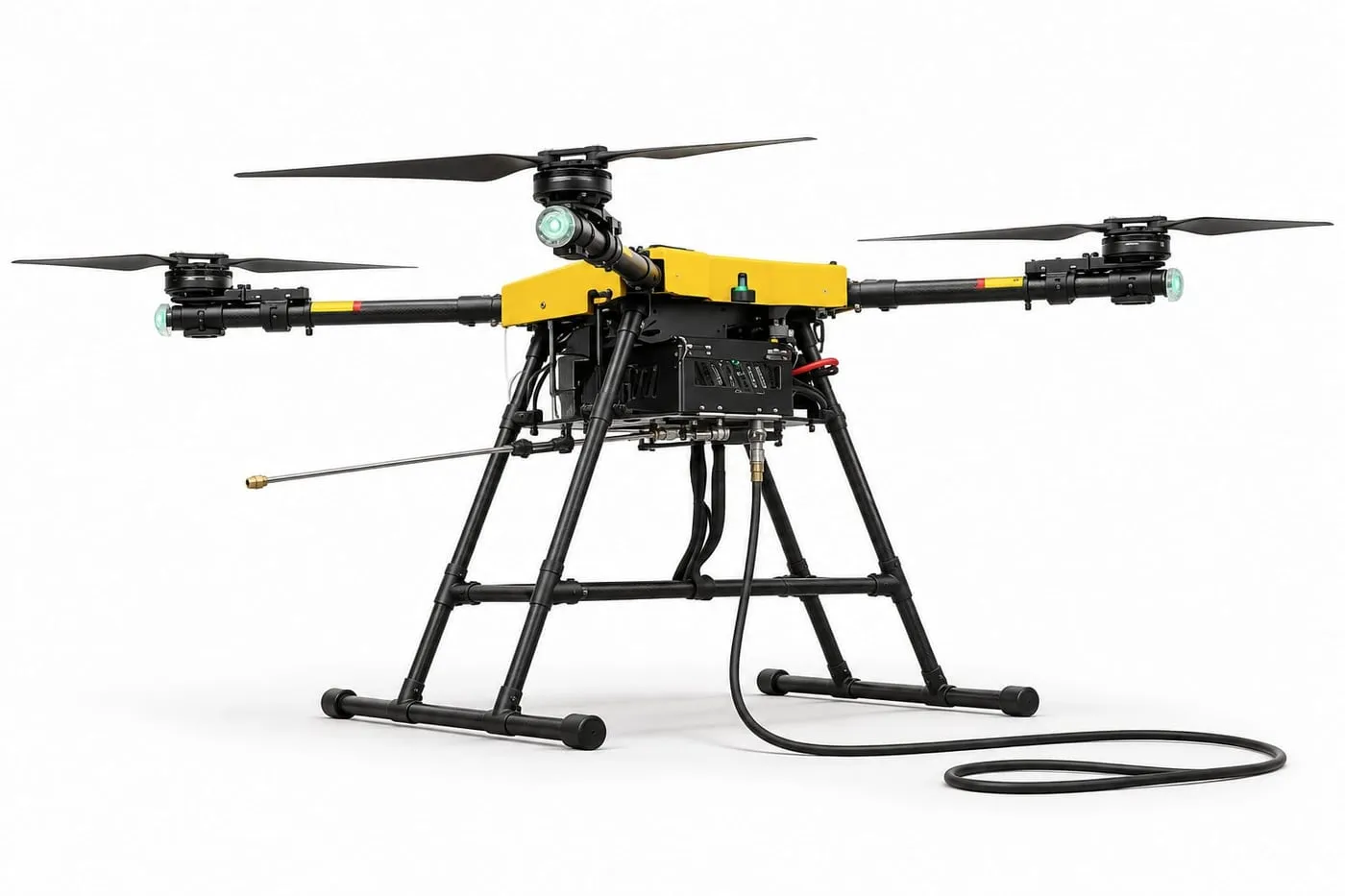
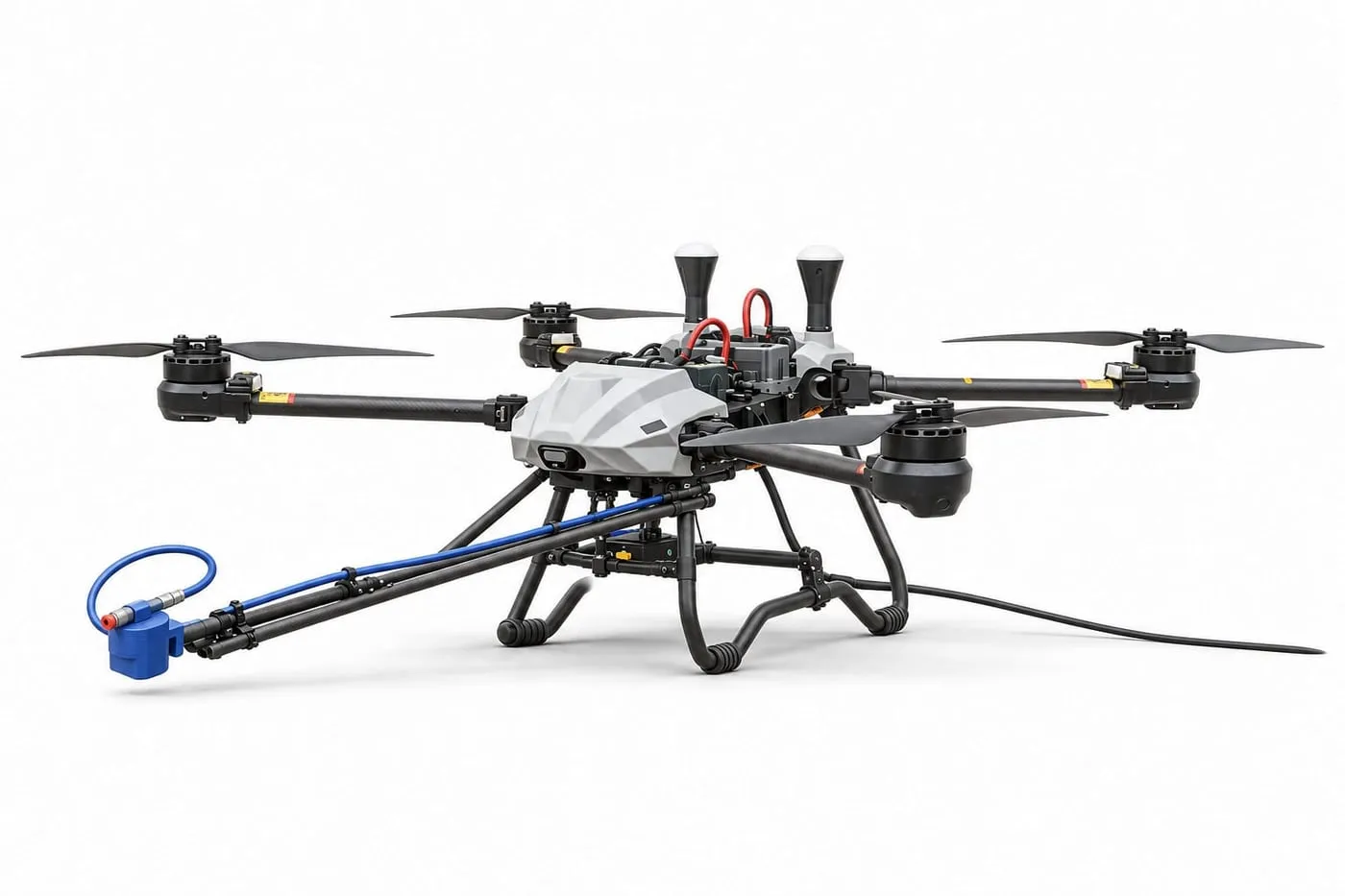
| Drone | Pay per job or panel | US$ 200 plus US$ 2 per panel on a commercial roof (provider’s public price) | Hose or 30–62 L tank | Roofs, carports, floating and steep sites | Weight class permit, panel pressure limit |
Is drone solar panel cleaning cheaper than cleaning robots?
For most roofs and one-off sites, yes, because a drone needs no hardware on each row. For a desert plant washed every day, no. The review says fully automatic cleaning cut soiling losses by more than 95 %, yet by 2019 it covered only about 0.13 % of global capacity (roughly 1.9 GW), a share that was expected to grow.
How much water does each method use?
The same review says wet cleaning is generally preferred for its cleaning effect and lower damage potential, while dry cleaning is mostly used where water is scarce. In deserts, where soiling losses can be around 1 % a day, the IEA says only dry cleaning is economical. A US study put plant-wide washing near 63 m³ per MW a year in the south-west. For drones, a hose-fed Clean 30 uses what the ground pump supplies, while the Clean 30T tank holds 30 L and the Clean 65 holds 62 L. No reliable litres-per-m² figure for drones exists in public sources; test on site.
Can brushes or high pressure damage panels?
Cleaning brushes are mostly rotating, with polyamide or polyethylene bristles, from 0.5 m to over 6 m long and up to 50 cm across, and a fully automatic robot takes about one to two seconds per panel. The IEA notes there is no international performance or acceptance standard for panel cleaning; an abrasion test method (IEC 62788-7-3) was still a draft. High pressure is limited by the module maker’s own value. Drone vendors argue that no contact and no walking on panels is their advantage, but that is a vendor claim: check pressure and nozzle distance first.
Which method fits which site?
| Site | Likely choice | Why |
|---|---|---|
| Residential and commercial roof | Drone or crew | Access and fall risk matter more than price |
| Carport, canopy | Drone | Awkward to reach from below |
| Floating or water-edge plant | Drone | No walking surface |
| Agri-PV (crops under panels) | Crew or drone | Machinery would damage crops |
| Rainy, temperate ground plant | Crew or truck, once or twice a year | Rain does part of the work |
| Large desert plant | Fully automatic robot | Washed very often |
What should a service company or dealer take from this?
A big operations-and-maintenance client may need robots for a large plant and drones for its roofs. DEWKITE sells the drone side only. Start from the solar cleaning drone business guide, compare equipment on our tethered cleaning drone page and the cleaning manufacturers list, and ask about the dealer program. Remember that the Clean 30 (60 kg) and Clean 65 (111 kg) both exceed the 25 kg lines used in the EU and US.
Questions dealers ask
- What is the best method of cleaning solar panels?
- There is no single best method. Fully automatic robots suit big desert plants washed very often, crews and trucks suit large plants with wide row spacing, and drones suit roofs, carports, water edges and steep or fragile sites. Match the method to wash count and access.
- Is drone solar panel cleaning cheaper than cleaning robots?
- At low wash counts, yes, because a drone service has no per-row hardware. At daily washing in a desert, automatic robots win. The break-even is about 27 to 91 manual-wash equivalents on the study figures used here.
- How much water does a solar panel cleaning drone use?
- Public sources give no reliable litres per square metre for drones, so test on site: the Clean 30P is hose-fed, the Clean 30T holds 30 L and the Clean 65 holds 62 L. Dry-cleaning robots use no water, and desert plants lean towards them.
- When does a cleaning robot pay for itself?
- When a plant is washed many times a year. On the example figures a robot costing €2.4–8.2 per m² equals 27–91 manual washes, so washing weekly pays back in under two years and washing twice a year takes a decade or more.
- Can high-pressure cleaning void a solar panel warranty?
- It can. The IEA notes that panel makers set maximum pressure values and that warranties may be voided if they are exceeded. Ask the module maker for the limit before you choose any pressure-washing method, drone or ground-based.
References
- [1]Soiling Losses: Impact on the Performance of Photovoltaic Power Plants (T13-21:2022). IEA PVPS Task 13.
- [2]Techno-Economic Assessment of Soiling Losses and Mitigation Strategies for Solar Power Generation. Joule / DLR.
- [3]Photovoltaic Cleaning Frequency Optimization Under Different Degradation Rate Patterns. Sandia National Laboratories and University of Jaén.
- [4]Water Use and Supply Concerns for Utility-Scale Solar Projects in the Southwestern United States. Sandia National Laboratories.
- [5]Drone cleaning 101: a new tool for solar O&M. Solar Power World.
- [6]Southern California Drone Solar Panel Cleaning. DronePower1.