Guides
Hybrid (Fuel-Electric) Agricultural Drones: When They Make Sense (2026)
When a petrol-electric hybrid agricultural drone makes sense in 2026: fuel use, endurance, a battery-versus-hybrid table, fire risk, upkeep and the Agri 60H.
- Prepared by
- DEWKITE Sales Team
- Published
- Reading time
- 4 min
- Sources
- 5
Key takeaways
- 1A hybrid agricultural drone carries a small petrol engine and generator on board, so it suits sites with fuel but no electricity or a long drive to a charging point.
- 2Battery drones burn fuel too, in a generator at the field edge, so the real comparison in 2026 is where the fuel is burned: on the drone or beside it.
- 3One manufacturer lists a 20 L hybrid with 3–9 L/h fuel use, about 40 minutes of flight with a load and 10–12 ha/h on flat ground.
- 4The same manufacturer does not recommend its hybrid over ripening grain, oilseed or industrial crops because of fire risk.
- 5Dealers need an engine-capable technician and engine spares in stock; ask the supplier for the engine service schedule before you promise uptime.
Contents
Short answer: A hybrid agricultural drone carries a small petrol engine that makes electricity in flight. In 2026 it makes sense where there is fuel but no electricity, fields lie far from a charging point, or hauling a 10 kW generator is a problem. A battery drone burns fuel as well, in a generator at the field edge, so the choice is where the fuel burns: on the drone or beside it.
The fuel account in one table
| Battery drone plus field generator | Hybrid with on-board engine | |
|---|---|---|
| What you refill | Spray tank; swap and recharge packs | Spray tank and fuel tank |
| Where fuel is burned | In a generator at the field edge | On the drone |
| Ground kit | Generator, charger, three to five packs per drone | Fuel can, funnel, engine spares |
| What wears | Packs (cycles) and the generator | Engine, fuel system and airframe |
| Fire risk | Normal handling | Higher over dry, ripening crops (maker’s warning) |
| Best for | Most farms and contractors | Remote sites with fuel but no power |
| DEWKITE model | Agri 60 | Agri 60H |
Example (rough, mixes two sources): a maker’s lab test found 10 L of petrol charged a pack 13.37 times, about 0.75 L per charge. At about 2.6 ha per sortie (Missouri’s figure) that is about 0.3 L of petrol per hectare through a generator. One hybrid maker lists 3–9 L/h at 10–12 ha/h, which is about 0.25–0.9 L per hectare. The two are different machines, but the order of magnitude is the same: the change is in logistics, not in fuel bills.
What is a hybrid agricultural drone?
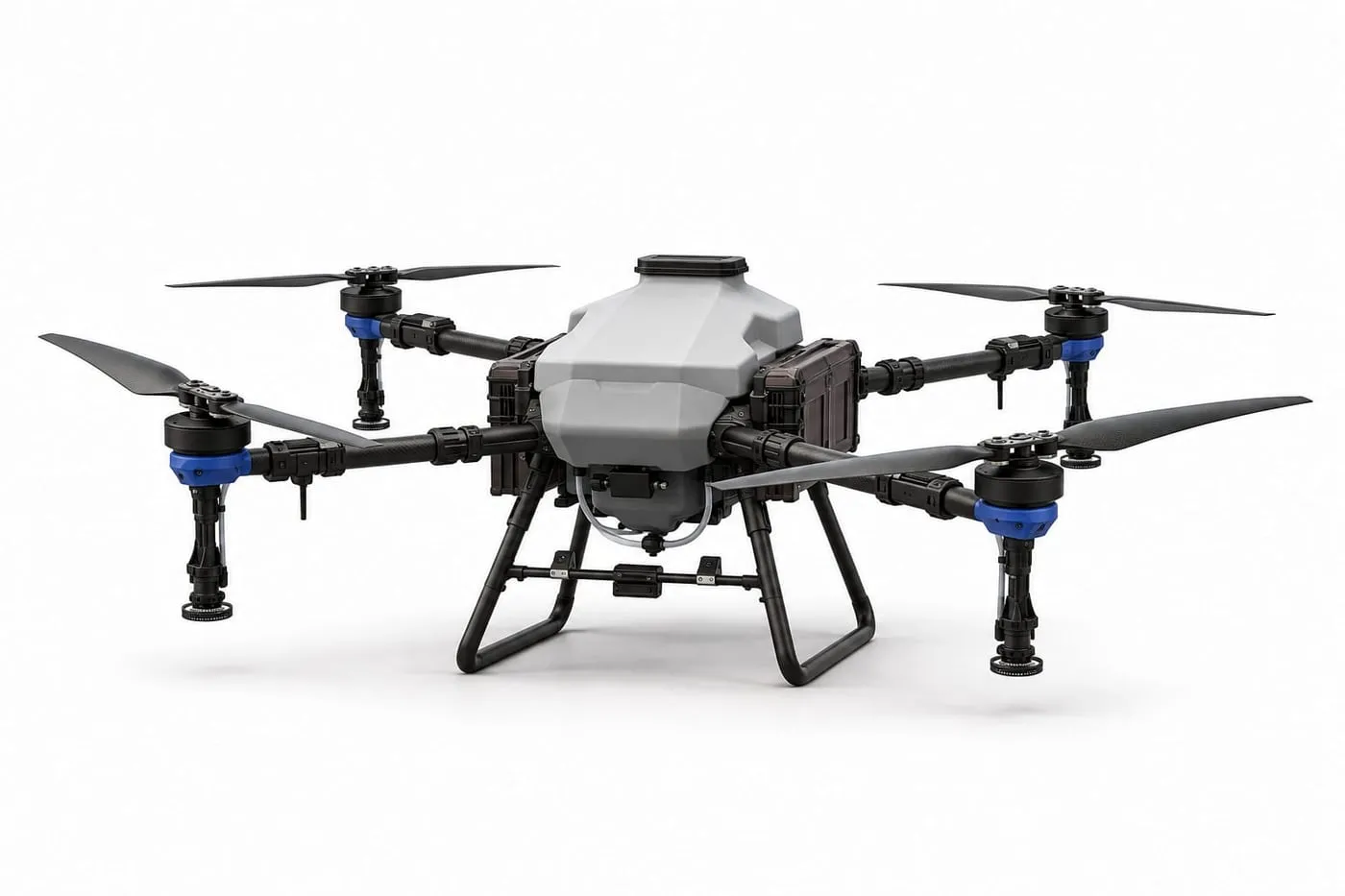
It is a multirotor with a petrol engine and generator on board that supplies power to the rotors in flight, so the flight is not limited to one battery pack. Our Agri 60H is the petrol-electric version of the 60 L-class Agri 60; its parameters are typical values for the class, so confirm the data sheet on the quotation. The idea is old. A 2024 modelling study from the University of Zagreb puts lithium polymer packs at about 0.25 kWh/kg and petrol at about 12.9 kWh/kg, so even after engine and generator losses a hybrid unit stores several times more energy per kilogram.
How long can a hybrid agricultural drone fly?
Longer than a battery pack, but numbers vary by design. The Zagreb study finds that beyond a certain mass the endurance gain can range from double to five times a battery system, with three worked cases adding 35 to 118 minutes; it is a model for multirotors, not a farm test. For a real farm machine, one manufacturer lists a 20 L hybrid with a 3.5 L fuel tank, at least 80 minutes empty and about 40 minutes with a load, up to 3 ha per flight and 7.5 kW of hybrid power. Hybrid hours do not turn into spray hectares by themselves; the tank, refills and swath still decide the work rate.
Hybrid or battery drone: which costs less to run?
Neither always wins. A battery set is cheap to operate where mains power or a good generator exists, and packs wear by cycles (see the battery guide). A hybrid can remove the field generator and a large pack stock, but it adds an engine that needs service. Purdue notes that air-cooled petrol generators are not made to run 12 hours a day in heat, so ask how the hybrid’s engine is cooled and rated for continuous work. Ask for the engine service schedule and the price of a replacement engine in the data sheet; we do not quote an interval here.
Where do hybrids make sense, and where do they not?
They make sense on large estates and remote farms where charging is hard, where carrying a big generator is costly, or where a crew moves between sites without mains power.
They make less sense over ripening grain and oilseed, near fire-sensitive crops, in places where noise matters, and in markets without a technician who can service small engines.
What should a dealer do before selling a hybrid?
Train one technician on engines, stock fuel-system and engine spares, and write down which crops and seasons the supplier clears for use. Offer the hybrid as a second model next to a battery machine, such as the Agri 50 or Agri 100, so the customer can compare at the same price. The dealer program covers training and parts lists, and our best spraying drone guide shows where the hybrid fits the range.
Questions dealers ask
- What is the price of a hybrid drone?
- The Agri 60 and Agri 60H share a public FOB reference range of US$ 10,400–31,500, because the range covers both power types. The final price is always on a quotation, with the engine package and spares listed as separate lines.
- What is the best drone for agriculture on the market?
- There is no single best one. It depends on farm type, field size and power supply; our best-drone guide gives six picks, with the hybrid for places where charging in the field is hard.
- Does a hybrid need less ground equipment?
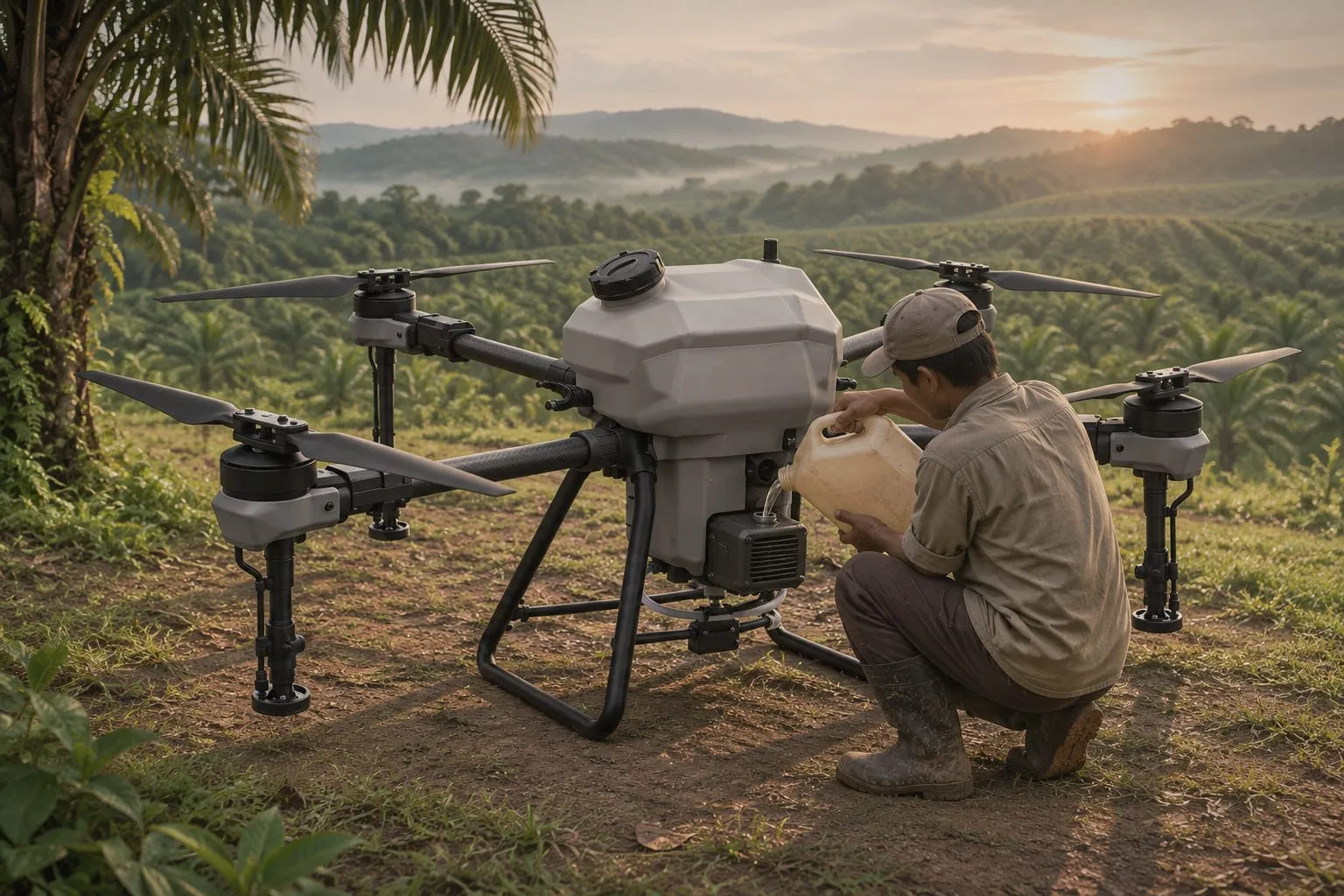
- Yes and no. It needs no charger, batteries or large generator at the field edge, but it needs a fuel can, a funnel, clean fuel and an engine service routine. Pack the fuel away from the crop and from the charging point.
- Is a hybrid a fire risk in dry crops?
- It can be. One maker advises against using its hybrid over ripening grain, oilseed and industrial crops. Follow the supplier's guidance, the product label and local rules, and ask for the hybrid's safety notes in writing.
- Does a hybrid carry as much liquid as a battery drone?
- Not automatically. The engine, generator and fuel weigh something, so the payload left for liquid depends on the design. Ask for the tank size and the maximum take-off weight in the data sheet, and compare at the same payload.
- What should a dealer ask the supplier about hybrid drones?
- The engine service interval, the spares list, fuel specification, noise and vibration figures, the warranty on the engine and the training offered to your technician. Do not promise uptime until those answers are in writing.
References
- [1]Hybrid Electrical-Internal Combustion Engine Power Supply for Multirotors: Feasibility Analysis and Case Study. Journal of Sustainable Development of Energy, Water and Environment Systems.
- [2]Reactive Drone Hybrid RDH20. Bavovna (manufacturer data).
- [3]DJI AGRAS T100 specifications. DJI (manufacturer data).
- [4]Agras T50 and T25 battery systems. DJI (manufacturer laboratory data).
- [5]The Evolution of Spray Drones: operational set-up in the field (PPP-154). Purdue Pesticide Programs.