Guides
Fall Armyworm Control with Drones in 2026: Emergency Contracts and Readiness
How drones are used against fall armyworm in 2026: FAO facts, tested spray settings, emergency contract terms, a fleet example and a readiness kit for dealers.
- Prepared by
- DEWKITE Sales Team
- Published
- Reading time
- 3 min
- Sources
- 4
Key takeaways
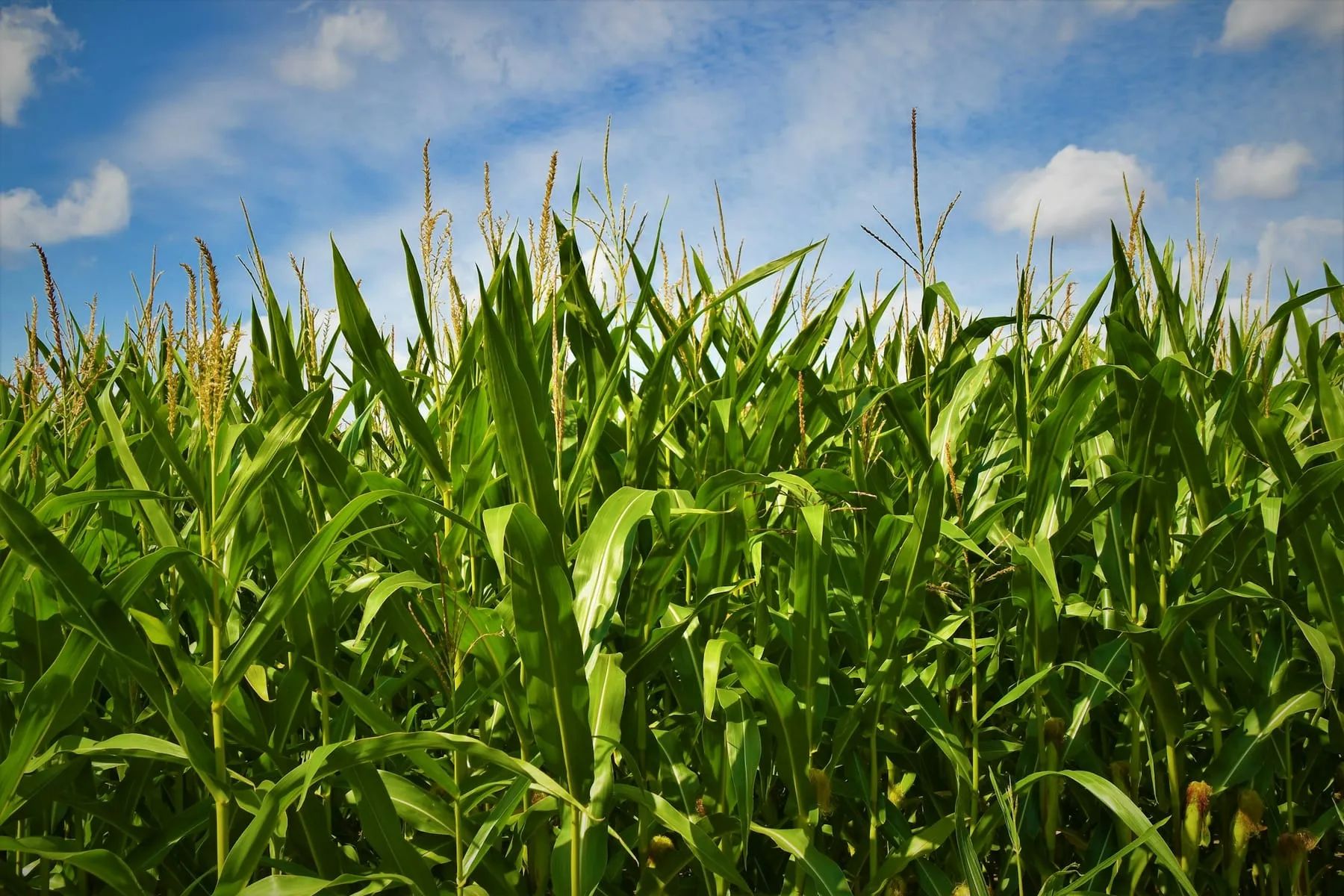
- 1Drones suit the whorl stage of fall armyworm, when caterpillars hide in the leaf funnel and a fast, wide-area response matters.
- 2FAO reports the pest moved from six African countries in 2016 to 78 countries across Africa, the Near East and Asia-Pacific, with up to US$9.4 billion a year of crop loss in Africa.
- 3A 2025 Chinese trial used a 2.5 m flying height and 37.5 or 45 L/ha with flat-fan nozzles and matched an electric knapsack sprayer.
- 4Example: 2,000 ha in five days needs about five 100 L machines or about ten 30 L machines.
- 5A drone does not replace monitoring and rotation of insecticides; use only products registered locally and follow the label.
Contents
Short answer: Drones are a good tool for fast, wide-area treatment of fall armyworm in young maize, but not a cure-all: results depend on monitoring, flying height, spray volume, nozzles and rotating insecticides that are registered in your country. For dealers, the opportunity is an emergency contract with a readiness kit that can be on a field within days.
How big is the fall armyworm problem?
FAO reported that in 2016 only six African countries had fall armyworm, and by 2022 it was in 78 countries across Africa, the Near East and Asia-Pacific, with losses in Africa of up to US$9.4 billion a year. Burkina Faso reports losses under 5 % since 2020, according to FAO. The pest hides in the leaf whorl, so the spray has to reach the upper canopy.
What spray settings have been tested?
A 2025 paper in Frontiers in Plant Science tested a drone at 2.5 m flying height with 37.5 or 45 L/ha and flat-fan nozzles (XR110015VS), and found control comparable with an electric knapsack sprayer. Treat these as trial values: read the product label and ask your agronomist before copying them.
What goes into an emergency contract?
The list below shows common practice only; each agreement is negotiated.
| Clause | Common practice | What the dealer prepares |
|---|---|---|
| Trigger | Scouting or trap count passes a threshold | A named monitor |
| Response time | Within 48-72 hours | Crew, drones and chemicals ready |
| Price | Per hectare | Rate card per distance and size |
| Product | Buyer or contractor supplies | Registered products only |
| Records | GPS flight logs per field | Log export after each job |
What should a dealer keep ready?
Quantities depend on the plan, so use a formula: hectares per day = machines x hectares per flying hour x flying hours. Then size the kit.
| Item | How to size it | Why |
|---|---|---|
| Battery sets | Per battery guidance | Charging is the real bottleneck |
| Spare propellers and nozzles | Per spare parts list | Dust and hard landings |
| Filling station | One per two machines | Water and mixing |
| Generator | Per charger load | Field charging |
How many drones does an outbreak need?
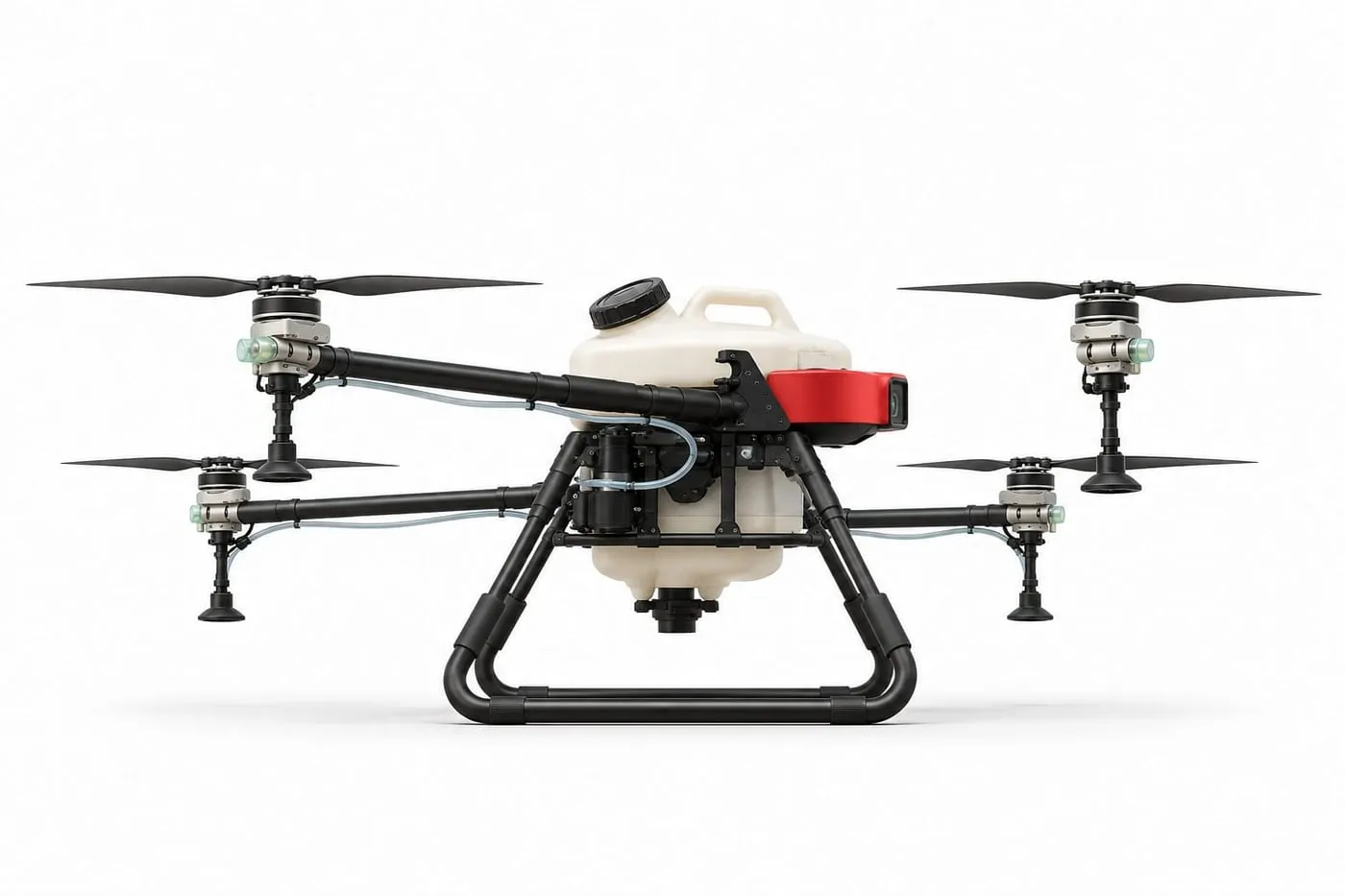
Example (estimate): a district has 2,000 ha of young maize to treat in 5 days, so 400 ha a day. A 30 L machine at a 6 m effective swath covers about 6.5 ha an hour, or 39 ha a day in six hours, which needs about 10 machines. An Agri 100 at a 12 m swath covers about 13 ha an hour (12 m x 6 m/s x 50 %), about 78 ha a day, so about 5 machines. All numbers are examples.
Who pays for programmes?
FAO and China started a South-South programme in Kenya and Ghana in 2024; a July 2025 update reported more than 1,000 core farmers trained and more than 500 ha covered. Kenya’s government also announced cooperation with FAO against an outbreak in Uasin Gishu in 2022. Public programmes are usually tendered through ministries or agencies, so dealers should hold a company profile, training materials and a clear parts policy. See tender specifications.
Do not over-promise
Resistance and product choice differ by country. Rotate modes of action as local advice says, combine with scouting, and never state a kill rate you cannot show.
Best for …
Best for a small crew serving many farms: Agri 30. Low entry cost from US$3,000 and 30 L that gets small maize plots done quickly.
Best for county-scale emergency response: Agri 100. It treats about 78 ha a day in our estimate, and the 100 L tank keeps ground crews to a minimum.
Read corn spraying drones, drone spraying service and the Kenya market page, then check the dealer programme.
Questions dealers ask
- Can drones control fall armyworm?
- They can deliver a fast treatment over large areas, and a 2025 trial matched an electric knapsack sprayer. Success still depends on monitoring, timing, nozzles, flying height and the insecticide chosen.
- When should you spray for fall armyworm in maize?
- Follow your national extension service and the product label. Monitoring traps and scouting should trigger the spray, and the young whorl stage is when caterpillars feed hidden in the funnel.
- How many drones are needed for an outbreak?
- Divide the hectares by the hectares per machine per day and by the days you have. In the example, 2,000 ha in five days is about 5 machines of 100 L class.
- Which countries have fall armyworm?
- FAO reported 78 countries by 2022 across Africa, the Near East and Asia-Pacific. Check your national plant protection agency for the current list.
- What is the best insecticide for fall armyworm?
- Use only products registered in your country, and rotate modes of action as the label and local advice recommend. A supplier cannot give a single global answer.
References
- [1]FAO Global Action for Fall Armyworm Control extended to end of 2023 with broader scope. FAO.
- [2]Optimization of spray operation parameters of UAV for fall armyworm control. Frontiers in Plant Science, 2025.
- [3]FAO-China South-South programme boosts national capacity of sustainable FAW management. FAO, 2025.
- [4]Fall armyworm invasion affecting crops in Uasin Gishu. Kenya News Agency, 2022.