Guides
One Demo Drone, Twenty Field Days: What a Demo Unit Costs a Dealer in 2026
What a demo drone costs a dealer in 2026: yearly cost per demo, terms to ask for, when to run demos before the spray season and how to track demos into orders.
- Prepared by
- DEWKITE Sales Team
- Published
- Reading time
- 3 min
- Sources
- 4
Key takeaways
- 1A demo unit is the dealer's main sales tool, and in our 2026 example one 50 L machine costs about US$ 8,700 a year to keep working, or about US$ 430 per field day.
- 2Three terms are common in dealer programmes: a demo unit sold below wholesale, a loaned unit, or a unit bought at full price; get the one you get in writing.
- 3Buyers book their equipment months before the spray window, so demos should happen four to eight weeks before the crop stage that needs spraying.
- 4Count the result, not the applause: record every demo, how many people came, how many asked for a quote and how many bought.
- 5The demo unit is not wasted money after the season; it is later sold as a used machine, with its flight log as proof of care.
Contents
Short answer: A demo unit costs a dealer roughly one third of its landed price every year once depreciation, wear parts, batteries, pilot time, transport and insurance are counted. In our 2026 example that is about US$ 8,700 a year for a 50 L machine, or about US$ 430 for each of 20 field days. Three hardware sales cover it, so the question is not whether to buy a demo unit but how many demos you can run before the spray window opens.
What does a demo unit cost per year?
Start with the 50 L set priced in the profit margin guide, US$ 14,030 landed. Every yearly figure below is an example assumption; swap in your own quotes.
| Cost line | Example per year (US$) | How it was worked out |
|---|---|---|
| Depreciation | 4,677 | 14,030 over 3 years, straight line, no resale value counted |
| Wear parts (propellers, nozzles, filters) | 900 | Demo drones are landed and lifted dozens of times |
| Extra battery wear | 600 | One extra pack replaced early |
| Pilot time | 1,200 | 20 demo days at 60 a day |
| Transport | 800 | 20 days at 40 a day, fuel and a helper’s meals |
| Insurance | 500 | Liability and hull, local quote needed |
| Total | 8,677 |
Example: cost per field day = 8,677 ÷ 20 days = about US$ 434. Example: cost per sale = 8,677 ÷ 8 sales = about US$ 1,085, against a hardware margin of about US$ 3,470 a unit.
How does a demo unit turn into orders?
Use a plain funnel and count it. Suppose each of 20 demos draws 8 buyers who own or manage farmland, 160 people in all. If 5 % of them buy within the year, that is 8 drones. The numbers are examples, but the habit is the point: write down every demo.
| Field | What to record |
|---|---|
| Date, place, crop | Where the drone flew and what was in the field |
| Attendees | How many were farm decision-makers |
| Trial area flown | Hectares sprayed or spread |
| Quote requests | Names and contact details |
| Day 7 follow-up | Done or not, with the reply |
| Result | Order, no order, reason |
For how to talk to each buyer type, see how to sell agricultural drones; for the day itself, see the field day guide.
What demo terms do dealer programmes offer?
A public dealer programme from one US multi-brand dealer lists a demo unit sold below wholesale, a stock unit at wholesale and a credit line, and compares itself with “floor plan” minimums. That is one example, not a rule. Dealers usually see one of three arrangements:
| Arrangement | Who carries the cost | Watch for |
|---|---|---|
| Demo unit sold below wholesale | Dealer, at a lower price | Whether it is a new machine and full warranty |
| Demo unit loaned | Supplier, for a set period | Return date, who pays freight and damage |
| Demo unit at full price | Dealer | Whether you can resell it as a new machine |
At DEWKITE the dealer programme includes a demo unit; the terms are agreed in writing by market and quantity.
When should the demos happen?
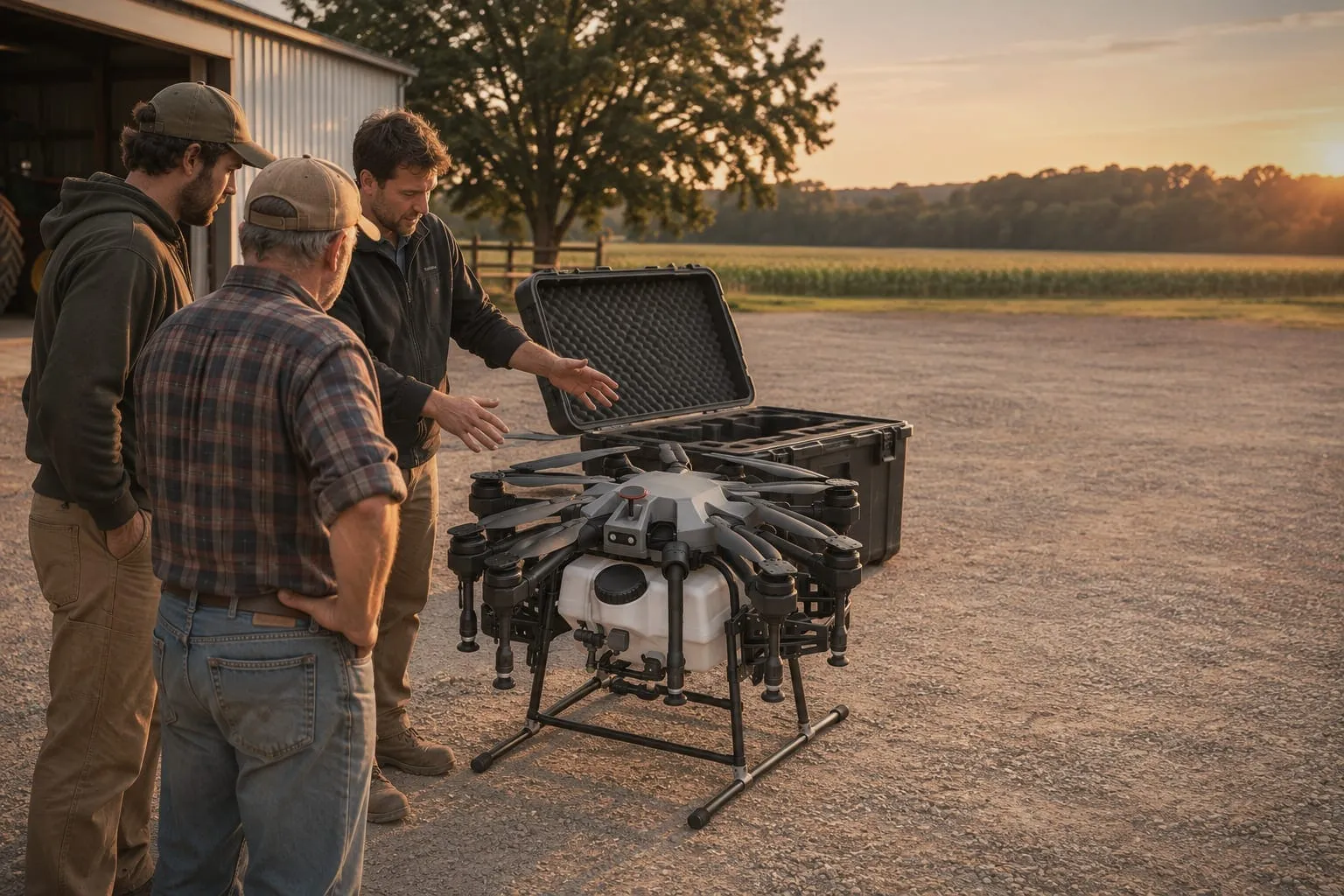
Buyers decide early. A US directory of operators says peak-season rental machines are often booked three to six months ahead for the wheat heading and corn fungicide windows. Farm buyers do the same with purchases, so run demos four to eight weeks before the crop stage you want to sell for, not on the first day of spraying.
Which model should be the demo unit?
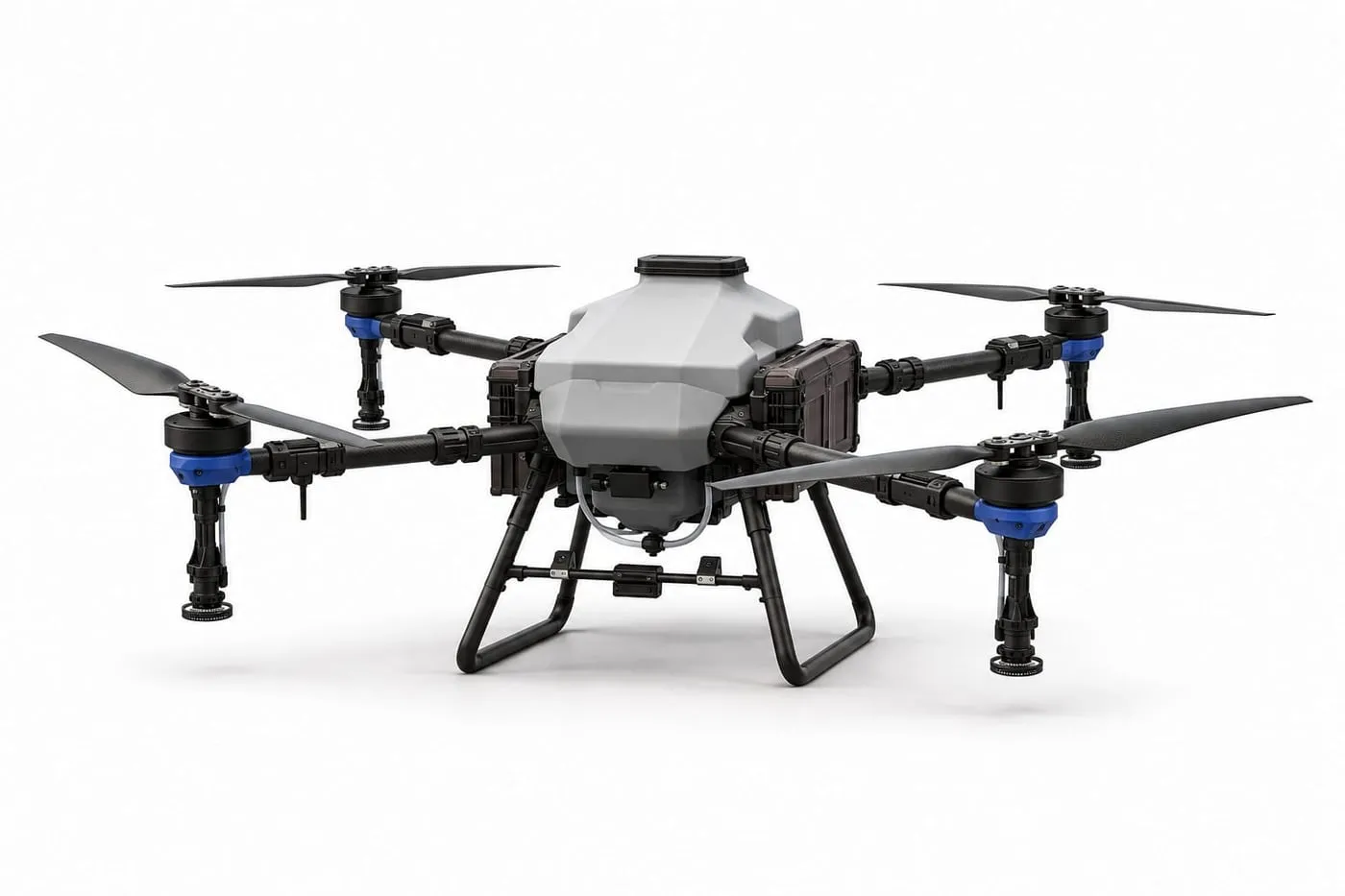
For a first year, pick the size class most farms near you will buy. The Agri 50 (50 L tank, 22 ha/h work rate, US$ 8,900–21,100 FOB reference range) or Agri 60 suits mixed farms and small contractors. Large estates and contractors may want to see the Agri 100 (100 L tank, 35 ha/h). Keep other sizes as brochures and videos from your own flights. When you sell the demo unit, our used spray drone guide shows what buyers will check.
Questions dealers ask
- How many demos does one unit need to pay back?
- In the example below, one 50 L unit costs about US$ 8,700 a year and a hardware sale earns about US$ 3,470, so three sales cover it. The number changes with your landed cost and discounts.
- Should a demo unit be the same size as what customers buy?
- Use the size most customers in your area buy for the standard demo, and show a larger machine such as the Agri 100 only to big farms and contractors who will actually consider it.
- Who may fly the demo drone?
- Only a trained and, where the law requires, licensed pilot. Hand-flying by visitors is often not allowed; ask your aviation authority and the demo programme terms.
- What happens to the demo drone after the season?
- Most dealers sell it as a used or "demo" machine at a lower price. Keep the flight log, battery cycle count and service record, because they make the sale easier. Our used spray drone guide covers how buyers check these.
- Do I need a demo unit in every town I cover?
- No. One unit on a trailer kit can cover a radius of a few hours. A second unit only makes sense when your calendar of demos is full for more than a month at a time.
References
- [1]What to Expect at an Agricultural Drone Demonstration. Ag Drones.
- [2]Become a Drone Spray Pro Dealer. Drone Spray Pro.
- [3]Agricultural Drone Rental. Ag Drone Directory.
- [4]G1274 Economics of Drone Ownership for Agricultural Spray Applications. University of Missouri Extension.