Short answer: Peru published its new drone decree, DS 012-2026-MTC, on 29 May 2026, but reports say the open and specific categories cannot be fully used until DGAC updates its technical standard, which may take up to two years. A dealer can still do real work in 2026: pick models, prepare registration and insurance figures, and run demonstrations with export farms while the rules settle.
A timeline for the gap
| Date or period | What is true | What a dealer does |
|---|---|---|
| 29 May 2026 | DS 012-2026-MTC published; open, specific and certified categories created | Read the decree text, not summaries |
| Now | Registry is free and public; pilot licences are long-lasting; insurance formulas apply | Register demo units, quote insurance by model |
| Next up to two years | Open and specific categories wait for DGAC to update NTC 001-2015 | Run demonstrations; avoid promising approvals |
| 30 May 2027 | Reported final deadline for registering equipment | Help buyers register before it |
Source notes: the decree is the primary text; a law-firm opinion in El Peruano gives the two-year estimate and the deadline.
Do I need to register a spray drone in Peru?
Yes. The decree creates a public registry that is free and updated quarterly, and it asks owners to register a drone within 30 working days of purchase. Infobae’s June 2026 report adds that non-recreational users need registration, a DGAC pilot licence and liability insurance. Check the MTC and DGAC pages for the current online procedure before you ship a unit. Our registration guide gives a checklist you can adapt.
How is drone insurance calculated?
Article 21 sets three formulas based on UIT units (a tax unit; look up its current value) and the drone’s maximum take-off weight (MTOW). For the open category it is 5 UIT plus 0.4 UIT for each kilogram of MTOW. The specific category with a standard scenario and no people overhead uses 10 UIT plus 0.5 UIT per kilogram, and with people overhead 15 UIT plus 0.7 UIT per kilogram. The decree’s own definitions decide which category a given drone falls in, so read them first.
Example (formula only, assuming the open-category formula applied): an Agri 50 at 99 kg MTOW gives 5 + 0.4 x 99 = 44.6 UIT. An Agri 100 at 254 kg gives 5 + 0.4 x 254 = 106.6 UIT. Every extra 10 kg of MTOW adds 4 UIT. Convert to soles with the current UIT and your insurer’s quote.
Does SENASA allow drone spraying?
SENASA runs the national pesticide system: a regulation, a banned list and an online registry (SIGIA). We found no SENASA rule written for drones, and the DS 012-2026-MTC text has no farming or spraying clause. So say “apply registered products within their label scope” and tell the buyer to confirm with SENASA. Never write “approved for drones” in a brochure.
Who buys, and which crops?
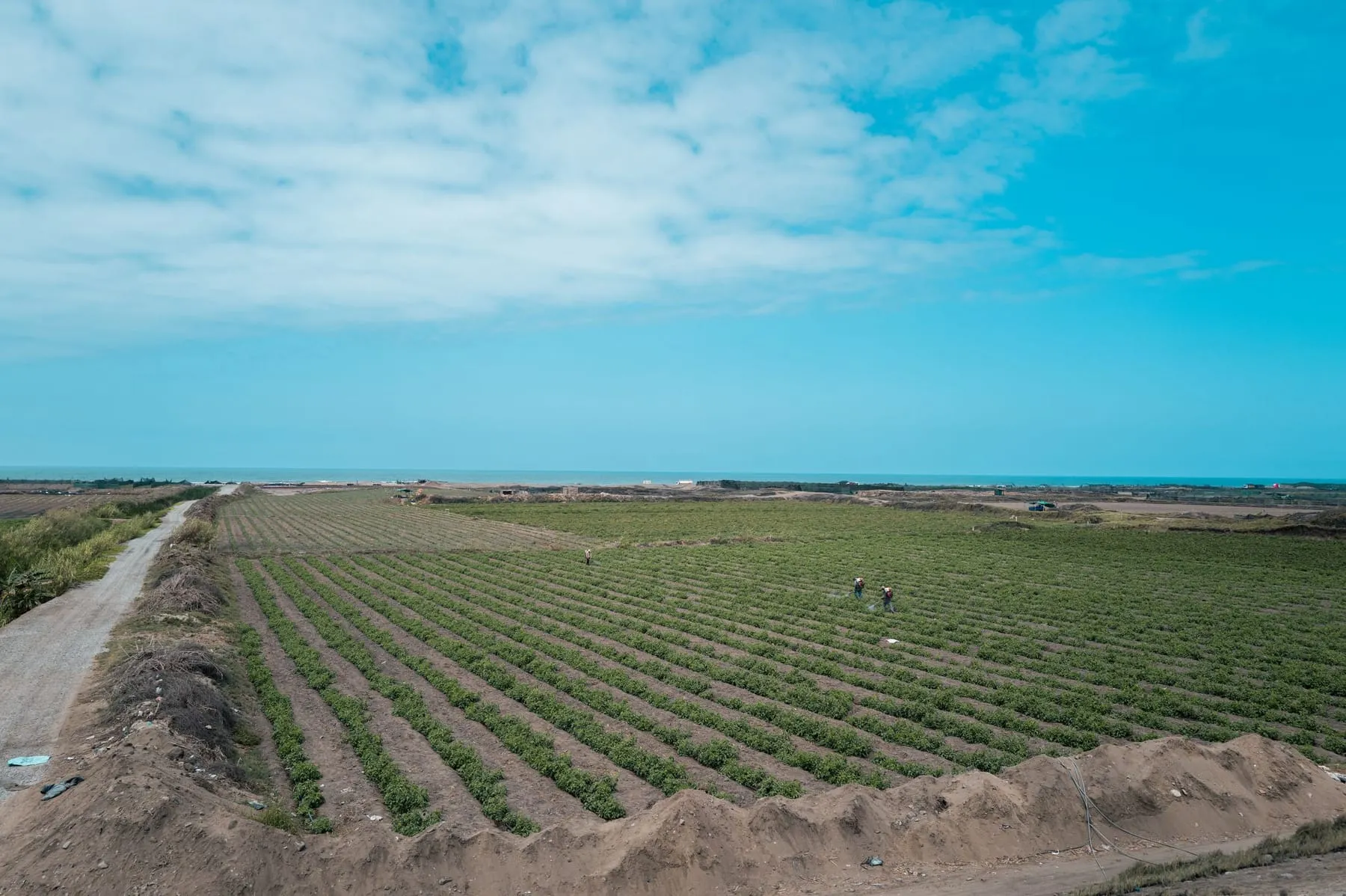
SENASA, quoted by Andina in May 2026, says Peru exported 540 agricultural products to 115 markets in 2025, more than 3 million tonnes in all. That export base means growers who care about documented spraying. FAO’s brief also reports strong 2026 import needs for yellow maize and wheat, so large feed-grain blocks are another target. We did not find reliable local area figures, so ask each buyer for hectares before you recommend a size.
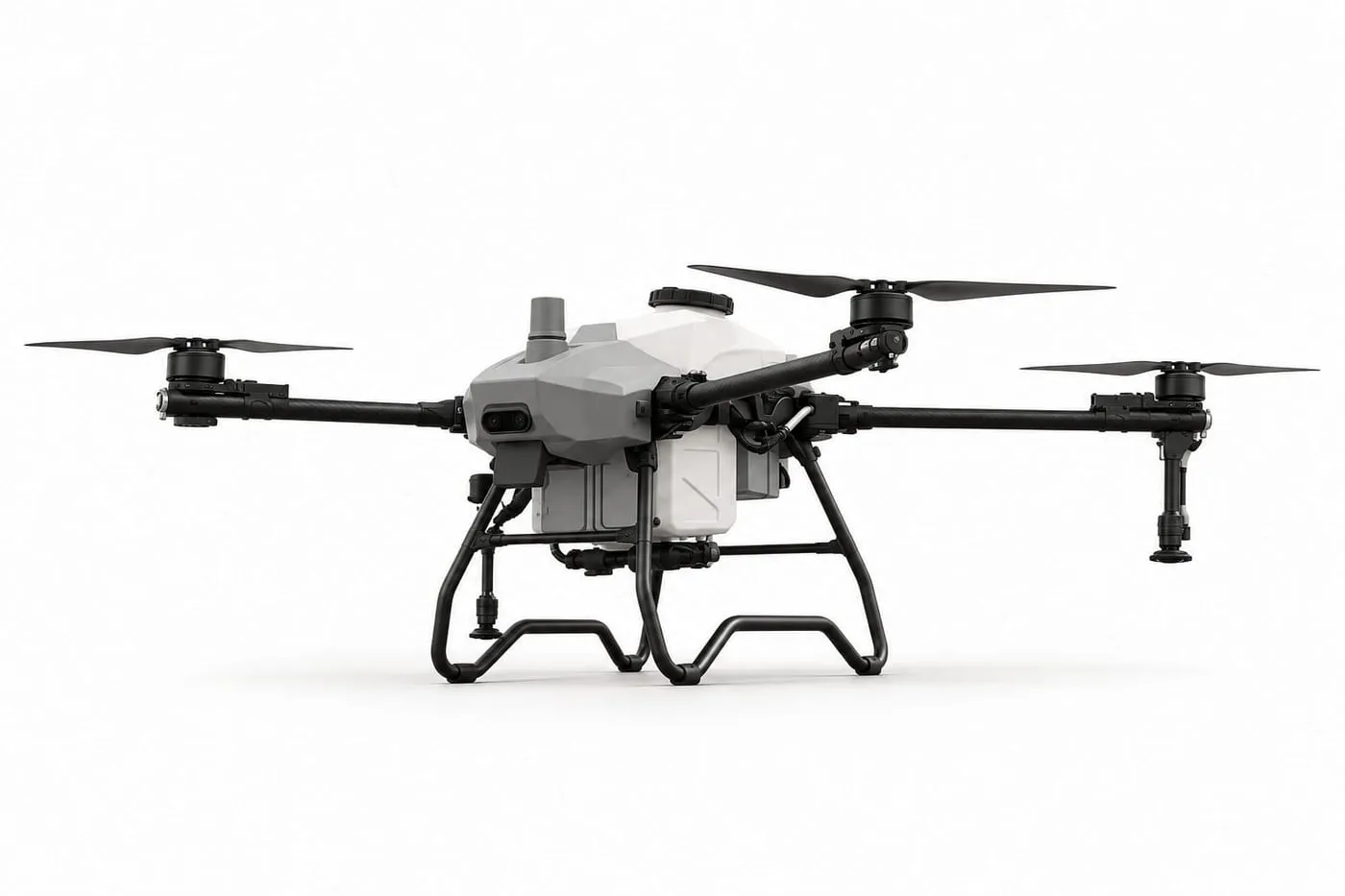
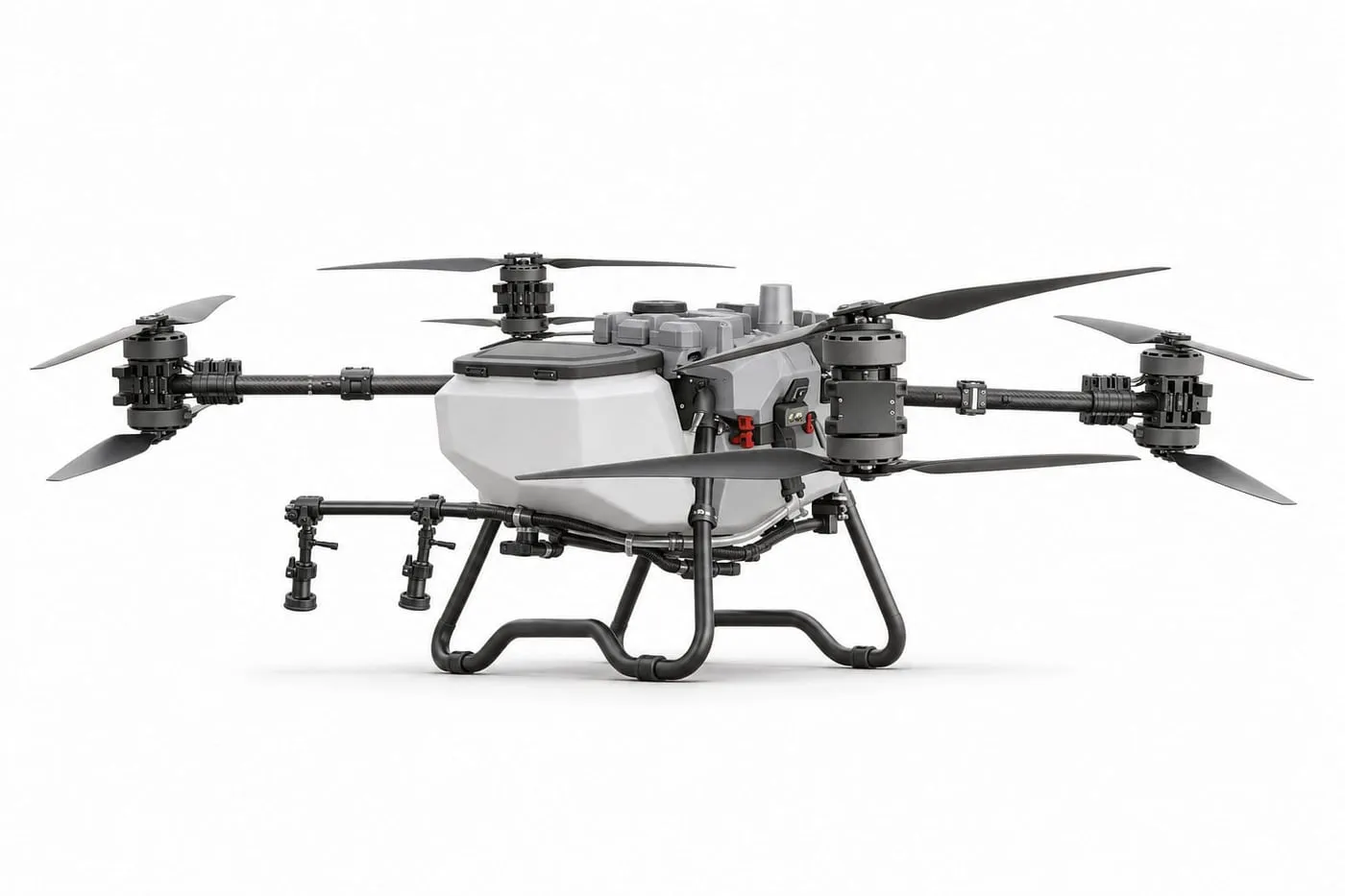
Local retailers already sell smaller models, so lead with large tanks, parts and training. The Agri 50 suits mixed farms, and the Agri 100 suits big blocks at 35 ha/h.
First-year plan
- Import one demo drone, register it and keep the receipt dates.
- Train one pilot and arrange the licence with DGAC.
- Quote insurance with the Article 21 formula for each model.
- Run a field day on an export farm and a feed-grain farm.
- After DGAC publishes the updated standard, order two to four drones with parts.
Colombia’s route is written up on a separate page, and the dealer program explains what you get with a first unit.