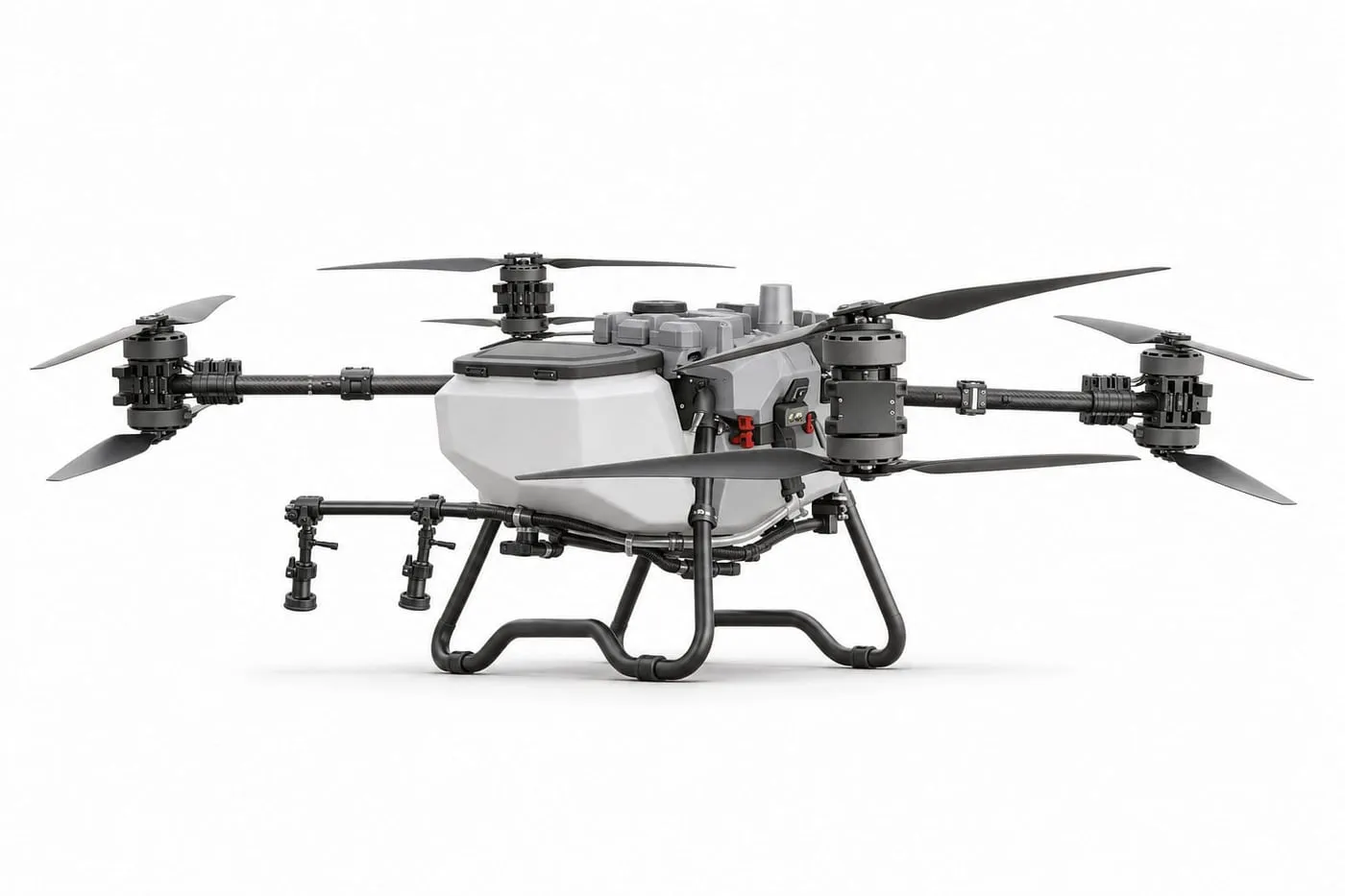
Short answer: Paraguay is a young but real market: close to 300 agricultural drones were flying in mid-2025, spraying is the main job, and soybean area of about 3.5 to 3.6 million hectares gives contractors plenty to spray. A new supplier needs a DINAC-registered drone, SENAVE-compliant spraying, and local parts and training, then a plan for the first spray season.
What does the first year look like? (example plan)
| Month | What happens | Who does it |
|---|---|---|
| 1–2 | Company set-up, ask DINAC and SENAVE what applies, choose a customs broker | Dealer |
| 3 | Order one demo drone, two battery sets and a charging generator | Dealer and DEWKITE |
| 4–5 | Shipment by sea, river port or land border, clearance, DINAC registration | Broker and dealer |
| 6–7 | Train two operators, test on a rented field | Dealer |
| 8–10 | Paid demonstrations in one growing area; first contract spraying | Dealer |
| 11–12 | First mixed order of two to four drones with spare parts | Dealer and grower |
The timings are an example. Customs and registration steps take as long as the paperwork allows, so leave slack.
Who is buying drones in Paraguay?
Most buyers are spray contractors, large soybean and grain farms, rice growers and forestry or yerba mate producers. ABC Rural names rice in Alto Paraná, Misiones and Ñeembucú, and mentions a private pilot school that has trained about 150 students. The soybean area is stable at 3.5 to 3.6 million hectares according to the University of Illinois farmdoc daily, with about 12.1 million tonnes forecast for 2025/26, so the same fields come round every season.
The Chaco is the area people watch for new land. The same study says up to 300,000 hectares of expansion is possible there, but poor soils and little infrastructure limit it. A drone that moves easily between small blocks suits that kind of frontier land.
Which drone size sells in Paraguay?
Large flat fields suit big tanks. A contractor covering thousands of hectares looks at a 100 to 150 L machine, because fewer refills mean more hectares per hour.
| Size | Example model | Tank | Reference price (FOB) | Typical buyer |
|---|---|---|---|---|
| 50 L | Agri 50 | 50 L | US$ 8,900–21,100 | First drone, mixed farms |
| 100 L | Agri 100 | 100 L | US$ 22,700–29,100 | Contractors on large fields |
| 150 L | Agri 150 | 150 L | US$ 28,900–34,800 | Estates and big contractors |
Treat the prices as FOB planning ranges for one unit; your quotation sets the real figure.
What are the rules for importing and flying a drone?
DINAC is the civil aviation authority. Its drone section lists Resolución 1049/2026, which sets prohibited and restricted zones for remotely piloted aircraft, and a procedure notice for drone operations. ABC Rural reports that DINAC has basic rules but no law written specifically for agricultural drones, and that DINAC and SENAVE together created a register of agricultural aircraft pilots (PPAG). Read the current text on dinac.gov.py before you promise customers anything.
SENAVE is the plant-health authority. Under Ley 3742 of 2009, agricultural pesticide products must be registered, and so must any company that imports or distributes them. SENAVE also hosts a prior-notice page for aerial spraying. Follow the product label and local rules.
For imports, ask a licensed Paraguayan customs broker for the documents, duties and route for drones, lithium batteries and a generator. Confirm with the customs authority and the broker; do not rely on a forum post.
What would a drone contractor earn? (example)
Example: one Agri 100 at the mid reference price of about US$ 26,000. Assume 100 spray days a year, 100 hectares a day and US$ 6 per hectare (an assumption, not a market quote). Revenue is 10,000 hectares × US$ 6 = US$ 60,000 a year before pilots, chemicals handling, batteries, fuel and servicing. ABC Rural’s source estimates payback in 6 to 12 months with continuous use; treat that as one supplier’s view and check it against local service prices.
How should a Paraguayan dealer set up?
- Pick one growing area and one crop, and do ten demonstrations there.
- Keep a battery and parts shelf; a down drone in the spray window loses the customer.
- Offer training and a written warranty split (12 months main parts, 3 months wear parts).
- Agree area and price levels in writing; see the dealer programme.
Next steps: read the dealer start-up guide at how to become an agricultural drone dealer, then compare the Agri 100 with the Agri 50.