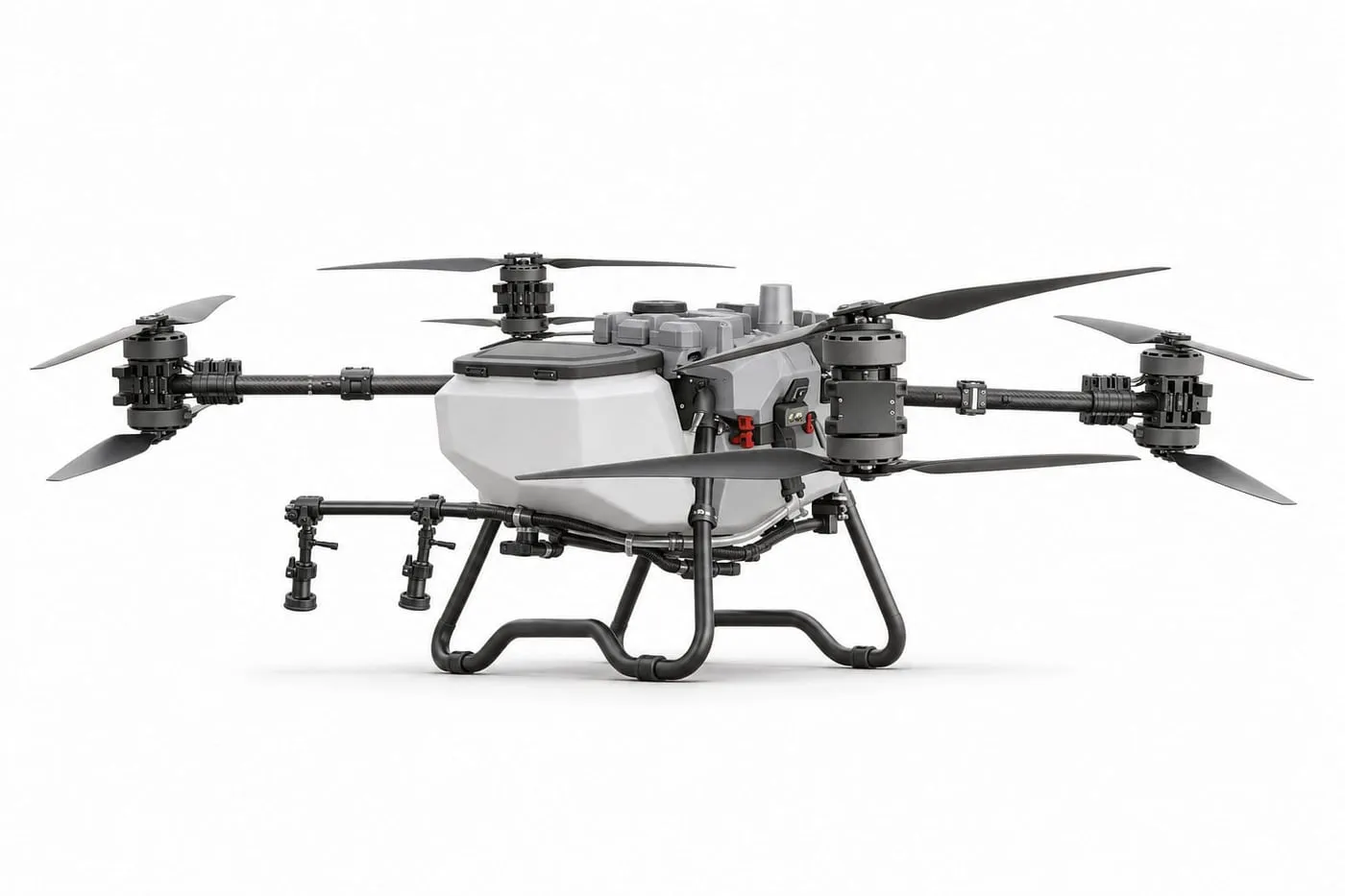
Short answer: Ecuador is a dollar-priced market with large banana, rice and cacao areas on the coast and early drone demand from growers and spray-service firms. The aviation authority DGAC sets the rules, and a draft law reported in September 2026 would tighten registration and customs release. A sensible entry is one demo drone, one season of paid spraying, then a mixed order.
The first-year account
An example plan for a new dealer or service company. Dates and amounts are examples; adjust to your own quotes.
| Period | What happens | Example result |
|---|---|---|
| Months 1–2 | Check DGAC and Agrocalidad rules, hire a customs agent, order one demo drone | Demo unit ordered |
| Months 3–4 | Shipping to Guayaquil, customs, training | Two trained people |
| Months 5–8 | Demos on banana and rice farms, paid spraying | Reference jobs |
| Months 9–12 | First mixed order of 2–4 drones plus a parts shelf | A working dealership |
Service rental is the benchmark. Primicias reported rates from about US$ 14/ha for rice and US$ 20/ha for banana, with two people covering about 23 ha a day (reported in 2022). Example: a drone doing 60 ha a week at US$ 14 earns about US$ 840, enough to cover a loan on a 50 L machine in under a year if work is steady.
Who buys drones in Ecuador?
- Banana growers and exporter associations. Ecuador is the world’s largest banana exporter, and bananas were 7.59 million tonnes of the 9.92 million tonnes of fruit harvested in 2024 (FreshPlaza). The DGAC resolution of 2023 allowed heavier drones for banana spraying.
- Rice growers in Guayas. A rice-growers’ leader told Primicias that Guayas holds 72–75 % of national rice output and Los Ríos about 17 %. That is the densest area for your demo days.
- Cacao and maize farms on the coast. The ministry’s cacao bulletin shows production concentrated in Los Ríos, Guayas, Manabí and Esmeraldas.
- Spray-service companies that rent by the hectare.
- Forestry in the highlands (pine and eucalyptus, reported in 2022).
What rules apply to agricultural drones in Ecuador?
DGAC regulates unmanned aircraft. Primicias reported the 2020 rules: no flights near aerodromes (9 km), a maximum height of 122 m and daylight flying. Resolution DGAC-DGAC-2023-0037-R, reported by FreshPlaza, lets banana growers use drones above 150 kg take-off weight. Spray-service firms have also been reported to need registration with the phytosanitary agency, Agrocalidad, which we could not confirm from the official page.
A draft to watch: El Universo reported on 21 September 2026 that a draft Civil Aviation Law has a chapter on unmanned aircraft. DGAC would register them, drones above 250 g would be covered, and customs could not release a foreign-bought drone without technical approval. Ask your customs agent whether it applies when you order.
How does an import work?
Freight comes through the Guayaquil maritime port. The customs authority SENAE runs the ECUAPASS system and lists authorised customs agents. We do not quote duty here: confirm duty and taxes with your customs agent. Batteries need dangerous-goods handling; see the import duty guide.
Which drone for which Ecuadorian crop?
Best for large banana and rice blocks: Agri 100 (100 L, 8–15 m width, 35 ha/h) and Agri 150 (150 L, 40 ha/h). Best for mixed farms and a first demo: Agri 50 (50 L, 22 ha/h). Heavy machines need field charging, so budget a generator.
Dealers get demo support, training and a parts list through the dealer program; read how to become a dealer first.
What about El Niño?
Primicias reported in 2026 that a strong El Niño could put much of the rice crop at risk, with Guayas the most exposed province. Treat wet and flooded seasons as lost working days in your plan.