Guides
What Goes on the Truck: A 2026 Field Support Kit for a Large Spray Drone Crew
Load list for a large spray drone crew in 2026: water, pump, generator, charging, PPE and a spares box, with sizing sums for one 100 L machine.
- Prepared by
- DEWKITE Sales Team
- Published
- Reading time
- 4 min
- Sources
- 4
Key takeaways
- 1A large spray drone is only as productive as the truck behind it: water, a transfer pump, power for chargers and a spares box decide how many tanks you fly per hour.
- 2Purdue Extension suggests planning about 10 kW of continuous generator power per charger and adding 20% headroom, because a generator's nameplate watts are not its continuous output.
- 3A pump that fills a tank in one minute needs a flow of about 100 L/min for a 100 L tank; slower pumps are fine if the crew has another job to do while filling.
- 4Example: a 150 ha day at 20 L/ha uses about 3,000 L of spray mix, which is 30 tanks of 100 L.
- 5Buy the spares box with the first drone: propellers, nozzles, filters and a spare remote cost little against a lost day in season.
Contents
Short answer: In 2026 a crew with one large spray drone needs six groups of kit: water and a transfer pump, power for the chargers, a mixing point, protective gear, a vehicle to carry it all, and a spares box. A pickup with a tank and a small generator is the minimum; a trailer with two chargers and batch tanks is the full set-up. Size each item from the drone’s tank, charger rating and hectares per day.
The money first: what a field kit costs
Prices of generators, pumps and tanks differ by country, so this page does not quote them; collect two local quotes for each line. One public reference helps: Purdue Extension reports that a US operation with two drones and a fully equipped truck or trailer commonly puts US$100,000–200,000 into the whole set. For the drone share of that, see the price guide.
| Line | Minimum kit (pickup) | Full kit (trailer) | Size it from |
|---|---|---|---|
| Water | Tank or IBC on the bed | Large tank plus batch tanks | Hectares × litres per hectare |
| Transfer pump | Small pump and hose | Pump, hose reel, filter | Tank volume ÷ fill time |
| Power | One generator | Two or three generators or one set | Charger rating × number of chargers |
| Charging space | Shaded tailgate | Ventilated rack | Batteries per drone |
| Safety | Gloves, eyewear, coveralls | Add wash station, first-aid kit | Product label |
| Spares | One small box | Labelled drawers | Wear parts you replace each season |
How big must the generator be?
Purdue Extension explains the arithmetic. New fast chargers can draw up to about 13 kW, an average charger about 5 kW, and the extension advises planning about 10 kW per charger. A generator’s nameplate is a peak: Purdue gives an example of a 13,000 W set that holds 10.5 kW continuously on petrol and less on natural gas. Then add 20% headroom.
Example: two chargers × 10 kW = 20 kW; × 1.2 = 24 kW, plus the pump. That is above one 13,000 W petrol set, so you would run two or three sets or buy one larger one. DJI’s own trailer guide suggests several smaller generators over one big one, so a failure does not stop the crew. More on sizing and fuel is in the generator guide.
How fast must the pump be?
Purdue’s rule: to fill a 20-gallon tank in one minute you need at least 20 gallons per minute. It also warns that a pump that is too strong foams and overflows small tanks.
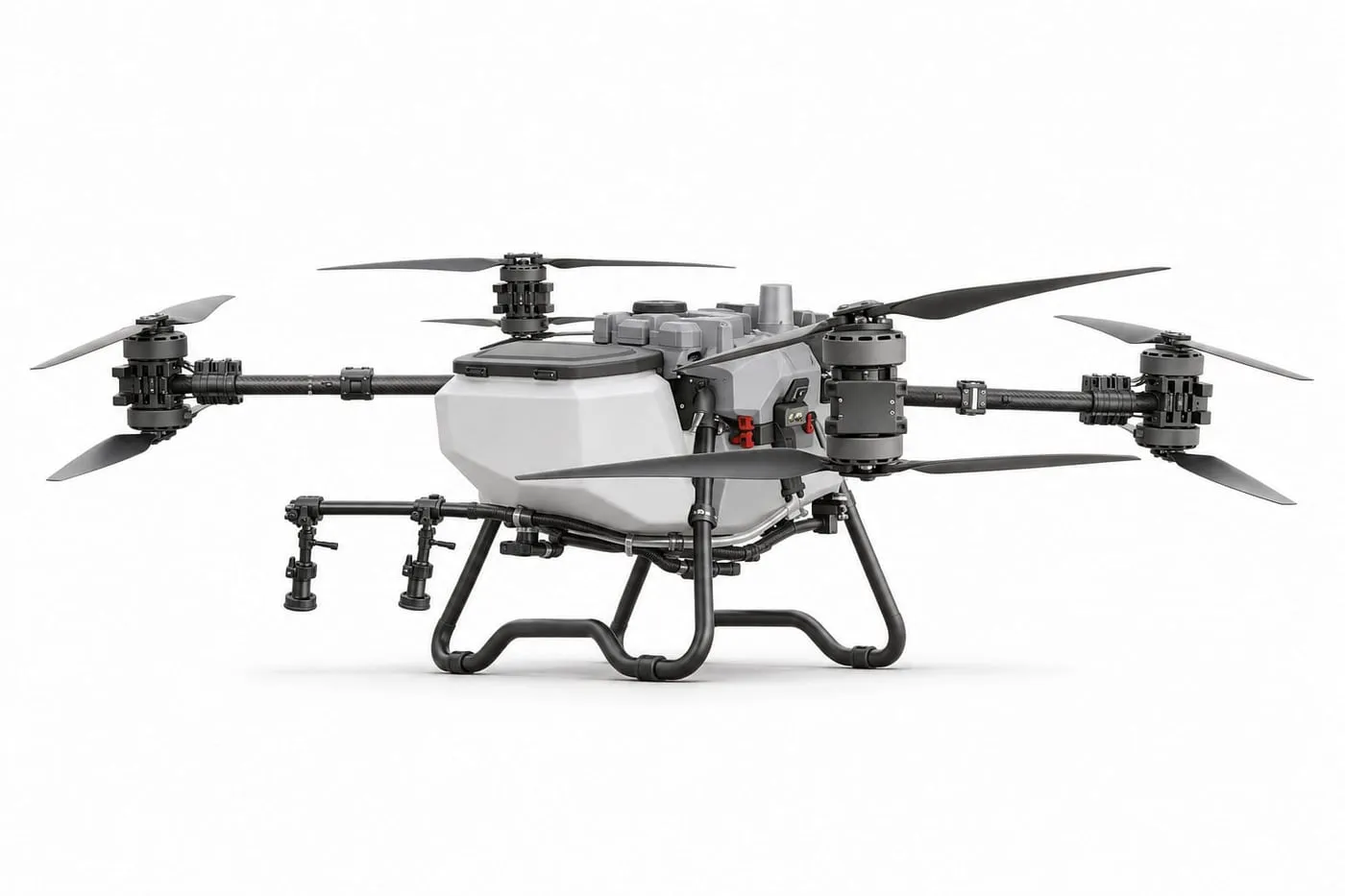
Example, calculated: the Agri 100 holds 100 L, about 26 gal. A one-minute fill needs about 100 L/min. A pump at half that speed fills it in two minutes. For the 150 L Agri 150 the same sums give 150 L/min for one minute, or 75 L/min for two. Choose the speed from what your crew does while the tank fills.
How much water does a day use?
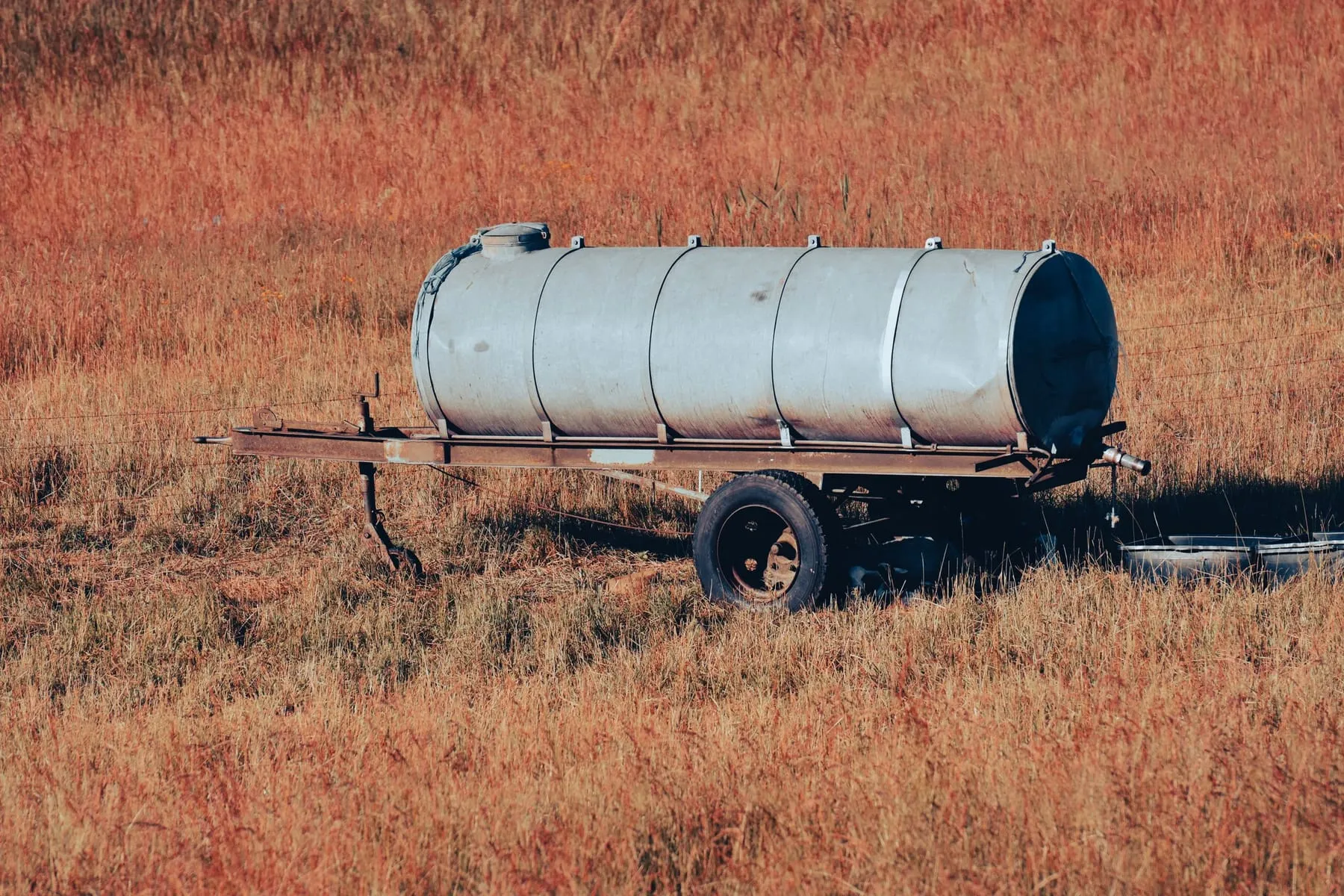
Example: 150 ha flown × 20 L/ha = 3,000 L. At 100 L per tank that is 30 loads, about 790 US gallons. DJI’s trailer guide suggests a main water tank of at least 800–1,000 gallons, with batch tanks of 30–100 gallons that have agitation, which fits this sum. Use your product label for the real litres per hectare, and the sheet work rate (35 ha/h for the Agri 100, 40 ha/h for the Agri 150) only as a ceiling.
Where do the batteries and the mix go?
Purdue’s set-up notes place generators and batteries in shade, with mixing and washing in set places away from the flight area. Sprayers101 adds a point from tender design: batteries need airflow while they charge, so a closed box without ventilation can slow charging. Keep wires and hoses clear of walkways, and fly away from power lines.
What PPE and safety steps does the crew need?
Follow the product label and local rules. The drone is powered down for filling, mixing is done by the person trained for it, and wash water has a planned place. Crew roles are in our spraying crew guide.
What belongs in the spares box?
For a dealer this is the easiest sale to make together with the drone: propellers, nozzles, filters, a spare remote and spare battery connectors, plus the tools to change them. Ask the supplier which wear parts it advises for one season; the spare parts range and the dealer programme page explain what is available with a first order.
Questions dealers ask
- What do you need to start a drone spraying business?
- The drone and batteries, a charger and power for it, a way to carry and mix water, protective clothing, a vehicle, a spares box and the licences your country asks for. This page covers the field kit; the business plan is in our drone spraying business plan guide.
- How big a generator do I need to charge spray drone batteries?
- Purdue Extension plans about 10 kW of continuous power per fast charger and adds a margin of 20%. Two chargers running together therefore point to about 24 kW. Read the charger input rating in your manual and compare it with the generator's continuous rating, not its peak rating.
- How much water does a large spray drone use per day?
- It follows the hectares flown and the application volume. Example: 150 ha at 20 L/ha is 3,000 L. Your label sets the real volume per hectare, so work the sum with that number.
- Do I need a trailer for a spray drone?
- Not always. A pickup, a water tank on the bed and a small generator is a workable first kit. A trailer helps when you run two chargers, carry batch tanks and need a clean place for the drone, batteries and tools.
- What PPE is needed when refilling a spray drone?
- Follow the product label and local rules. In practice that usually means chemical-resistant gloves, eye protection and coveralls for mixing and loading, with the drone powered down while it is filled. Purdue Extension's field set-up guidance says the same about shutting the drone off.
- How many batteries per spray drone?
- Batteries decide how long the drone flies before it waits for a charge. Our product pages list the charging details for each model, and for a heavy machine ask the supplier for the battery sets and charger that match your hectares per day. See the battery-count guide for the sums.
References
- [1]Trucks and Trailers for Drone Operations, Part 1 (PPP-160). Purdue Pesticide Programs.
- [2]7. Operational Setup in the Field (PPP-154). Purdue Pesticide Programs.
- [3]Spray Drone Trailer Guide. DJI.
- [4]Drone Tendering: Considerations before Buying or Building. Sprayers101.