Guides
Drone vs Knapsack Sprayer: What Service Price Beats Manual Spraying?
In 2026, compare drone and knapsack spraying on labour days, water use and operator exposure, then work out the service price per hectare that makes drones pay.
- Prepared by
- DEWKITE Sales Team
- Published
- Reading time
- 3 min
- Sources
- 5
Key takeaways
- 1An Indian research-institute table lists knapsack work at 1.5–2.0 acres per person per day against 25–40 acres per day for a spray drone, and 400 L/ha of water against 30–45 L/ha.
- 2The same table puts costs at INR 800–1,000 per acre for knapsack and INR 400–500 per acre for drones, so drone service can win on price where labour is dear or scarce.
- 3Where a day's wage is very low, the drone may not win on labour cost alone; its case then rests on speed, timing and water saved.
- 4A drone cuts walking through the crop and carrying water, but mixing and loading still expose the operator, so PPE and shut-down rules stay.
- 5Smallholders rarely buy a big drone; dealers sell the service to many farms and charge per hectare.
Contents
Short answer: In 2026 the honest way to compare a drone with a knapsack sprayer is to work out the service price per hectare at which the drone team breaks even, then see whether farmers will pay it. In the one research-institute table we found, drones were about half the cost per acre and used a tenth of the water; where daily wages are very low the saving may shrink, and the case rests on speed and timing.
The side-by-side table first
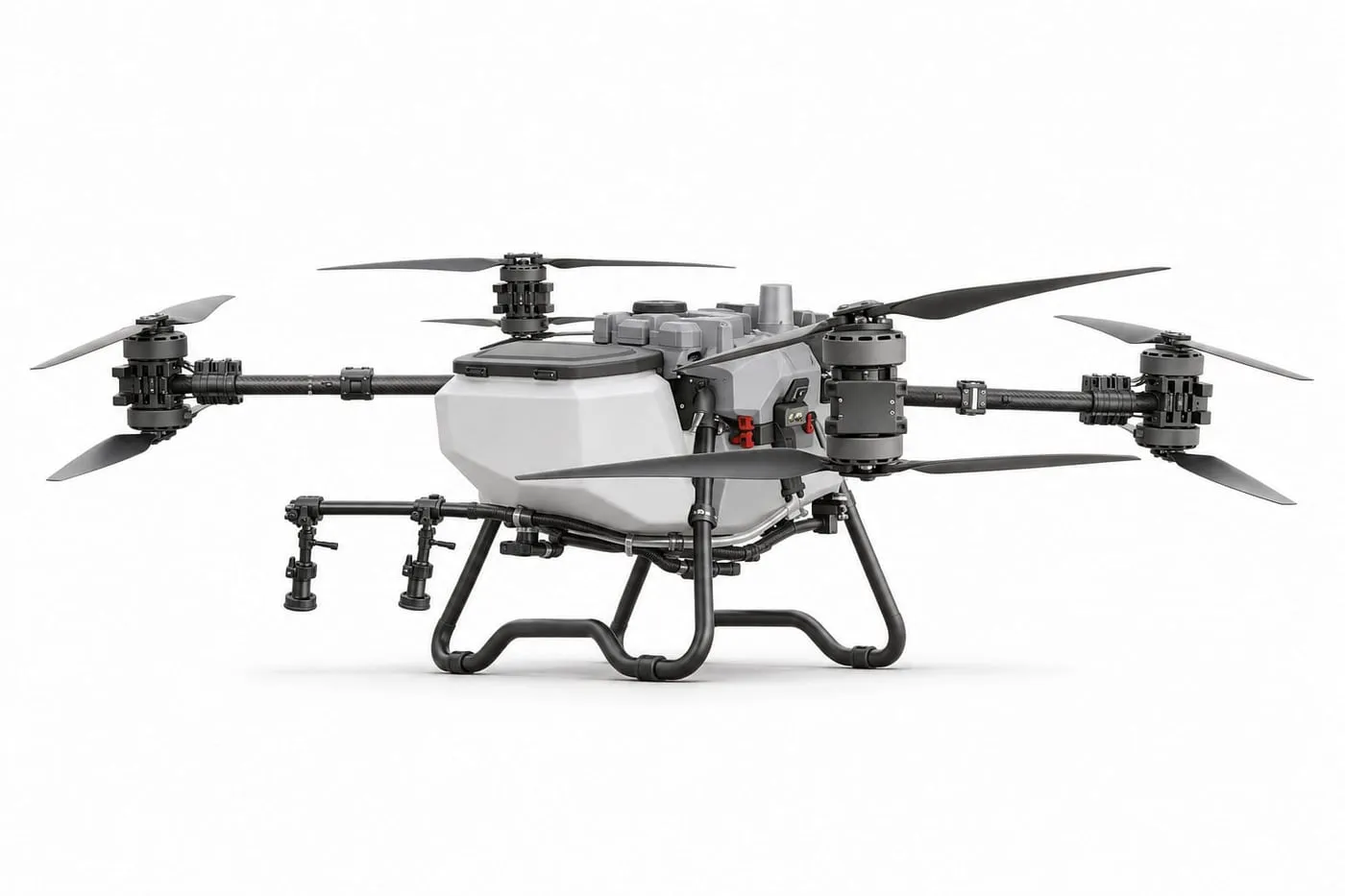
These figures come from a June 2026 standard-operating-procedure article by ICAR-IIRR and IRRI on herbicide spraying in direct-seeded rice in India. They describe small drones, not the Agri series; the last column adds the product-sheet rates for the big machines as a ceiling.
| Item | Knapsack (ICAR table) | Spray drone (ICAR table) | Agri 100 / Agri 150 sheet |
|---|---|---|---|
| Area per day | 1.5–2.0 acre per person | 25–40 acre | Not listed per day |
| Speed | about 0.08 ha/h | about 3.0–4.0 ha/h | 35 / 40 ha/h (sheet ceiling) |
| Water | about 400 L/ha | 30–45 L/ha | Set by your label and nozzles |
| Cost | INR 800–1,000 per acre | INR 400–500 per acre | Your own cost sum |
How many labour days does a drone save?
Example, calculated from the ICAR table: 100 ha is about 247 acres. Knapsack at 1.5–2.0 acre per person per day needs 124–165 person-days. A drone at 25–40 acre per day needs 6–10 days of the flying team. The saving that farmers feel is the timing: a whole village can be sprayed inside the weed or pest window instead of over weeks.
What service price do I need to break even?
Take this formula and put in your own figures:
Cost per hectare = (yearly depreciation + interest + insurance) ÷ hectares flown per year + battery and spares + labour + fuel.
The University of Missouri method shows the same thing: owning the machine is the biggest cost, so the answer depends mostly on how many hectares you fly each year.
Example (all numbers assumed): outlay US$ 40,000 for the drone, batteries and kit; life 4 years; interest 10% of the outlay per year; spares and fuel US$ 2,500 a year; crew US$ 6,000 a year.
- Depreciation: 40,000 ÷ 4 = 10,000; interest 4,000. Yearly cost = 10,000 + 4,000 + 2,500 + 6,000 = US$ 22,500.
| Hectares flown per year | Cost per hectare (example) |
|---|---|
| 750 | US$ 30.00 |
| 1,500 | US$ 15.00 |
| 3,000 | US$ 7.50 |
Now compare with the knapsack. At an example wage of US$ 5 per day and 0.6–0.8 ha per person-day (the ICAR range converted), knapsack labour is about US$ 6–8 per hectare before water carrying. A drone at 1,500 ha per year does not beat that on cost alone; at 3,000 ha it does. This is why the dealer’s task is to fill the machine’s year with hectares, with many farms and more than one crop. See the fleet-size guide for that planning.
Does a drone work as well as a knapsack?
A 2024 Frontiers in Agronomy study from Tamil Nadu in direct-seeded rice found drone herbicide at 30 L/ha comparable to knapsack spraying. Another Tamil Nadu trial compared 25–50 L/ha by drone with 500 L/ha by knapsack in transplanted rice. Both are single-crop studies, so do not simply cut the water volume: ask the chemical supplier what volume the label allows from the air, and use suitable nozzles and adjuvants. Follow the product label and local rules.
Is drone spraying safer for the operator?
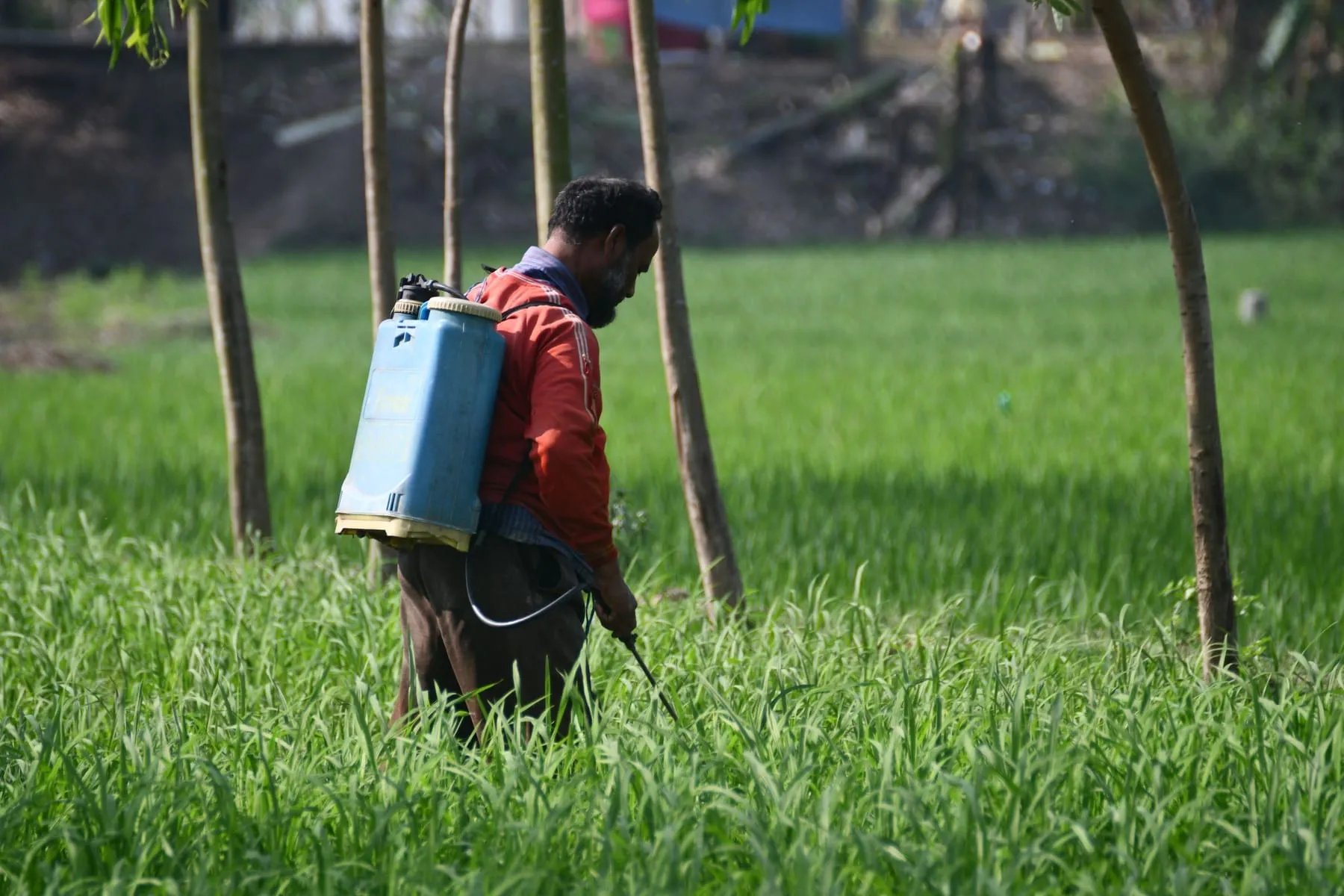
Partly. A critical review of rice-field studies in developing countries found skin contact usually larger than inhalation, and 12 of the 22 studies covered knapsack use. A drone removes the walk through the crop with a tank on the back. It does not remove mixing and loading, so the Purdue guidance applies: shut the drone down when filling and wear the protective gear on the label.
What should a dealer sell to a smallholder market?
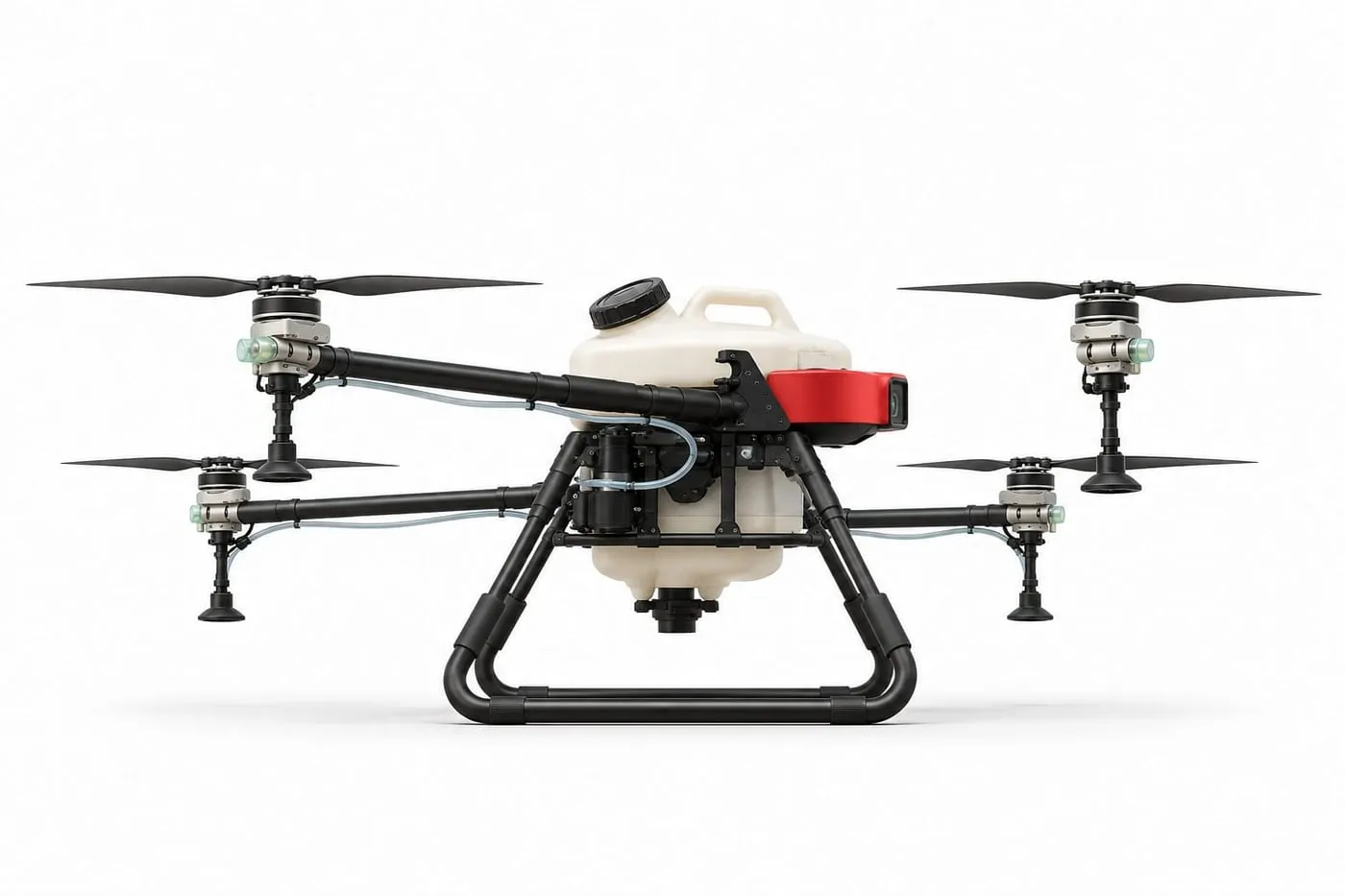
Not a machine to each farm. Sell to a spraying team: one drone, two or three people, a spares box, with a price per hectare. The Agri 30 suits terraces and small fields; the big tanks suit the rice belts and estates. Learn the business side from the business ideas guide, see the dealer programme for team set-up, and ask local farmers what they pay now before you set the price.
Questions dealers ask
- How many acres can a drone spray in a day?
- The ICAR table lists 25–40 acres per day for a spray drone in direct-seeded rice. The Agri 100 and Agri 150 product sheets list 35 and 40 ha/h; treat that as a ceiling and plan on a lower daily figure after refills, battery changes and field moves.
- Is drone spraying cheaper than knapsack spraying?
- In the ICAR table, yes: INR 400–500 per acre against INR 800–1,000. Elsewhere it depends on wages, field size and how many hectares the drone flies a year. Use the cost sum on this page with your own numbers.
- Does drone spraying work as well as a knapsack sprayer?
- A 2024 Tamil Nadu study of direct-seeded rice reports that herbicide at 30 L/ha by drone worked comparably to a knapsack. Results depend on nozzles, spray volume and weather, so test your own crop and product before you promise results.
- Is drone spraying safer for the operator?
- It removes walking through wet crop with a tank on your back. A review of rice-field studies found skin contact the main exposure route and knapsack use common in the studies it covered. Mixing and filling still expose people, so keep PPE and shut the drone down when refilling.
- Can a smallholder afford a spray drone?
- Usually not as an owner. A cooperative, a dealer's spraying team or a local service business buys the machine, and smallholders pay per hectare or per acre. The [dealer programme](/dealer-program/) page explains how that is set up.
- What do farmers pay for drone spraying?
- There is no single price. The Indian table above lists INR 400–500 per acre, and a US university guide uses about US$16 per acre as a custom rate. Ask neighbouring farmers and sprayer owners in your own market before setting yours.
References
- [1]Standard operating procedure for herbicide application in direct seeded rice using UAVs, Indian Farming 76(06), June 2026. ICAR-Indian Institute of Rice Research and IRRI.
- [2]Spray volume optimization with UAV-based herbicide application in direct-seeded rice, Frontiers in Agronomy 6 (2024). Frontiers.
- [3]Assessment of occupational exposure to pesticides applied in rice fields in developing countries: a critical review (PDF). Wong and Brown, Int. J. Environ. Sci. Technol..
- [4]G1274 Drone spraying cost per acre. University of Missouri Extension.
- [5]Trucks and Trailers for Drone Operations, Part 1 (PPP-160). Purdue Pesticide Programs.