Guides
What Coffee Trials Say About Drone Spraying: Rust Control, Canopy Coverage and Who Pays
Coffee drone spraying in 2026: Brazilian trial data on canopy coverage and leaf rust control, DJI's farm cases, Brazil rules and a 100 ha service example.
- Prepared by
- DEWKITE Sales Team
- Published
- Reading time
- 3 min
- Sources
- 4
Key takeaways
- 1Coffee is a crop where drones work but cover the canopy less well than a pneumatic sprayer, so sell speed and access, not better coverage.
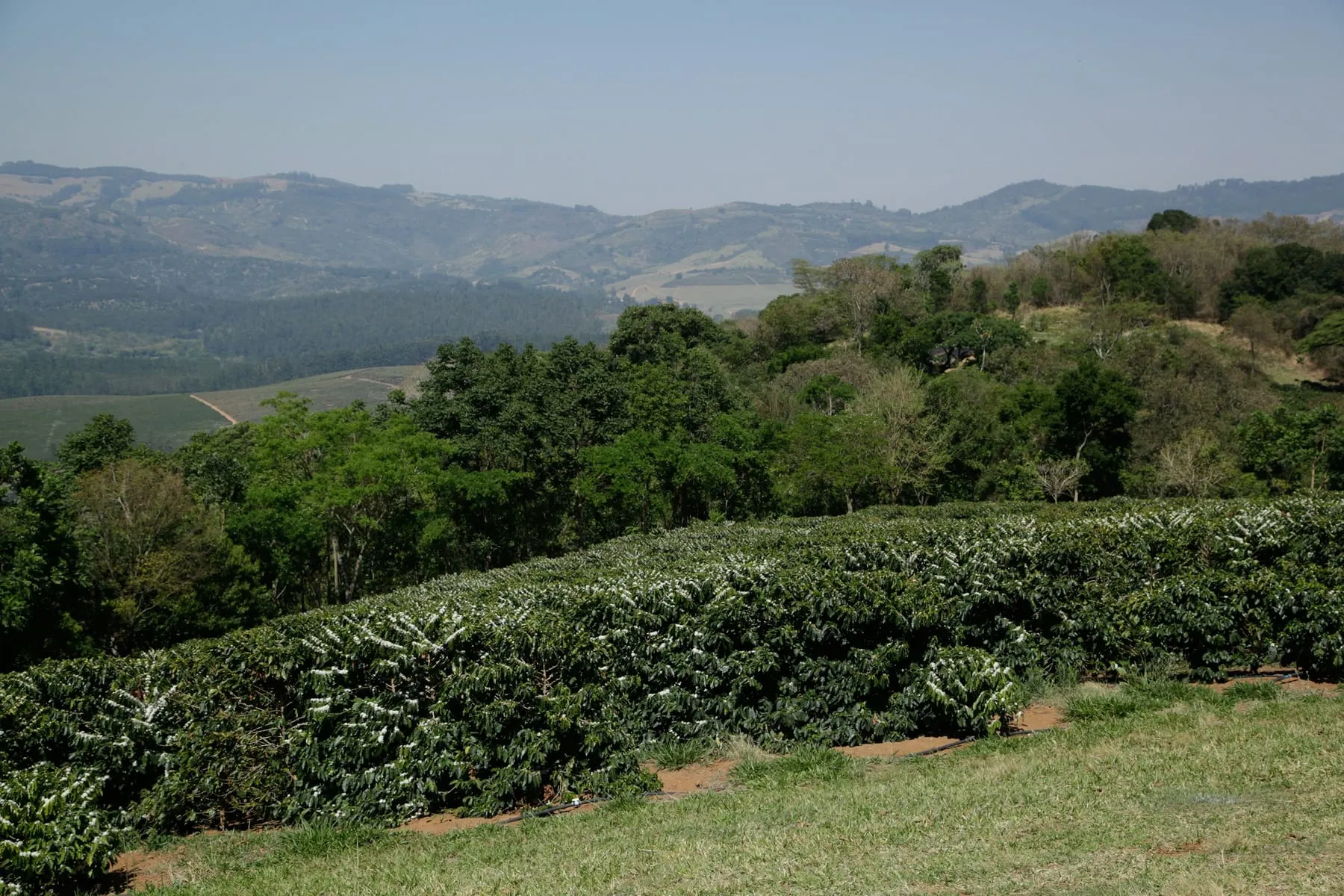
- 2In a Brazilian mountain-coffee trial the drone gave 6.98% coverage on the upper canopy against 28.70% for the pneumatic sprayer.
- 3The same trial found no significant difference in control of coffee leaf rust and brown eye spot.
- 4Example: 100 ha of coffee needs about 4.5 flying hours with an Agri 50 or about 10 hours with an Agri 30, before slowing for dense canopy.
- 5No coffee-specific drone service price was found; use a clearly labelled assumption and test it on a pilot estate.
Contents
Short answer: In 2026 drone spraying on coffee works best as a speed and access tool, not a coverage upgrade. In a Brazilian mountain-coffee trial the drone put far less spray on the canopy than a pneumatic sprayer, yet leaf rust and brown eye spot control did not differ significantly. Sell fast work on slopes and after rain, and prove it on a pilot estate.
What do the coffee trials actually say?
| Trial | Setup | Result |
|---|---|---|
| Agronomy, 2023 (Brazil, mountain coffee) | Drone against pneumatic sprayer, 15 L/ha fungicide | Upper-canopy droplet coverage 6.98% for the drone against 28.70% for the pneumatic sprayer (4.11 times more). Drone deposition 1.60 / 1.04 / 0.43 µL/cm² in upper, middle and lower canopy; pneumatic upper canopy 42.67 µL/cm² (26.7 times more). Disease control rated efficient with no significant difference |
| Revista Cultivar, 2025 (Federal University of Uberlândia) | 10 L drone, 4 m swath, 1.5 m above canopy, 10.2 km/h; trees 2.7 m tall, rows 3.8 m apart | Air-induction nozzles with mineral oil gave the highest deposition; 10 and 20 L/ha gave no difference in deposition |
Take the message honestly: the drone leaves the lower canopy thinly covered, but the trial found the disease control the same. One trial is not a guarantee for your variety, rust pressure or product.
Do drones control coffee leaf rust?
The Brazilian trial says a drone application of fungicide was efficient against coffee leaf rust and brown eye spot. DJI’s case study describes flowering and fruit set as the key periods for borer and rust control. That is a vendor view. Always follow the product label and local rules for which fungicide may be flown.
Can drones spray coffee on slopes?
DJI’s case study gives two Brazilian farms, quoted here as the vendor’s numbers:
- 74.5 ha of conilon in Espírito Santo: 10 to 16 days by the usual method, against 12 to 15 hours by drone.
- A 3 ha mountain block with 15,000 plants: a few days against about 2 hours, 35 L of mix against 2,000 L, and labour down 70%.
- Tractor passes damage branches, which DJI says costs 5 to 10% of yield.
These are single-farm claims. They explain why growers listen, but they are not independent data.
What does 100 ha of coffee cost to spray by drone?
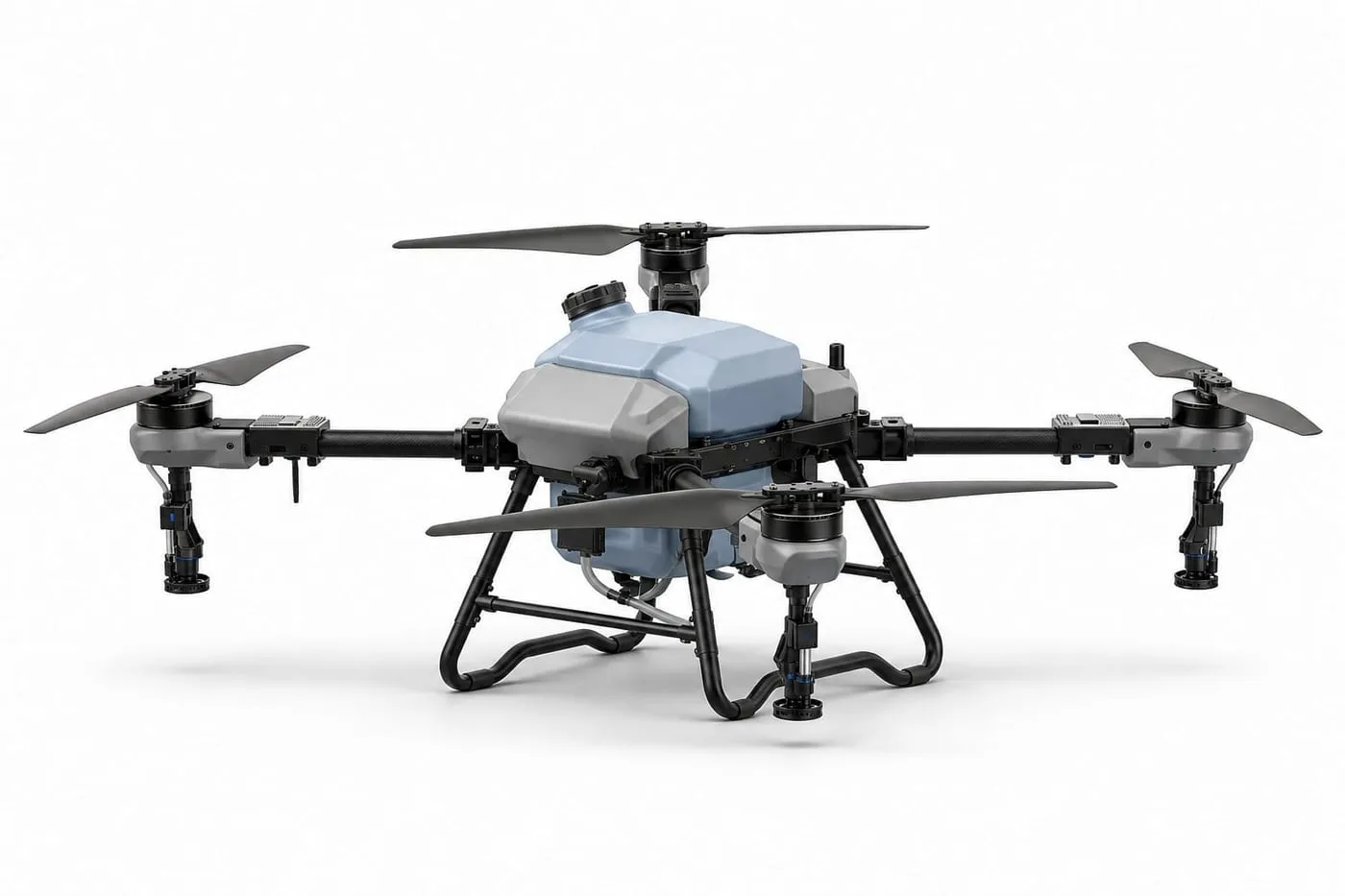
Example: 100 ha ÷ 10 ha/h (Agri 30) = 10 flying hours, or about 1.25 machine-days; with an Agri 50 at 22 ha/h it is about 4.5 hours. Dense canopy and uneven rows will make real hours higher. At 15 L/ha an Agri 30 sprays two hectares per 30 L tank.
No coffee-specific service price was found. If you assume US$ 12 per hectare per round (example only, not a market price), 100 ha earns US$ 1,200 per round, which is a number a pilot estate can confirm or reject. Machines in this class are the Agri 30, Agri 40 and Agri 50.
Is drone spraying legal in Brazil?
The US International Trade Administration reports that Brazil’s agriculture ministry (MAPA) issued rules in September 2021 for drone spraying, with registration of operations, and aircraft registered with the civil aviation authority (ANAC). A Chinese manufacturer’s compliance summary says ANAC updated its rules in 2026; treat that as a pointer, not as advice. In Kenya, Ethiopia, Colombia or Vietnam, ask the local aviation and crop-protection authorities. We found no official coffee-drone figures for those countries.
What should a dealer tell coffee growers?
Do not say “better coverage”. Say: no tractor damage, work after rain, hills no problem, fast rust rounds, and one Brazilian trial showing disease control equal to pneumatic spraying. Offer a 1–2 estate pilot with water-sensitive paper, then quote. Terrain tips from tea plantations apply. The dealer programme covers demo and training, and the spraying service guide covers pricing.
Questions dealers ask
- Can drones spray coffee plantations on slopes?
- Yes, and slopes are one of the best reasons. A drone does not need tracks between the rows, and it can work after rain when a tractor would damage branches or get stuck. Train pilots on your own terrain and cap flying speed on steep blocks.
- Do drones cover coffee leaves as well as a pneumatic sprayer?
- No, not in the Brazilian trial. Upper-canopy coverage was 6.98% for the drone against 28.70% for the pneumatic sprayer, and deposition fell towards the lower canopy. The trial still found equal control of leaf rust, so position drones as faster, not more thorough.
- Do drones control coffee leaf rust?
- In that trial, yes: fungicide applied by drone was judged efficient and did not differ significantly from pneumatic spraying. It is one study in one region, so run your own comparison with the product label.
- How many hectares of coffee can a drone cover in a day?
- At the reference rates, an Agri 30 covers about 80 ha and an Agri 50 about 176 ha in eight flying hours on open ground. Dense canopy and uneven rows lower this, so plan on less.
- Is drone spraying legal in Brazil?
- Brazil regulates agricultural aviation through MAPA, which requires registration and trained pilots, and the aircraft are registered with ANAC. A manufacturer's summary says the rules were updated in 2026, so check with the authorities before operating.
References
- [1]Efficiency of aerial spraying of coffee with drones. Revista Cultivar.
- [2]Efficiency of Fungicide Application Using an Unmanned Aerial Vehicle and Pneumatic Sprayer in Mountain Coffee Crops. Agronomy (MDPI, 2023).
- [3]Growing Coffee in Brazil with Drones. DJI Agriculture (vendor case study).
- [4]Brazil Drones for Spraying. U.S. International Trade Administration.