Guides
Pricing Spray Drones for Resale: From Landed Cost to Quote Sheet (2026)
How dealers set the retail price of a spray drone in 2026: landed cost, markup, bundles, service prices and a worked quote sheet using reference price ranges.
- Prepared by
- DEWKITE Sales Team
- Published
- Reading time
- 3 min
- Sources
- 4
Key takeaways
- 1Price from landed cost, not from FOB: in our example, FOB 11,500 becomes 14,030 landed and 17,500 at retail, a hardware margin of about 20 %.
- 2Retail price formula: landed cost ÷ (1 − target margin); a 20 % margin means landed cost × 1.25.
- 3Sell bundles, not just machines: generator, training, first-year parts and service plans carry higher margins than the airframe.
- 4DEWKITE public reference prices are FOB ranges, not price promises; the retail price is the dealer's own after tax, freight and service costs.
- 5Do not cut the price to win a sale; cut the bundle or add training, which costs you less than discount.
Contents
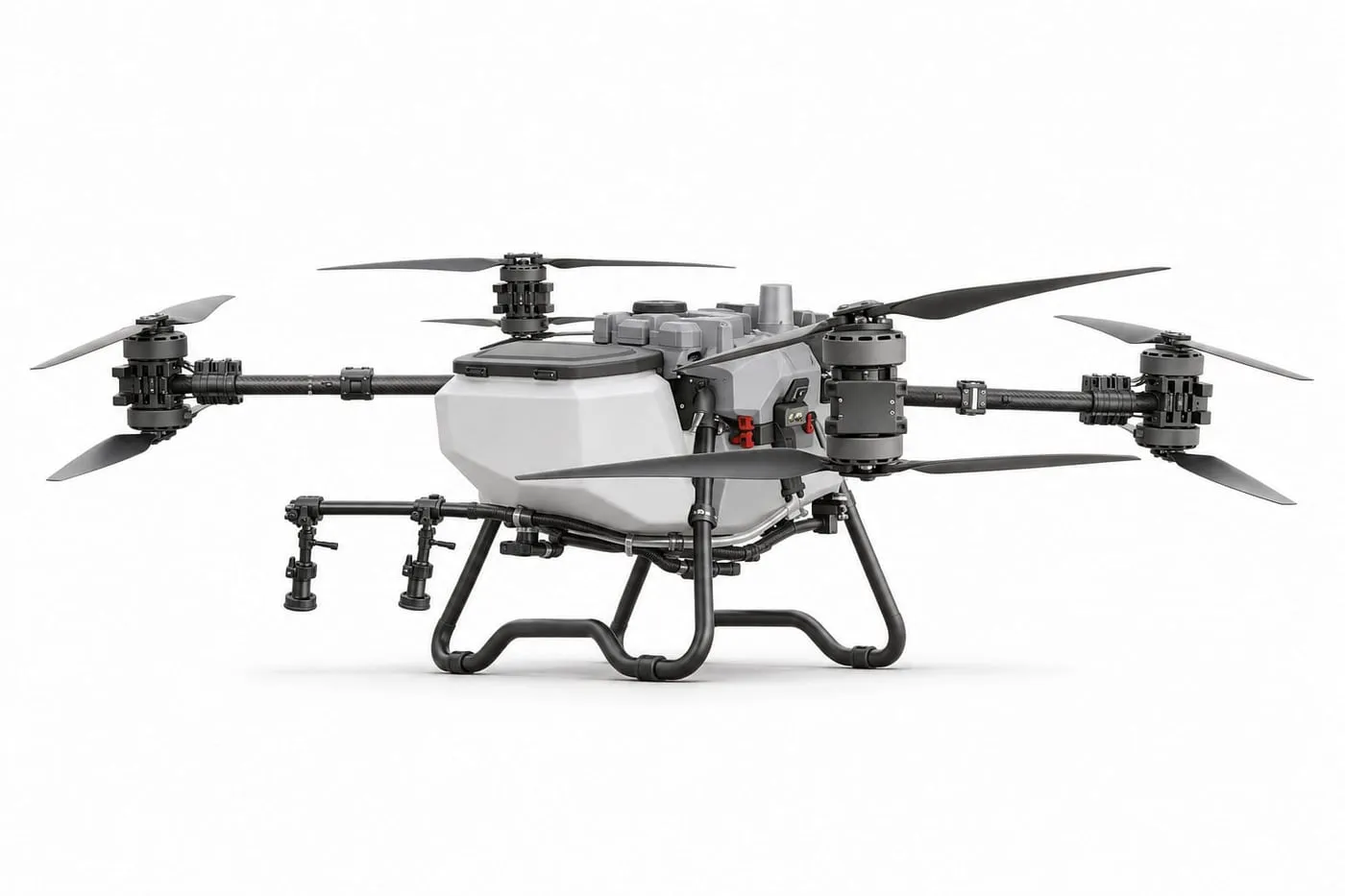
Short answer: Dealers price a spray drone backwards from landed cost. In our 2026 example, a 50 L set with an FOB price of US$ 11,500 lands at US$ 14,030 and sells at US$ 17,500, about 20 % gross margin. Use retail = landed cost ÷ (1 − margin), then add bundles and services where the margin is better. The numbers below are examples built on public reference ranges, not DEWKITE price promises.
From landed cost to retail price
| Step | Example (US$) |
|---|---|
| FOB price, 50 L set | 11,500 |
| Freight, insurance, duty, clearing, inland transport (example 22 %) | 2,530 |
| Landed cost | 14,030 |
| Target gross margin | 20 % |
| Retail price = 14,030 ÷ 0.80 | 17,538, rounded to 17,500 |
What retail band do the reference ranges give?
Public FOB reference ranges move a lot because configurations differ. Apply the same example uplift (22 % landing, 20 % margin) to get a rough retail band. Your own freight, duty, tax and margin will change it.
| Model | FOB reference range (US$) | Example retail band (US$) |
|---|---|---|
| Agri 50 | 8,900–21,100 | about 13,600–32,200 |
| Agri 100 | 22,700–29,100 | about 34,600–44,400 |
| Agri 150 | 28,900–34,800 | about 44,100–53,100 |
For outside comparison, one manufacturer’s guide lists large drones with controller at US$ 15,000–40,000, three batteries at US$ 1,800–5,000 and a charger and generator at US$ 2,000–5,000. Those are one company’s figures for the US market.
How do bundles lift the margin?
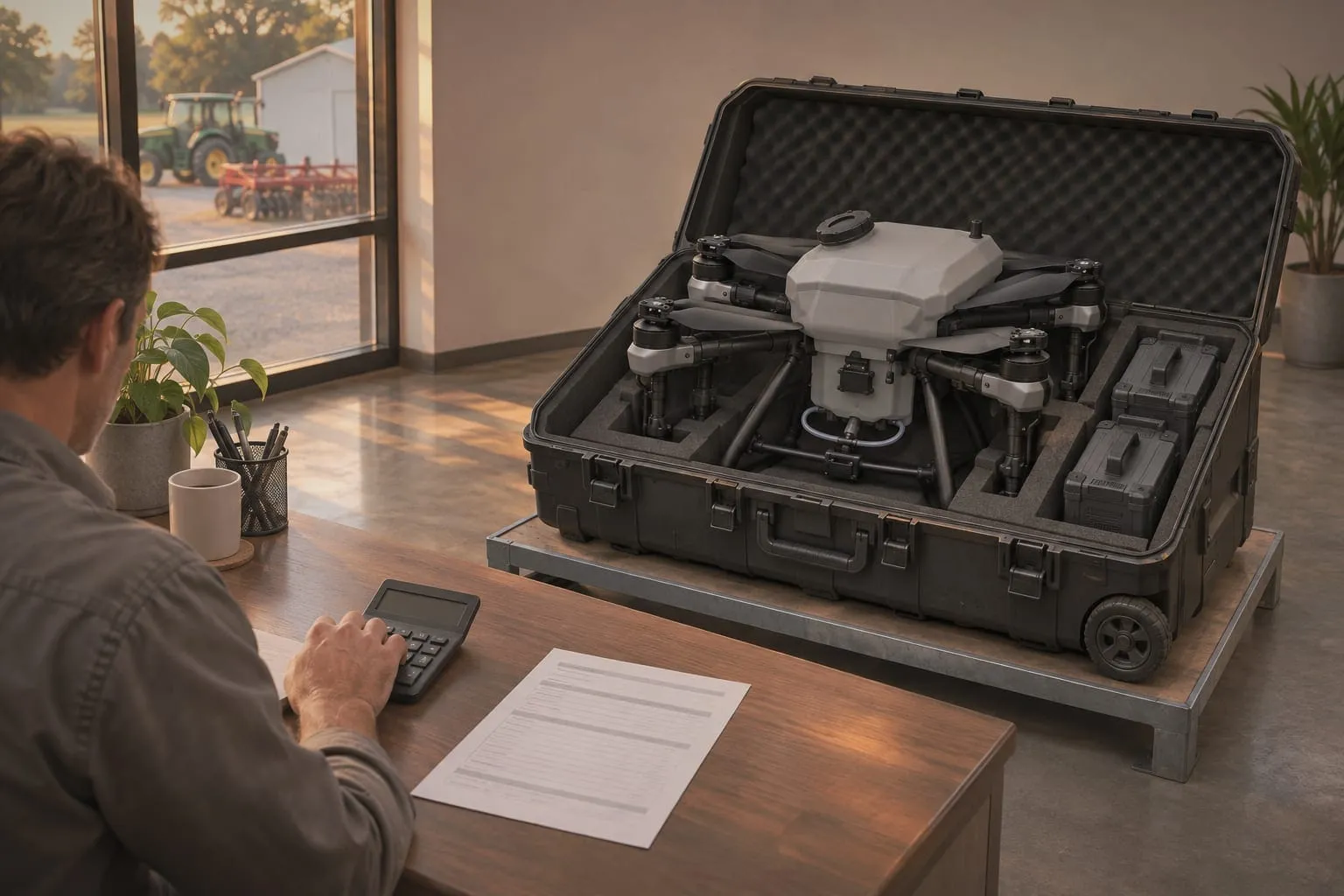
Selling only the airframe is the most competitive part of the deal. A manufacturer’s price guide makes the same point: the real margin is in the complete solution. Here is an example quote sheet.
| Line | Dealer cost | Quote | Margin |
|---|---|---|---|
| Drone, 3 battery sets, charger | 14,030 | 17,500 | 20 % |
| Field generator | 1,300 | 1,800 | 28 % |
| Training day (two people) | 150 | 400 | 63 % |
| First-year parts pack | 600 | 900 | 33 % |
| Service plan (one pre-season check) | 80 | 250 | 68 % |
| Bundle | 16,160 | 20,850 | 22 % |
The bundle margin rises only a little, but the customer gets a working set and you earn on parts and service all year. For a parts plan by fleet size, see the spare parts list.
What should I charge for services?
A US pricing guide puts drone spraying at US$ 8–40 per acre, commonly 12–25, with small fields over 30 and large contracts at 12–18. In metric units that is roughly US$ 30–62 per hectare for the common band. A US directory lists weekly rental at US$ 2,000–8,000 for similar machines. Set your service price from your own cost per hectare: the University of Missouri example counts total ownership at US$ 12.27 per acre for a farmer with 1,000 acres a year and US$ 7.39 for a custom applicator with 4,000 acres, both in the US with a 40 L class machine.
When should I not cut the price?
A discount comes straight off a margin of about 20 %. A 5 % cut on 17,500 is 875, a quarter of your hardware margin. Offer a training day, a spare battery or a service plan instead, which cost you less than they look to the buyer. Volume price levels for dealers are agreed in writing in the dealer programme; see also the wholesale price guide and the price guide.
Questions dealers ask
- How much should a dealer mark up a spray drone?
- There is no standard. A working rule is to target a gross margin of around 20 % on the machine and more on parts and service, then test against what local buyers pay. Markup on landed cost is 25 % when margin is 20 %.
- How much is a 50 litre spraying drone at retail?
- Our Agri 50 lists at US$ 8,900–21,100 FOB depending on configuration. Retail adds freight, duty, tax and the dealer's margin, so the shelf price in your country will be higher; other brands and markets differ.
- How much does a farming drone typically cost?
- A manufacturer's price guide lists a drone plus controller at US$ 15,000–40,000 for large machines in the United States, with three batteries about US$ 1,800–5,000. Treat it as one manufacturer's view, not a market average.
- How much do contractors charge per hectare?
- A US pricing guide gives US$ 8–40 per acre for drone spraying, commonly 12–25. That is roughly US$ 30–62 per hectare. Small fields cost more per unit; large contracts less.
- Should a dealer publish prices?
- Publish ranges and bundles, and keep the exact price for a quote. Buyers compare spec sheets, so show what is in the price: batteries, charger, training and parts.
References
- [1]G1274 Economics of Drone Ownership for Agricultural Spray Applications. University of Missouri Extension.
- [2]Drone Spraying Cost Per Acre. DroneBundle.
- [3]Crop Spraying Drone Price Breakdown. EAVISION (manufacturer news).
- [4]Agricultural Drone Rental. Ag Drone Directory.