Guides
Renting Out Spray Drones in 2026: Dry Hire, Wet Hire and the Maths
How to rent out agricultural drones in 2026: dry versus wet hire, example weekly prices and deposits, damage rules and a payback sum for one machine.
- Prepared by
- DEWKITE Sales Team
- Published
- Reading time
- 3 min
- Sources
- 4
Key takeaways
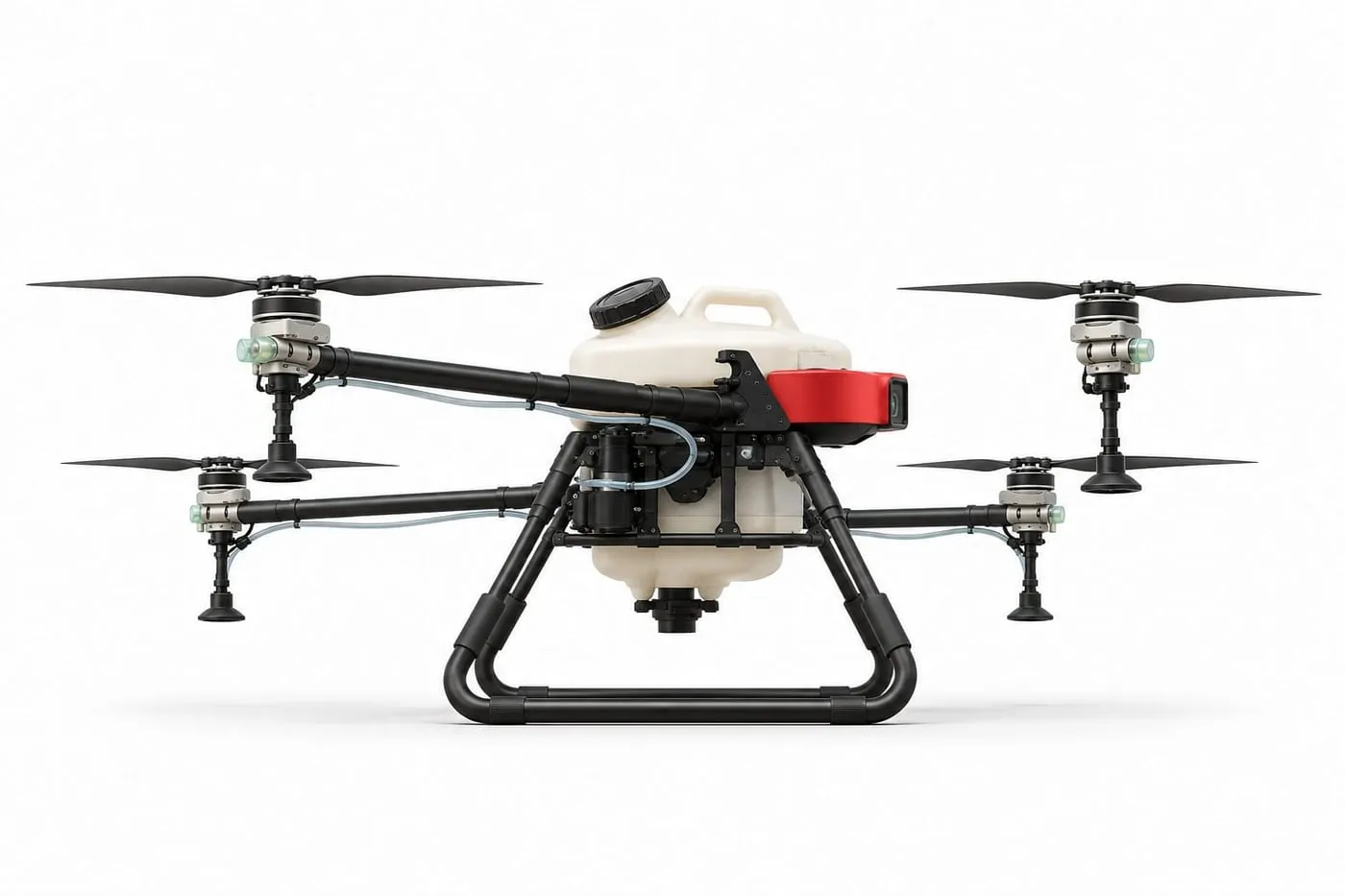
- 1Dry hire rents the drone to a licensed customer; wet hire rents the drone with your pilot, usually priced per hectare.
- 2US rental benchmarks run from about US$ 400 to 600 a day for large spray drones, with deposits of US$ 2,000 to 3,500 and weekly rates from about US$ 1,600 to 2,750.
- 3Example: one 50 L machine rented 12 weeks at US$ 1,750 earns about US$ 21,000, and pays back its landed cost in about 0.9 years.
- 4At 6 rental weeks the same machine takes about 2 years, so utilisation is the number to watch.
- 5Write damage rules before the first hire: who pays for motors, arms, pumps and crash parts.
Contents
Short answer: Renting out a spray drone pays if the machine is hired for roughly 9 to 12 weeks a year. In our 2026 example, a 50 L machine at US$ 1,750 a week earns about US$ 21,000 over 12 weeks and pays back its landed cost in about 0.9 years; at 6 weeks it takes about 2 years. Choose dry hire (the customer flies) or wet hire (your pilot flies, priced per hectare) before you set a price.
What is the payback for one rented machine?
Example for one 50 L set with landed cost US$ 14,030. The weekly price follows the 30 L class at US benchmark rates, an example only.
| Item | 6 weeks | 9 weeks | 12 weeks |
|---|---|---|---|
| Rental income at 1,750 a week | 10,500 | 15,750 | 21,000 |
| Wear, cleaning, handling at 250 a week | 1,500 | 2,250 | 3,000 |
| Insurance (1,500 a year) and admin (600) | 2,100 | 2,100 | 2,100 |
| Net before depreciation | 6,900 | 11,400 | 15,900 |
| Payback on 14,030 | 2.0 years | 1.2 years | 0.9 years |
Dry hire or wet hire?
| Dry hire | Wet hire (with operator) | |
|---|---|---|
| Who flies | Customer, licensed | Your pilot |
| Price basis | Per day, week or month | Per hectare or per job |
| Main risk | Crash damage, misuse | Weather days, pilot cost |
| Compliance | Check the hirer’s licences | You hold the licences |
| Best for | Experienced operators | Farms new to drones |
A US operator’s rate card for dry hire sets conditions: renters aged 25 or older, a Part 107 certificate, Part 137 and a state applicator licence for spraying, and liability and hull insurance or a damage waiver. The FAA says Part 137 governs dispensing from a drone and it is checking exemption holders against their conditions. Outside the US, ask your own authorities.
What do other rental companies charge?
All figures are US benchmarks for DJI-class and similar machines, not DEWKITE prices.
| Class | Per day | Per week | Per month | Deposit |
|---|---|---|---|---|
| 40 L flagship | 600 | 2,750 | 8,250 | 3,500 |
| 30 L class | 400 | 1,750 | 5,250 | 2,500 |
| 20 L class | 375 | 1,600 | 4,800 | 2,000 |
An extra battery is listed at US$ 75 a day. A US directory adds that a trailer and mixing station can cost US$ 500–1,500 more per week.
Who rents, and why?
Rent-to-buy farmers testing before purchase, spray services short of machines in peak weeks, and farms with a single seasonal job. A US directory notes that a spraying service at US$ 12–22 an acre is almost always cheaper than renting unless a farm covers about 800–1,500 acres a year, so your best dry-hire customers are contractors and large farms.
What rules protect the machine?
| Item | Rule (example) |
|---|---|
| Deposit | Equal to a motor, arm and pump replacement plus a margin |
| Handover check | Photos, battery cycle count, nozzles, pump, firmware |
| Customer pays | Crash damage, lost parts, late return days |
| You pay | Normal wear, faults inside warranty |
| Return check | Same list, signed by both |
| Damage waiver | Optional fee, with an excess |
Wear parts and crash spares come from the spare parts range. For longer-term deals see the leasing guide; for the demo machine’s cost, see the demo unit guide. The Agri 50 and Agri 30 are common rental sizes, and the dealer programme gives the supplier terms.
Questions dealers ask
- How expensive is it to rent an agricultural drone?
- US benchmarks: one operator lists large spray drones at US$ 375–600 a day, US$ 1,600–2,750 a week and US$ 4,800–8,250 a month, with deposits of US$ 2,000–3,500. A US directory gives US$ 2,000–8,000 a week for a wider range of machines.
- Is renting cheaper than hiring a spraying service?
- For small areas, usually not. A US directory states that a spraying service at US$ 12–22 per acre is almost always cheaper than renting, until a farm sprays about 800–1,500 acres or more a year.
- Who needs a licence to rent a spray drone?
- Whoever flies it. One US rental operator asks for a Part 107 pilot certificate and, for spraying, Part 137 plus a state applicator licence. In other countries, check with the aviation authority and the crop-protection office.
- Should I offer wet hire or dry hire?
- Start with wet hire if your customers lack licensed pilots, and move to dry hire for experienced operators. Wet hire pays per hectare, dry hire per day or week.
- What insurance do I need?
- Hull cover for the drone and liability cover for the operator. A US directory quotes operator liability at US$ 600–2,000 a year; rental insurance for the hirer at US$ 100–400 a week. Local quotes decide.
References
- [1]Agricultural Drone Rental. Ag Drone Directory.
- [2]Drone Rental Made Easy. DroneX.
- [3]Agriculture Drone Services. Alpha Drones USA.
- [4]Dispensing Chemicals and Agricultural Products (Part 137) with UAS. FAA.