Guides
Agricultural Drone Parts Explained: Names and Functions for New Dealers (2026)
Names and jobs of the parts on a spray drone: frame, motors, ESC, nozzles, pumps, radar, RTK, battery. A plain-English table for new dealers, 2026.
- Prepared by
- DEWKITE Sales Team
- Published
- Reading time
- 4 min
- Sources
- 5
Key takeaways
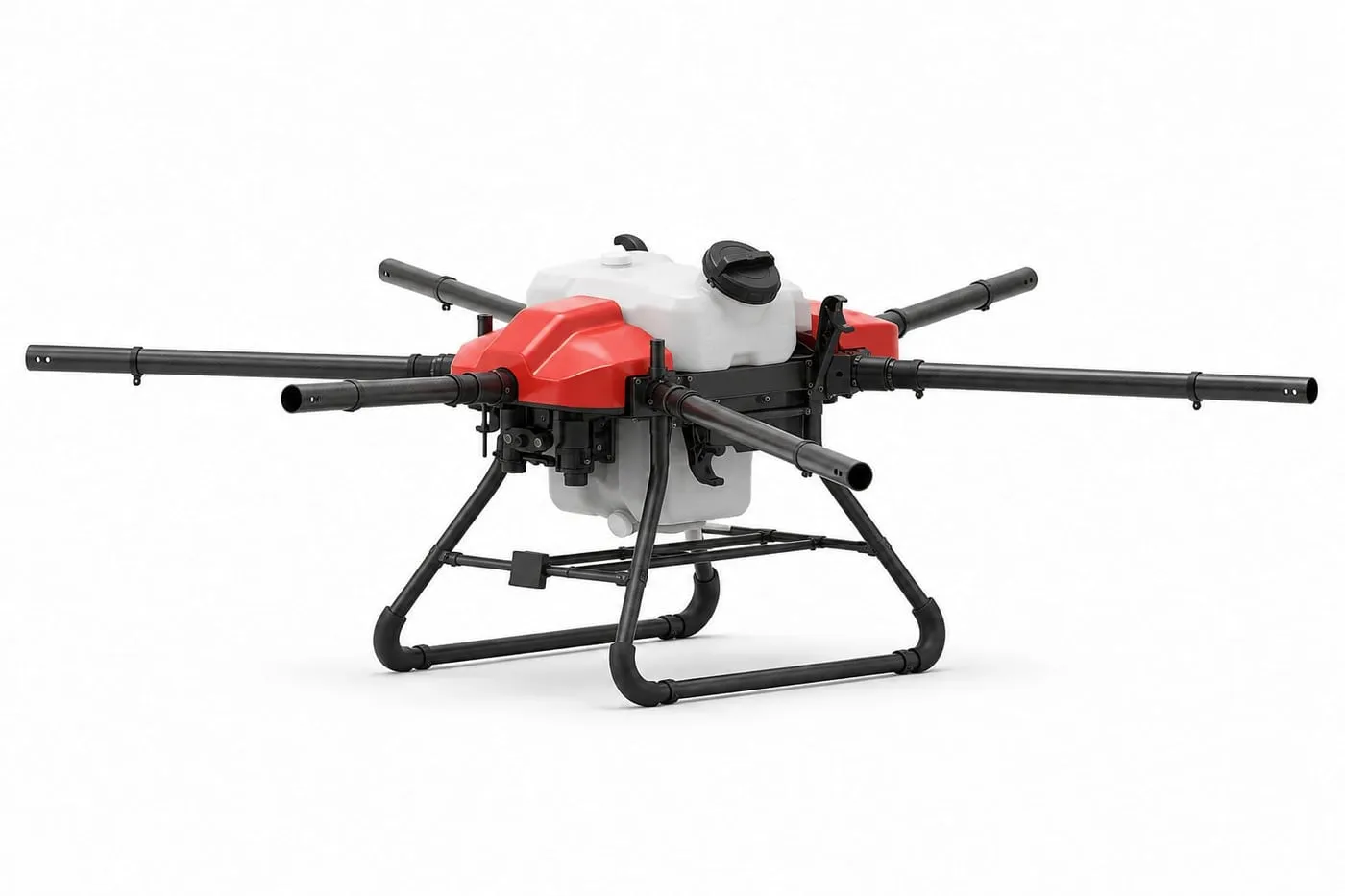
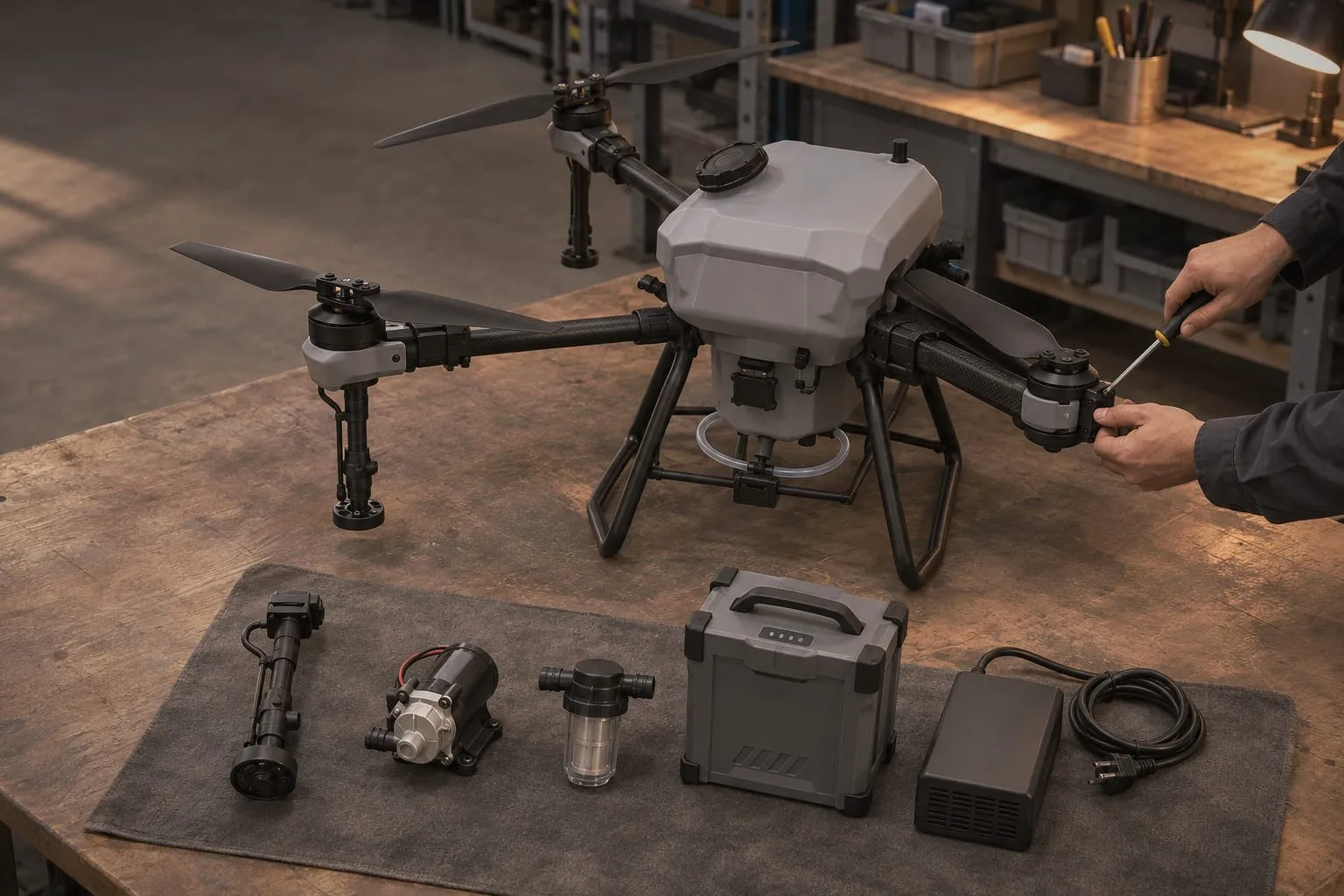
- 1A spray drone has five systems and roughly fifteen to twenty part types: airframe, power, spraying or spreading, navigation and control, and energy.
- 2The parts that wear out first are propellers, nozzles, pump parts and batteries, so a new dealer should learn those names before any others.
- 3Centrifugal nozzles spin a disc to make droplets; pressure nozzles force liquid through a small opening. Their spare parts are different.
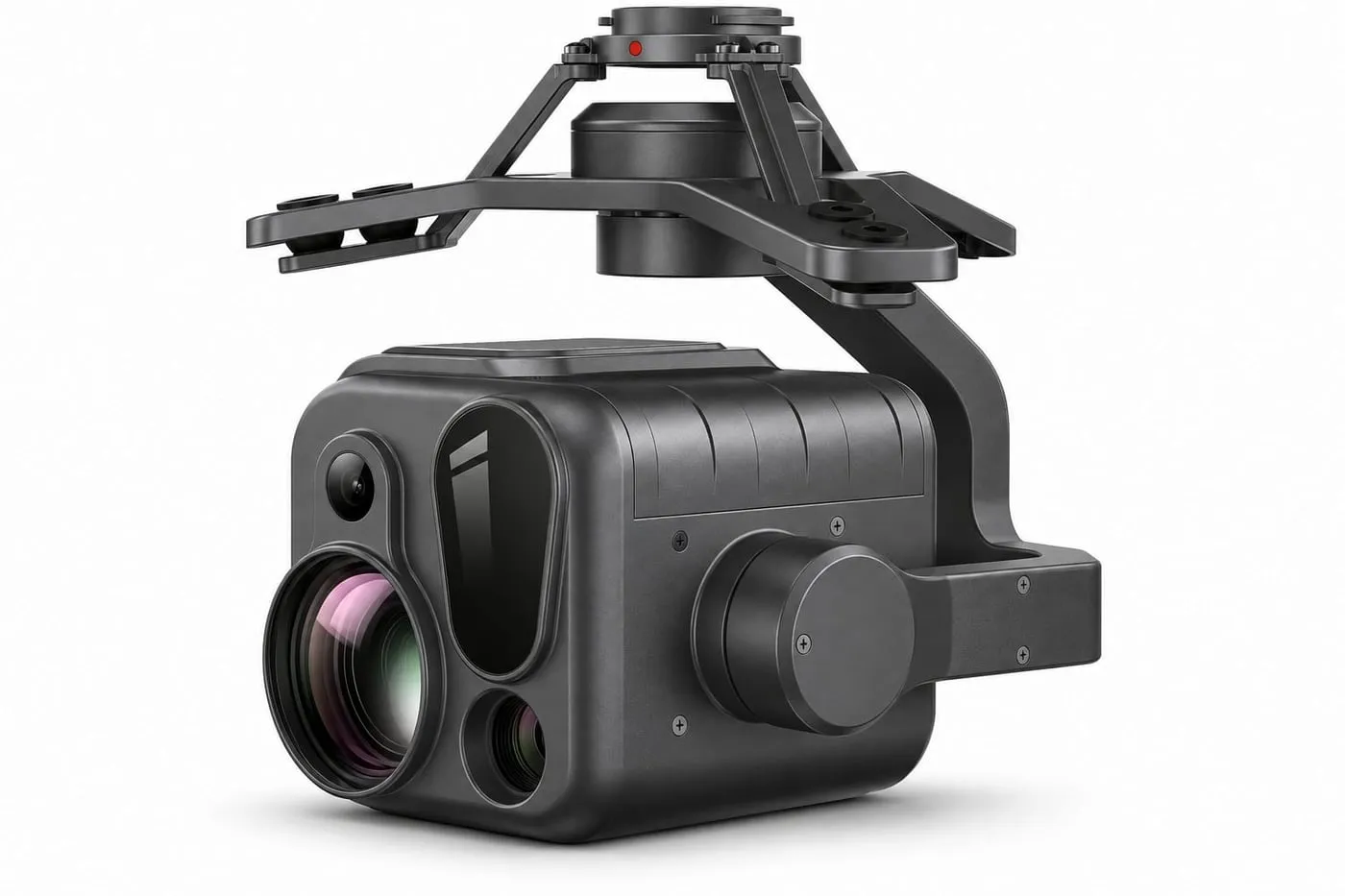
- 4Radar keeps the drone off obstacles and at a steady height above the crop; RTK keeps its position accurate to centimetres.
- 5When you order a part, quote the model, the part name and a photo; parts rarely fit across drone sizes.
Contents
Short answer: In 2026 a spray drone is five systems: airframe, power, spraying or spreading, navigation and control, and energy. That is about fifteen to twenty part types, and the ones a dealer replaces most are propellers, nozzles, pump parts and batteries. Learn those four names first, then the rest of the table below.
Why does a dealer need the names?
A service desk runs on part names. A customer who writes “the thing that sprays is dead” costs you a day; one who writes “left centrifugal nozzle, spinner not turning” gets a part in the post.
Example: a dealer services ten eight-rotor machines, so 80 propellers are in the field. If one in ten is damaged in a season (an assumption, not a statistic), that is 8 propellers and a quick visit. Eight is a shelf order, not an emergency, which is why the first shelf is built around the cheap, fast-wearing parts.
| System | Parts in it | What it earns the dealer |
|---|---|---|
| Airframe | Frame, arms, landing gear | Rare, costly repairs after crashes |
| Power | Motors, ESCs, propellers | Frequent small parts |
| Spraying and spreading | Tank, pump, hoses, filter, flow meter, nozzles, spreader | Most of the wear items |
| Navigation and control | Flight controller, GNSS or RTK, radar, camera, remote | Software help, replacements |
| Energy | Batteries, charger, generator | Steady battery and charger sales |
Which parts make up an agriculture drone, and what are they called?
| Part (also called) | What it does | Warning sign | Stock class |
|---|---|---|---|
| Frame and arms | Hold every other part; arms fold for the road | Hairline cracks at hinges | Rare |
| Motor | Spins one propeller | Heat, grinding noise, vibration | Common repair |
| ESC (electronic speed controller) | Tells a motor how fast to turn | A motor that stutters or stops | Common repair |
| Propeller | Produces the lift | Chips, bends, wobble | Wear item |
| Tank | Holds the liquid, with a level sensor | Leaks, a sensor that reads wrong | Rare |
| Pump | Pushes liquid to the nozzles | Weak flow, whining | Wear item |
| Hoses and filter | Carry the liquid and trap debris | Sun-cracked or stained hose, clogged filter | Wear item |
| Flow meter | Reads litres per minute | A rate on screen that does not match the work | Common repair |
| Nozzle (rotary atomiser, spinner) | Breaks liquid into droplets | Streaky pattern, dripping | Wear item |
| Flight controller | The on-board computer | Self-check fails at start-up | Rare |
| RTK module, GNSS antenna | Fixes position to centimetres | Wandering passes, lost fix | Common repair |
| Radar | Senses obstacles and height | Unexpected stops, poor height holding | Common repair |
| Battery | Stores the energy | Swelling, shorter flights | Wear item |
| Charger or generator | Refills the batteries | Will not charge, error codes | Common repair |
The tank, pump, hoses, filters, nozzles and flow meter are the same parts found on a ground sprayer, with GNSS and obstacle sensors on top, as Ohio State’s fact sheet lists them.
Centrifugal or pressure nozzle: how do they differ?
Virginia Tech sorts spraying systems into hydraulic nozzles (flat-fan tips, for example) and rotary atomisers (a disc or cup). Purdue notes that the rotary type needs no tip change to alter droplets, blocks less often and copes with thicker mixes, but the extra motor costs weight and battery. Hydraulic tips give wider choice of flow and droplet size. Their limit is the pump: a tip that passes too much liquid leaves the pump short.
On our data sheets the Agri 50 carries two centrifugal nozzles (30–500 μm) and two pumps; the Agri 100 has four centrifugal nozzles and two pumps up to 24 L/min; the Agri 150 has two pumps up to 60 L/min; the Agri 72 keeps 16 high-pressure nozzles. Different systems mean different spares.
What does the radar do, and what does RTK add?
Radar measures distance: forward and rear units look for obstacles, a downward unit holds height over the crop. The Agri 100 lists front and rear obstacle radar plus a terrain-following radar; the Agri 150 has a 360° obstacle radar. RTK corrects the satellite position; the Agri 30 lists BeiDou, GPS and GLONASS with RTK. Radar stops collisions, RTK keeps rows straight.
Which parts wear out fastest?
Propellers, nozzles, pump parts and batteries. Purdue’s end-of-season checklist adds frame cracks, sun-cracked hoses and swollen batteries. Counts and lifetimes are in our spare parts list and the lifespan guide; this page only names things.
How do I order the right part?
Send the model name, the part name from the table and a photo, which is how our parts page asks for it. Do not assume a part fits another size: arms, motors and pumps rarely carry across drone classes. See the spare parts page and the frames range for what is listed, and the dealer programme for how a first parts shelf is agreed.
Short glossary
- ESC: electronic speed controller for one motor.
- RTK: real-time kinematic correction for centimetre position.
- GNSS: satellite positioning (GPS, BeiDou, GLONASS).
- Terrain-following radar: holds a set height above the crop.
- Rotary atomiser: spinning disc nozzle.
- Flow meter: reads litres per minute.
- Flight controller: the on-board computer.
- BMS: battery management system inside a smart battery.
- Swath: width sprayed in one pass.
- Spreader: hopper that throws granules.
Questions dealers ask
- What are the names of the parts used in an agriculture drone?
- The main ones are frame and arms, motors, electronic speed controllers (ESC), propellers, tank, pump, hoses, filter, flow meter, nozzles, flight controller, GNSS or RTK module, radar, camera, battery and charger. The table above gives the job of each.
- What does an ESC do on a spray drone?
- The electronic speed controller sits between the battery and each motor and sets how fast the motor turns on command from the flight controller. A failing ESC shows up as a motor that stutters, runs hot or stops.
- What is the difference between a centrifugal nozzle and a pressure nozzle?
- A centrifugal nozzle uses a motor-driven spinning disc or cup, so droplet size changes with disc speed. A pressure nozzle forces liquid through a fixed opening, so size changes with pressure and the nozzle fitted.
- What does the radar do on an agricultural drone?
- It measures distance. Forward and rear radar look for poles, trees and wires; a downward radar holds a steady height above the canopy on sloping or uneven ground.
- What spare parts should an agricultural drone dealer keep in stock?
- Begin with the wear items: propellers, nozzles, pump parts and filters, plus one extra battery set for the demo machine. Quantities per fleet size sit in the separate spare parts list guide.
References
- [1]Drones for Spraying Pesticides: Opportunities and Challenges. The Ohio State University CFAES.
- [2]Spray Drones in Agriculture: Technology, Regulation and Field Operations (SPES-819NP). Virginia Cooperative Extension.
- [3]6. Calibrating Spray Drones for Liquid Applications. Purdue Extension.
- [4]9. Drone Maintenance and Winterization. Purdue Extension.
- [5]10. Pesticide Labels: A Quandary for Clear Guidance. Purdue Extension.