Guides
Agricultural Drone Sales Agent in 2026: Commission Models and How to Start
Work as a drone sales agent in 2026: agent, dealer and distributor compared, example commission levels, territory terms and how to protect a deal.
- Prepared by
- DEWKITE Sales Team
- Published
- Reading time
- 3 min
- Sources
- 2
Key takeaways
- 1An agent sells on behalf of the supplier and earns a commission; a dealer or distributor buys the drones and resells them on their own account.
- 2We found no public benchmark for drone agent commission, so the levels in this guide are examples to negotiate from, not industry standards.
- 3A fair agreement names the territory, products, commission rate, when it is paid, and what happens to commission after the contract ends.
- 4The ICC publishes a model commercial agency contract for deals with no common international rules.
- 5An agent who proves demand with demos can move to dealer terms once there is a stocking order.
Contents
Short answer: An agricultural drone sales agent earns a commission on sales he brings the supplier, without buying stock. As an example to negotiate from, 5–8% of the unit price for a closed sale is a reasonable starting point, but we found no public benchmark, so agree it in writing. Agents with demos and training can earn more, and later move to dealer terms.
What does the commission look like? (example)
Example, not a market standard: three levels of agent work.
| Agent type | What the agent does | Example commission |
|---|---|---|
| Introducer | Passes a verified lead to the supplier | 3–5% of unit price |
| Sales agent | Follows up, quotes, closes the order | 5–8% |
| Field agent | Also runs demos, training and first service | 8–10% |
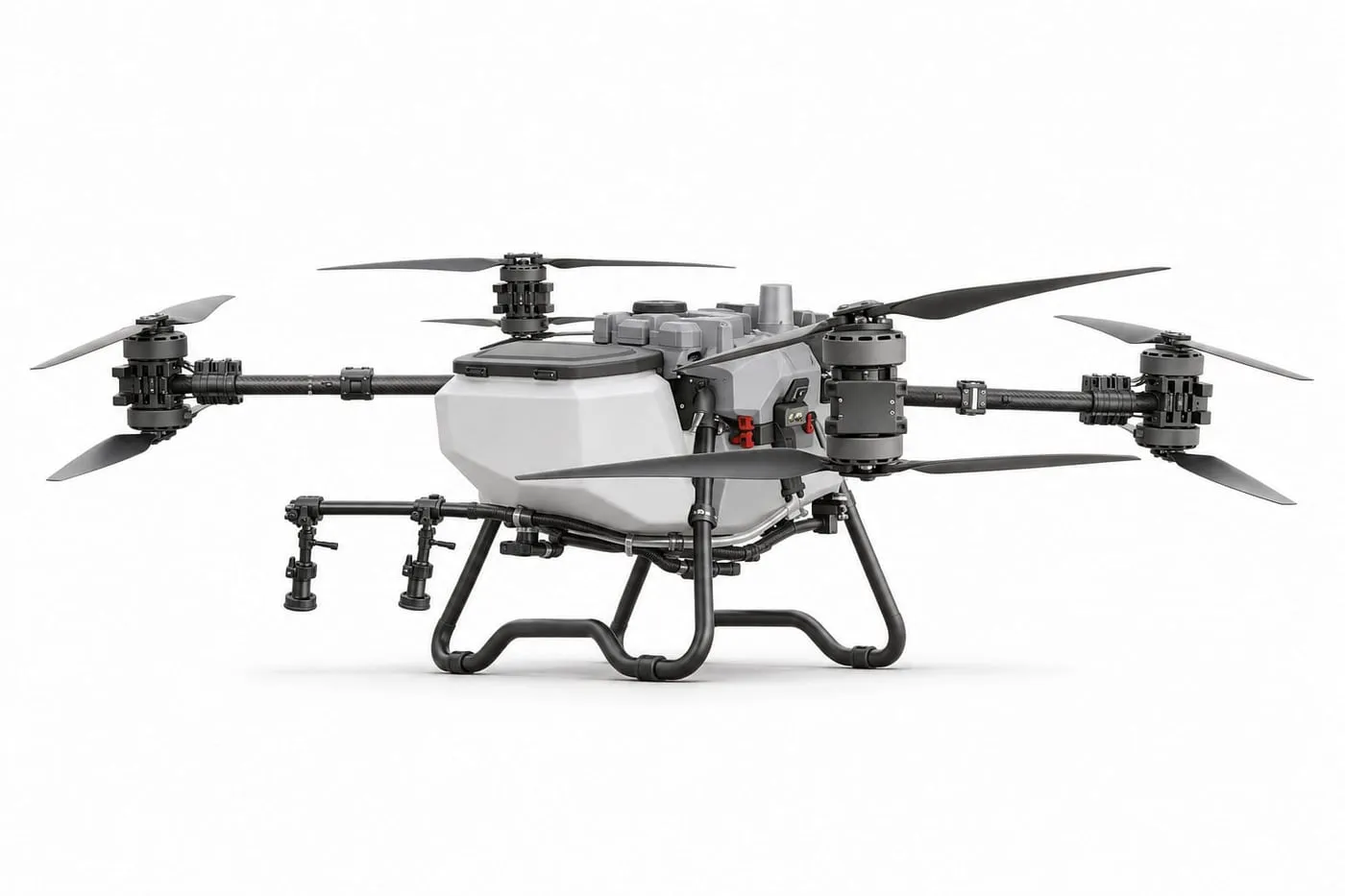
For an Agri 100 at the mid reference price of about US$ 25,900, 6% is US$ 1,554 per drone. Ten drones a year pay about US$ 15,540. A dealer buying the same ten drones earns the difference between purchase and resale price, but pays for stock and carries the risk.
What is the difference between agent, dealer and distributor?
| Agent | Dealer | Distributor | |
|---|---|---|---|
| Owns stock | No | Yes | Yes, often large |
| Earns | Commission | Resale margin | Margin plus sub-dealers |
| Risk | Low | Medium | Higher |
| Customer contract with | Supplier | Dealer | Distributor and sub-dealers |
| Start-up cash | Very low | Demo unit and parts | Stock and a service team |
ICC treats the two models as separate contracts: one for commercial agency and one for distributorship, where the distributor buys and resells or acts as importer. See our guide to distributor agreement clauses for the other side.
How do you protect an agent relationship?
An agent’s biggest risk is a customer lead that the supplier then sells to directly. Write these into the agreement:
- Territory: a named country, region or customer list
- Products: which models the agent may offer
- Commission: rate, trigger (order, payment or delivery) and payment date
- Registered leads: how a lead is logged, and how long it stays yours
- After termination: whether commission is due on orders from your leads
- Target and review: what happens if the sales target is not met
The ICC model agency contract has articles on territory and products, exclusivity and the agent’s commission, and the ICC says it reflects prevailing practice in international trade. It is a useful checklist even if you write your own. Some countries also give agents statutory rights on termination, so ask a local lawyer.
How do you start as an agent?
- Pick one area and one crop, for example rice or oil palm.
- Ask the supplier for a demo unit, a price sheet and training.
- Book ten demonstrations with growers and contractors.
- Log each lead in writing with name, date and model.
- Review after one season: if orders are regular, discuss dealer terms.
What does DEWKITE offer an agent?
Orders start at one unit. Each model page shows an FOB reference range, and the warranty is the industry-standard 12 months on main parts and 3 months on wear parts. Agents who turn into dealers use the same route described in how to become an agricultural drone dealer. Read the dealer programme, then look at the Agri 50, Agri 100 and Agri 150.
Questions dealers ask
- What is the difference between an agent and a dealer?
- An agent introduces buyers and takes a commission; the sale is between the supplier and the customer. A dealer buys the drones, owns the stock and sets their own resale price. ICC describes distributors as buyers and resellers, or importers organising distribution in their country.
- How much commission does an agricultural drone agent earn?
- There is no published industry rate. As an example, 3–5% for a lead only, 5–8% for a closed sale, and 8–10% where the agent also runs demos and training. Negotiate against the work you will do and the price the customer pays.
- Do I need a contract to be an agent?
- Yes. Even a short one avoids later arguments. The ICC model commercial agency contract is written for agency relations abroad, with clauses on territory, exclusivity and commission. Have a local lawyer check it for your country.
- Can an agent be the exclusive seller in a country?
- It can be agreed, usually with a minimum sales target and a review date. Exclusive rights without a target leave the supplier unable to act if sales stall.
- Can I start as an agent and become a dealer later?
- Yes. Many agents begin with a demo unit and commission-only sales, then switch to buying stock once customers return for batteries and parts.
References
- [1]ICC Model Commercial Agency Contract. International Chamber of Commerce.
- [2]ICC Model Contract: Distributorship. International Chamber of Commerce.