

Short answer: Selling agricultural drones in Egypt in 2026 starts with paperwork, not with a price list. Under Law 216 of 2017, importing, trading, holding and using drones needs a licence, and the executive regulation puts the Ministry of Defence in charge. A spray business also touches pesticide registration. Decide who holds the permit first, then plan crops, models and shipping.
What does the first year look like for an Egyptian importer?
| Stage | What happens | Typical lead time (example) |
|---|---|---|
| Months 1–2 | Choose the licence holder, collect commercial register and tax card, ask the civil aviation ministry what it needs | 4–8 weeks |
| Months 2–4 | File the permit application with quantity, specifications and destination | Authority should reply within 30 days |
| Months 4–5 | Ship one demonstration set; train one pilot and one technician | Sea freight plus clearance |
| Months 5–9 | Paid demonstration blocks for farm companies in wheat or maize | One cropping cycle |
| After first results | Order two to four machines with batteries and parts | Depends on the mix |
These are planning examples, not promises. A drone dealer’s biggest delay in a licensed market is the permit, so file early and do not order stock before it is granted.
Who issues drone permits in Egypt, and what do they ask?
| Question | What a law-firm summary says | What it means for you |
|---|---|---|
| Legal base | Law 216 of 2017, executive regulation 931 of 2018 | Import, manufacture, trade, possession and use are all covered |
| Authority | Ministry of Defence | Apply through the named licence holder |
| Application | Quantity, specifications, destination; commercial register or tax card; civil aviation ministry approval | Prepare one pack per shipment |
| Answer time | Within 30 days; no answer counts as refusal | Diarise day 31 |
| Licence term | Up to three years | Plan the renewal |
| Penalty | Prison and fines for unlicensed activity | Never ship before approval |
The source is a 2022 summary by a law firm, so read the current text with a local lawyer. The Ministry of Defence and the civil aviation ministry are the offices to ask; neither site carries a dedicated drone page. Our import documents guide lists what customs normally wants.
Which Egyptian crops suit drone spraying?
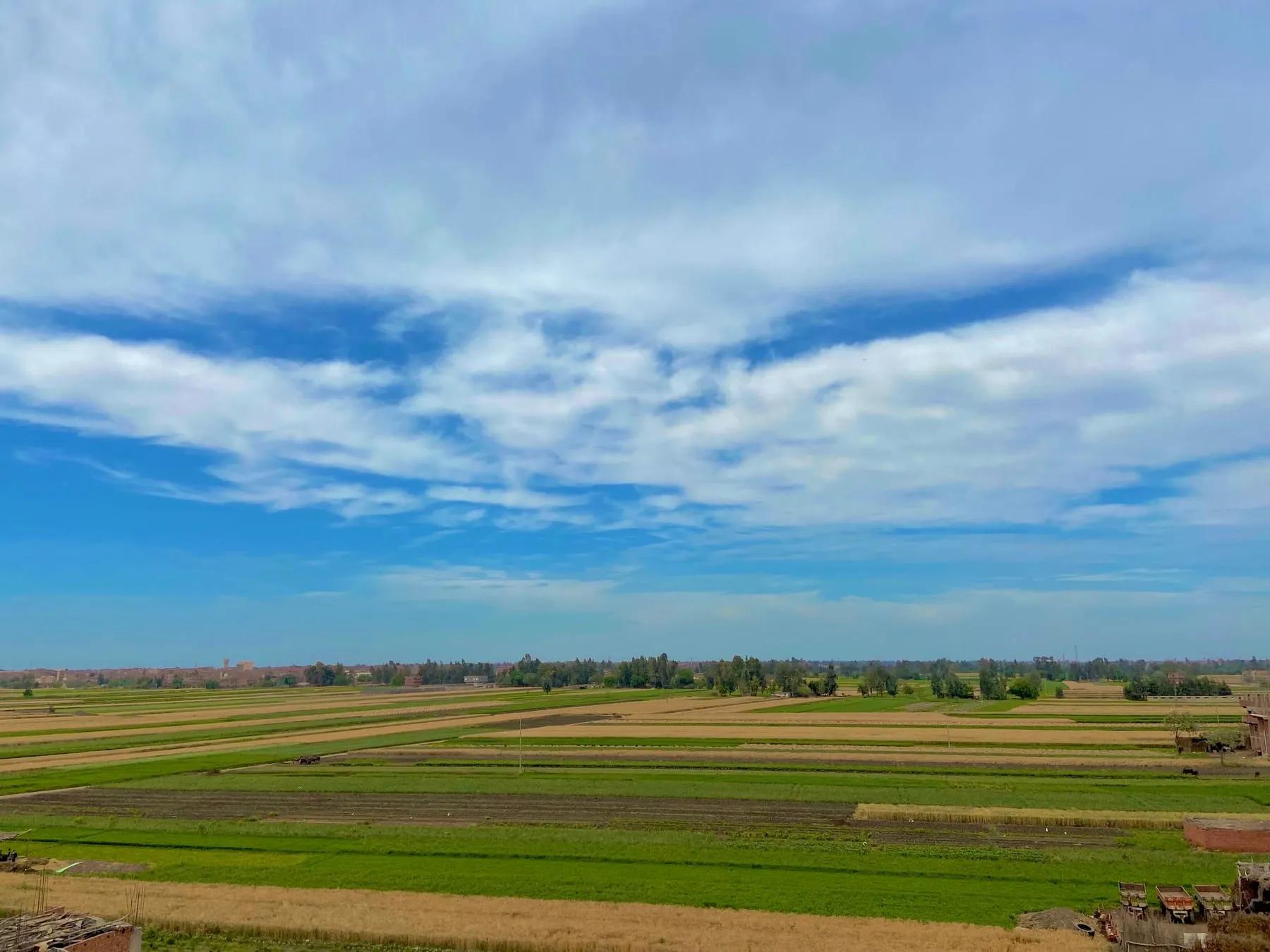
USDA reports 2025/26 harvested areas of about 1.3 million ha of wheat, 850,000 ha of maize, 720,000 ha of rice, 160,000 ha of oranges and 100,000 ha of cotton.
- Rice: concentrated in the Nile Delta; the water ministry fixes the permitted rice zone each year and farmers often plant beyond it. Block shapes change, so a drone that moves fast between fields helps. The Agri 100 and Agri 50 are the usual fit.
- Wheat and maize: large blocks for 50 to 100 L machines. Winter wheat sowing runs from November, and FAO notes the government raised the 2026 wheat purchase price to 2,650 EGP per ardeb.
- Oranges and other orchards: smaller plots, where the Agri 30 is easier to move.
Water is the pressure behind demand. USDA says water-saving early varieties use about 9,000–10,000 m³ per ha against 14,000–15,000 for traditional ones, and farmers who change varieties are also open to changing how they apply inputs.
Example: one rice block
A contractor sprays a 100 ha rice block (about 238 feddan) three times in a season with an Agri 100 rated at 35 ha/h.
- 100 ha ÷ 35 ha/h ≈ 2.9 flying hours per pass, so about 8.6 hours for three passes.
- Real days are longer because of refills, battery changes and moves; allow two to three times the rated figure.
This is an example only, built on the product page rating and not on a field trial.
How do goods reach Egypt?
Egyptian seaports handled about 11.1 million TEU in 2025, up from 8.9 million in 2024, according to the transport ministry as reported by the Egyptian Gazette. Payments run in Egyptian pounds, so ask your bank how foreign currency is released. Duties and port steps for drones and batteries: confirm with your clearing agent. When you are ready to talk about a partnership, the dealer programme starts from one unit.


