Guides
Power Line Stringing with Drones in 2026: Pilot Rope, Payload and Contracts
How drones string power lines in 2026: the three-step pilot rope method, payload limits, permits, and how a contractor team prices and pays back.
- Prepared by
- DEWKITE Sales Team
- Published
- Reading time
- 4 min
- Sources
- 6
Key takeaways
- 1A drone places only the lightest rope, the pilot line, between towers; a ground crew then pulls a heavier rope and, with it, the conductor.
- 2Example: five spans a day at US$ 400 a span against US$ 900 of daily cost leaves US$ 1,100 a day, so a US$ 70,000 landed set pays back in about 64 crew-days (all Example assumptions; no public subcontract price found).
- 3A US utility judges drone against helicopter case by case, and reports that helicopter line-stringing operators are in short supply.
- 4Entergy reports that on some sections of a new 230 kV and 500 kV build, drone rope-pulling brought a week of work down to about a day and a half.
- 5The weight on the drone grows as the line pays out, so size the aircraft for the longest span plus a margin.
Contents
Short answer: In 2026 a drone does only the first step of power line stringing: it carries the lightest rope, the pilot line, from tower to tower and drops it into the pulleys. A ground crew then pulls a heavier rope and the conductor. The business is a subcontract to line contractors, charged per span, per section or per day.
The business account first
Payback in crew-days = landed cost ÷ (spans per day × price per span − daily direct cost). Example assumption: we found no public subcontract price for drone stringing, so the numbers below are only a frame for your own quotes.
| Line | Example assumption |
|---|---|
| Landed set: Cargo 150 (FOB reference US$ 46,500–56,900), spare batteries, generator, rigging, training | US$ 70,000 |
| Spans completed per day | 5 |
| Price per span | US$ 400 |
| Revenue per day | US$ 2,000 |
| Direct cost per day (crew of three, vehicle, insurance share, standby for weather) | US$ 900 |
| Margin per day | US$ 1,100 |
| Payback | about 64 crew-days |
Weather days are the hidden cost, so write standby days into the quote.
How do drones string power lines?
| Step | Who does it | What moves |
|---|---|---|
| 1 | Drone | A lightweight pilot line (paracord) from one tower to the next and into the pulley |
| 2 | Ground crew | A heavier pulling rope tied to the pilot line and pulled through |
| 3 | Ground crew | The conductor or ground wire, pulled by the heavier rope |
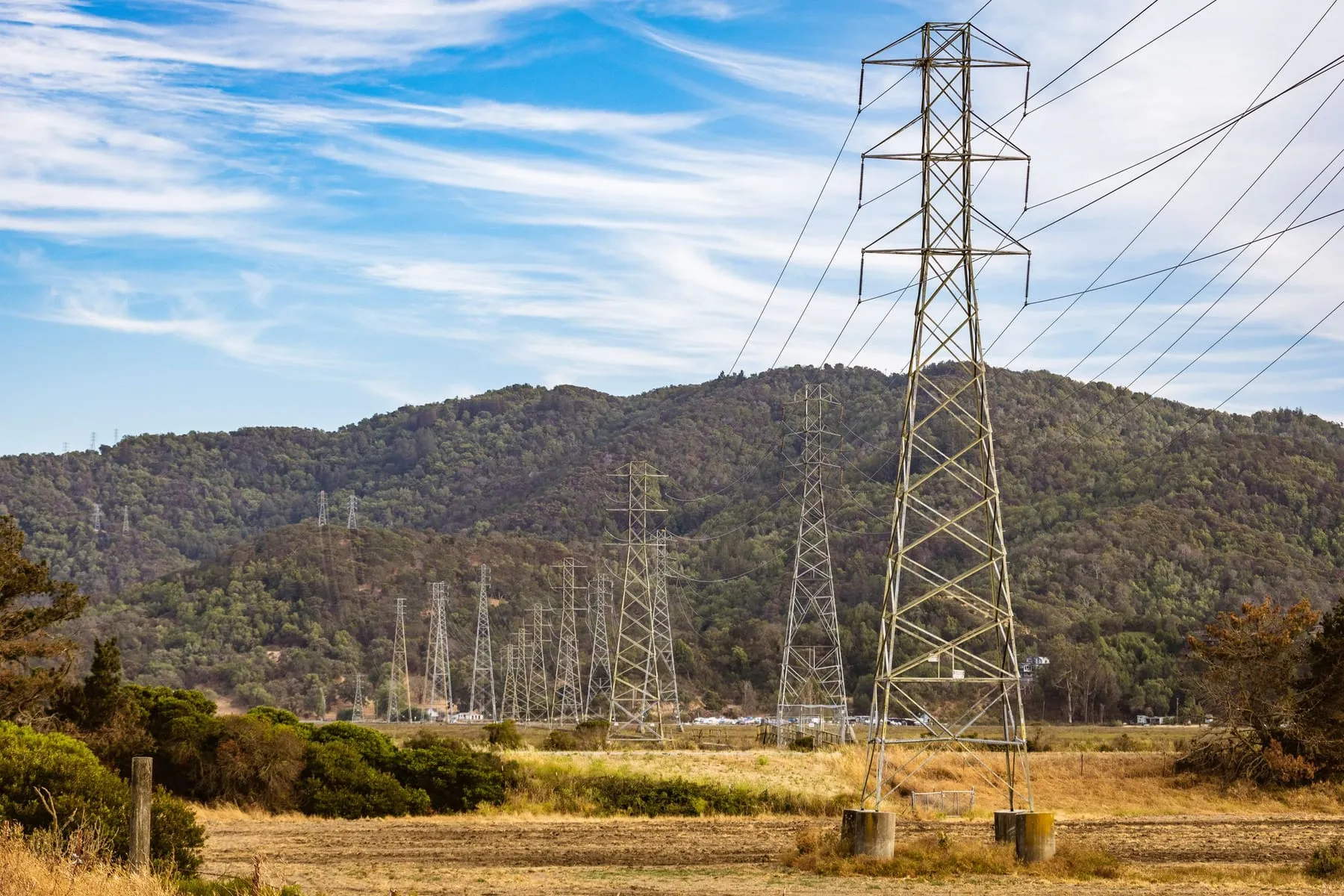
One US utility used a drone across a span of about 1,600 ft (about 490 m) and described it as one of the first times a drone had pulled a pilot line on a transmission project. A large contractor says it had previously used a bulldozer or a utility vehicle to pull the pilot rope out on rough ground.
Is a drone cheaper than a helicopter for stringing?
| Method | Where it fits | Limits |
|---|---|---|
| Helicopter | Long lines, many towers | Operators who offer it are in short supply |
| Drone | Valleys, rivers, wetlands, road crossings | Wind, rope weight, battery time, permit |
| Ground (bulldozer, utility vehicle) | Flat or accessible ground | Slow on steep or wet terrain |
Two projects show the range of answers. Entergy’s Amite South build runs new 230 kV and 500 kV lines over more than 150 miles of farmland and swamp; drones place the first pulling rope through the tower pulleys, and a construction supervisor credits that with cutting roughly 75 % from rope installation on some sections, a week down to about a day and a half. FirstEnergy expected a drone to cost less than a helicopter for one 1,600 ft span, yet says each job is judged on its own merits. A 2019 AOPA report was blunter: drones are unlikely to replace helicopters as the main sock-pulling tool.
How heavy a pilot line can a drone pull?
“The payload gets heavier as the line pays out” is how a 2019 report put it, while the battery empties. Plan around the longest span:
- Rope weight: mass per metre × span length. Example assumption: 30 g per metre × 490 m ≈ 15 kg, before wind drag and the weight of any hook.
- Margin: hold a payload margin and a battery reserve, because the last metres are flown with the heaviest line and the least charge.
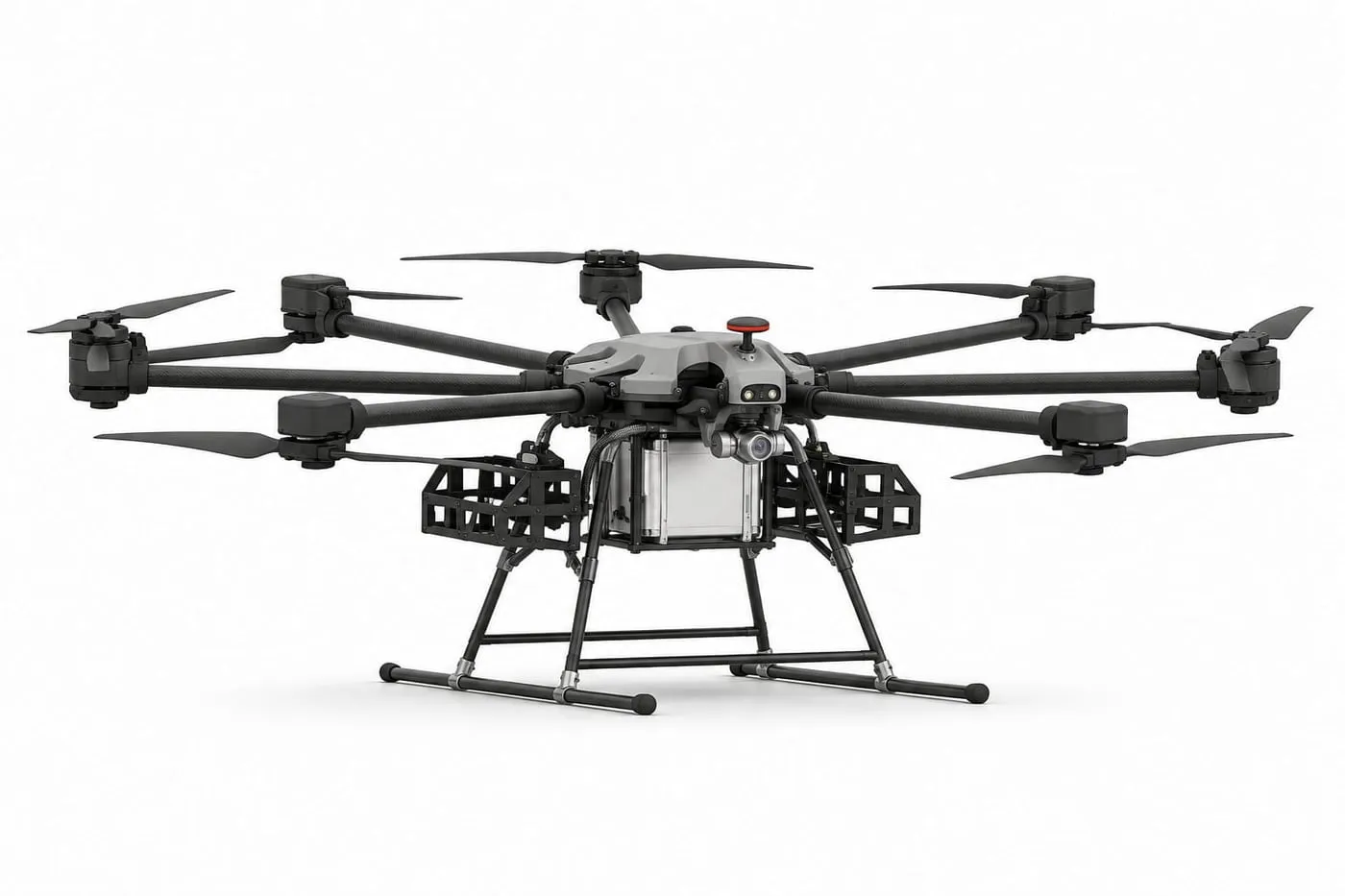
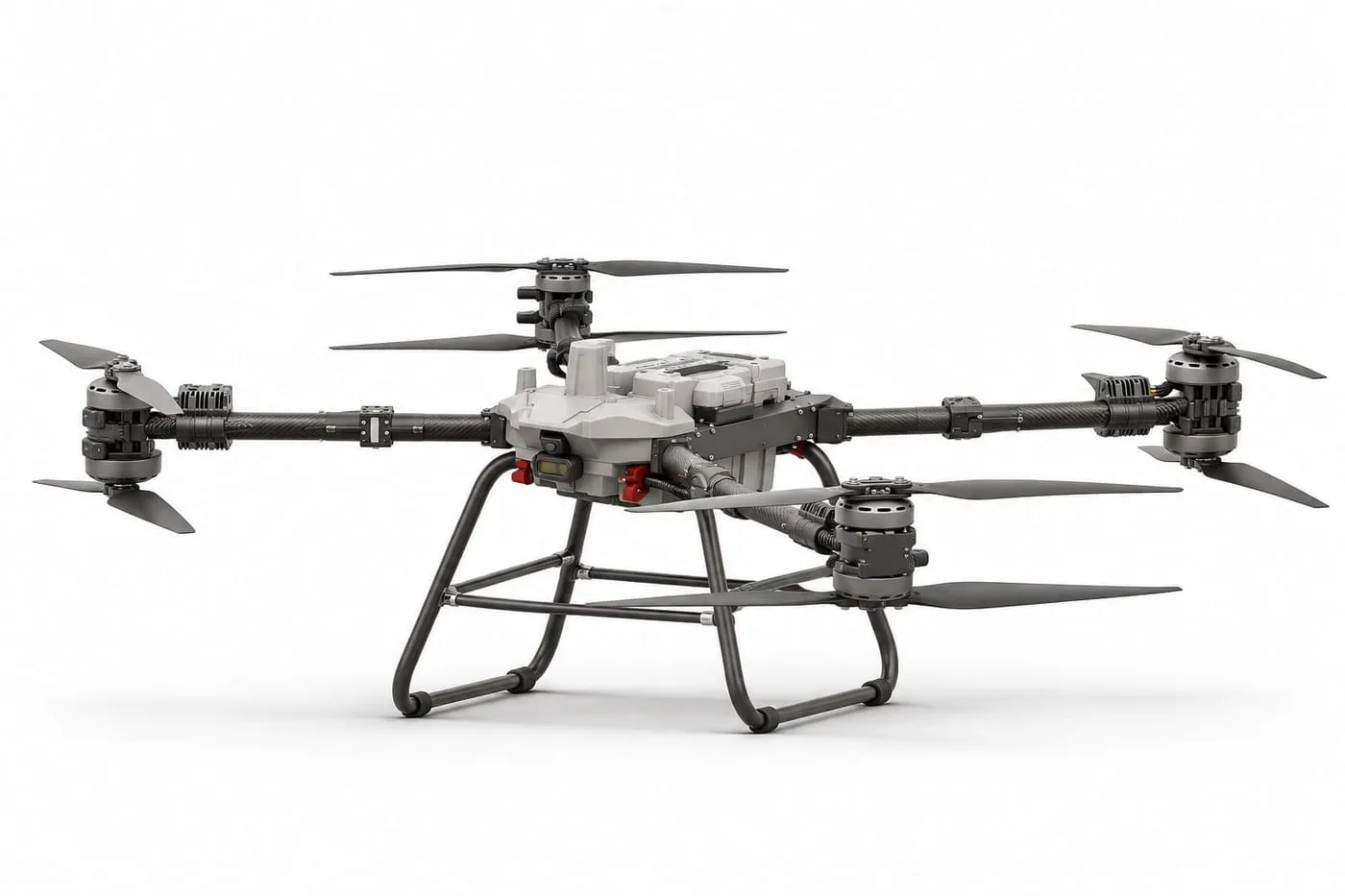
- Aircraft: the Cargo 150 is rated for 120 kg, and the Cargo 200 for 150 kg. We list no purpose-built stringing tensioner; ask us whether one can be fitted (not verified).
Do you need a special permit for drone stringing?
In 2019 AOPA reported no special waiver or certificate for sock pulling under Part 107 when the aircraft is under 55 lb. Heavier aircraft need an exemption under section 44807, and the EU puts anything over 25 kg, or any dropping of material, in the specific category. Crossings of roads, railways and rivers usually need agreement with the owners; the details depend on the country, and the local civil aviation authority sets the rule.
Who hires drone stringing crews, and how are they paid?
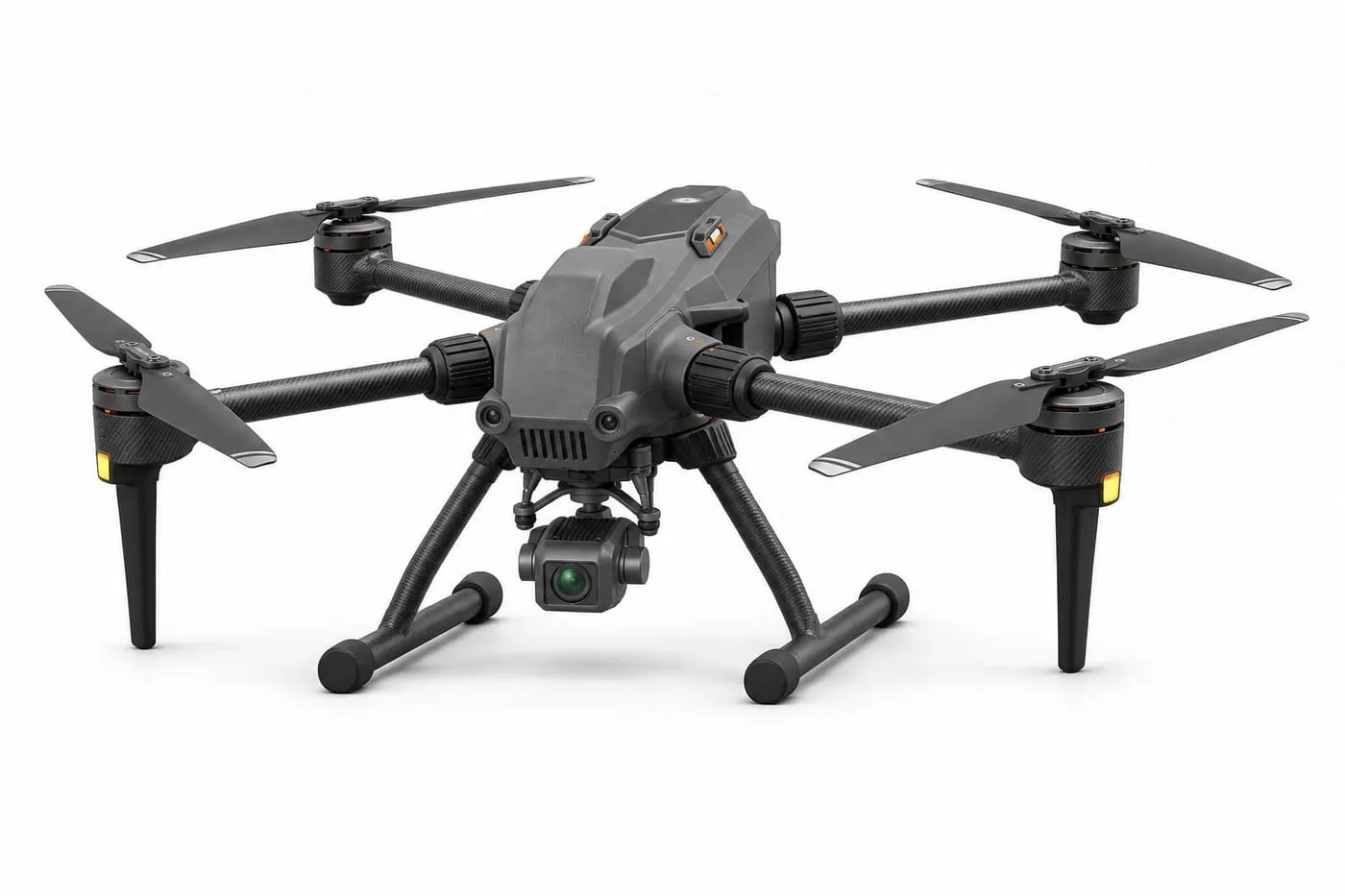
The chain runs from the utility to a line contractor to a stringing subcontractor, and the drone team sits at the end. A large contractor says it developed its own drone tensioner and has patents pending, so the biggest players may already have in-house teams. For a small team, a quote usually lists people, vehicle, aircraft and spare batteries, insurance and standby days. Our heavy-lift services guide covers the wider lifting business, and tower inspections before and after the job use a Vision 4; see the inspection business guide. Dealers can start from the dealer program.
Questions dealers ask
- How do drones string power lines?
- The drone carries a light pilot line from one tower, through the pulley on the next, and sets it there. The crew ties a heavier rope to it and pulls it through, and that rope then pulls the conductor or ground wire. The drone does only the first step.
- Is a drone cheaper than a helicopter for stringing?
- Sometimes. One US utility estimated that a drone was more cost-effective than a helicopter for a span of about 490 m, but said it will decide case by case. Long lines with many towers still favour helicopters.
- How heavy a pilot line can a drone pull?
- It depends on span, rope type and wind. As an Example assumption, a rope of 30 g per metre weighs about 15 kg over a 490 m span. Ask the line contractor for the rope weight and size the aircraft for that, plus a margin. Ask us whether a purpose-made tensioner can be fitted; we have not verified this.
- Do you need a special permit for drone stringing?
- A 2019 report said that sock pulling under 55 lb needed no special waiver or certificate in the US. Heavier aircraft need a section 44807 exemption, the EU treats over 25 kg or dropping material as specific category, and other countries follow their own authority. Road, rail and river crossings usually need agreement from the owners.
- Who hires drone stringing crews?
- Line construction contractors and utilities, usually through a subcontract. Some large contractors build their own drone teams, so a small team should aim at companies without one.
References
- [1]FirstEnergy Pioneers Drone-Assisted Line Work. FirstEnergy.
- [2]Drone Stringing Technology Expedites Entergy's Transmission Line Construction Project. T&D World.
- [3]Save Time by Pulling Lead Lines with Drones. Quanta Services.
- [4]Pulling socks with drones. AOPA.
- [5]Section 44807: Special Authority for Certain Unmanned Aircraft Systems. FAA.
- [6]Civil drones: specific category. EASA.