Guides
Power Line Inspection by Drone in 2026: Service Business, Crew Maths and Equipment
How a two-crew power line inspection drone company earns money in 2026: km per day, price per km and per tower, sensors, utility tender checks and a worked P&L.
- Prepared by
- DEWKITE Sales Team
- Published
- Reading time
- 4 min
- Sources
- 5
Key takeaways
- 1A two-crew line inspection company can be profitable on modest volume: the example below earns about 39% margin on 384 km a month.
- 2Corridor inspection (a pass along the line) covers tens of towers a day; fine inspection of each tower covers only a handful, so the two jobs are priced differently.
- 3Published cost anchors are US$61 per mile from one BVLOS operator, a US$200–300 per mile utility projection, and a 34% saving in a UK study; none is a market price you can quote.
- 4Utilities set their own safety, insurance and pilot rules, so read the tender and the local aviation rules before you buy aircraft.
- 5Start with a 63-minute or 120-minute inspection platform and a thermal-plus-zoom payload; add a dock only when you have a repeat contract.
Contents
Short answer: A drone line-inspection company earns money by selling km of corridor or number of towers per crew-day, and a two-crew company on 384 km a month can reach roughly 39% margin in the example below. The published cost figures are only anchors: one BVLOS operator reports about US$61 per mile, and a utility projected US$200–300 per mile against US$1,200–1,600 for helicopters.
What does a two-crew line inspection company earn?
Here is the business account in one table. Example only: every number is an assumption you replace with your own.
| Item (per month) | Example assumption | Result |
|---|---|---|
| Crews | 2 crews of 2 people, one inspection aircraft each | |
| Corridor inspected per crew-day | 12 km, line-of-sight with an observer | |
| Productive days per crew | 16 (weather, travel, permits) | |
| Corridor per month | 2 × 16 × 12 km | 384 km |
| Price | US$110 per km (example) | US$42,240 |
| Wages | 4 people × US$2,200 | US$8,800 |
| Vehicles, fuel, lodging | US$9,000 | |
| Insurance, software, licences | US$2,500 | |
| Data review and report writing | one analyst, part-time | US$4,500 |
| Kit depreciation | US$30,000 over 36 months | US$900 |
| Cost | US$25,700 | |
| Margin | US$42,240 − US$25,700 | US$16,540 (about 39%) |
The formula is simple: margin = km per day × productive days × price per km − monthly cost. If weather cuts productive days from 16 to 10, revenue falls to US$26,400 and the same costs leave only about US$700 of margin on the example. That is why contractors keep a second type of work, such as vegetation surveys, for bad-forecast weeks.
How many km per day can a crew inspect?
It depends on the job, so quote them separately. A corridor pass flies along the line once and covers tens of towers a day, while a fine inspection works each tower from several angles and covers only a handful (SPH Engineering). The BVLOS trials below show what is possible once the aviation authority approves long flights; they are not what a new line-of-sight crew will reach in month one.
| Source | What was flown | Figure |
|---|---|---|
| Elia with Avy, Belgium, December 2025 | 8 BVLOS flights | 85 km of high-voltage line in 3 h 42 min of flight time, 261.6 km flown |
| Ameren, Black & Veatch, Collins Aerospace, 2018 | one transmission flight | 60-mile BVLOS inspection in one flight |
| Censys, Florida | corridor mission | 77 miles of utility line, about 21 hours of preparation |
The Elia numbers work out to roughly 23 km of line per flight hour, but flight hours are not crew-days: add set-up, approvals and travel. The preparation time in the Florida mission is a useful reminder that planning is part of the job.
What do utilities pay compared with helicopters?
Treat these as anchors, not quotes. Ameren’s article reports a utility projection of US$200–300 per mile for BVLOS drones against US$1,200–1,600 per mile for helicopters, which is about US$124–186 and US$745–995 per km. A Censys cost analysis of a BVLOS programme gives about US$61 per mile and US$152 per hour, including personnel, aircraft, payloads, software and support equipment. A PricewaterhouseCoopers study for UK Research & Innovation estimated that a BVLOS drone could save 34% of inspection cost: about £194,000 for the existing method against just under £128,000 with a drone on one line.
Notice what is missing: a price per tower in a published tender. Ask utilities in your country for their last inspection award, and build your price from the table above.
Which sensors and aircraft do I need?
Match the sensor to the defect. High-resolution RGB finds visible defects, thermal finds hot joints and fittings, and LiDAR builds a point cloud for vegetation and sag. Corridor work with LiDAR suits transmission lines, while denser distribution networks suit pole-by-pole photography (SPH Engineering).
Best for a new two-crew start:
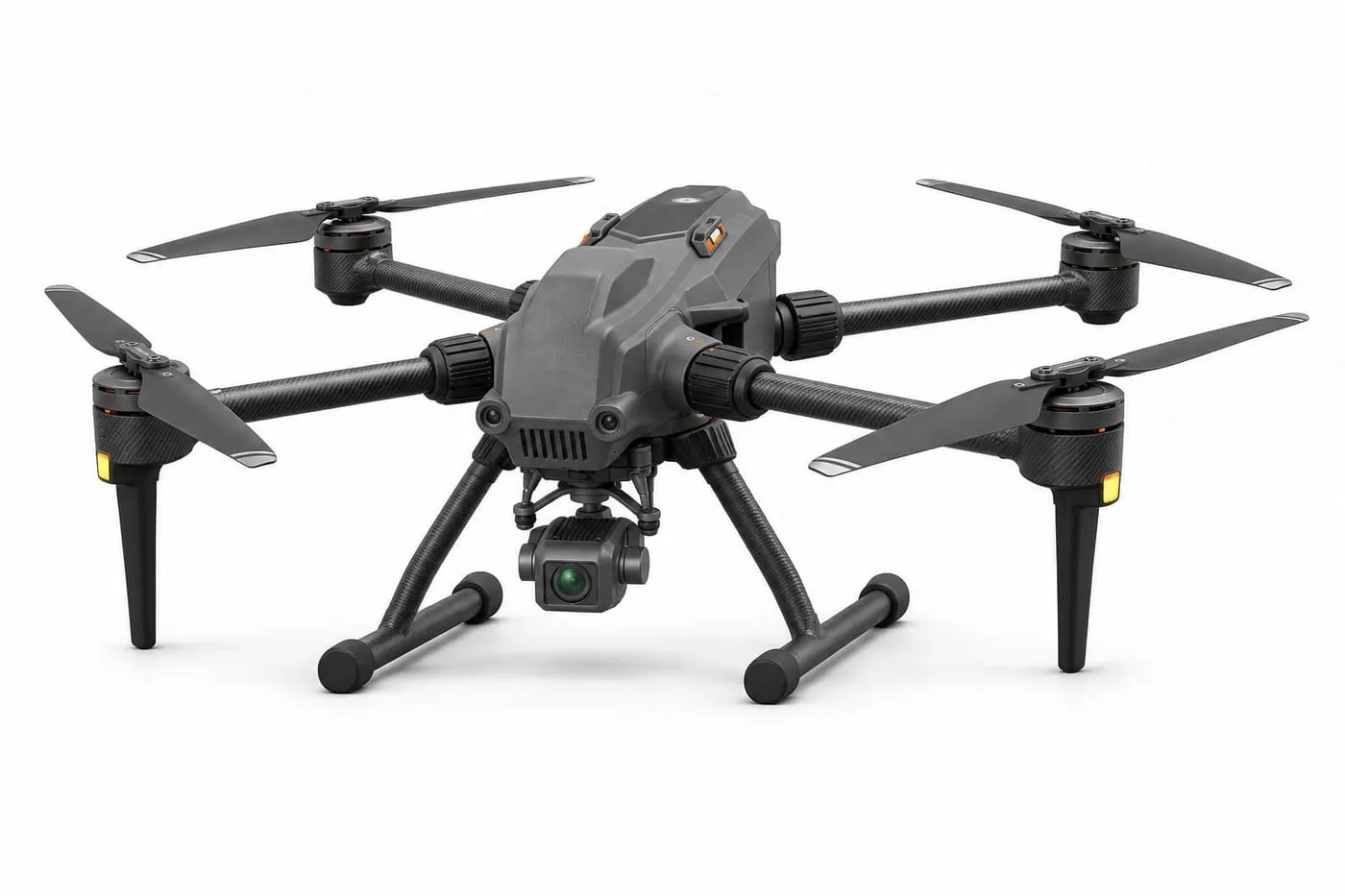
- Vision 4 / Vision 4X: 63 minutes of flight, 3 kg payload, wind level 7; the reference price is US$3,900–11,400 FOB.
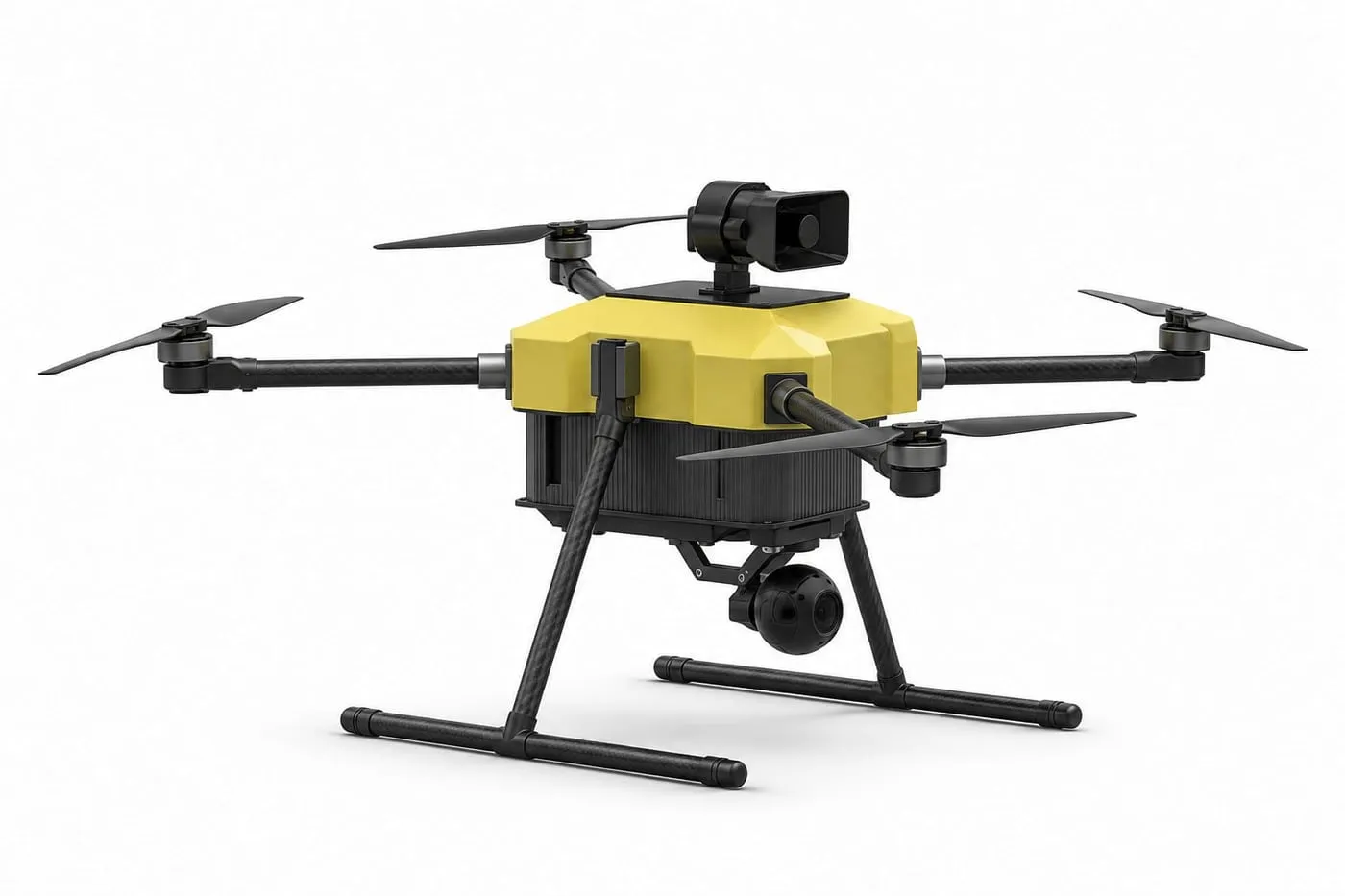
- Vision 9: 120 minutes, 5 kg payload, wind level 6; US$5,200–11,400 FOB, for longer hops between take-off points.
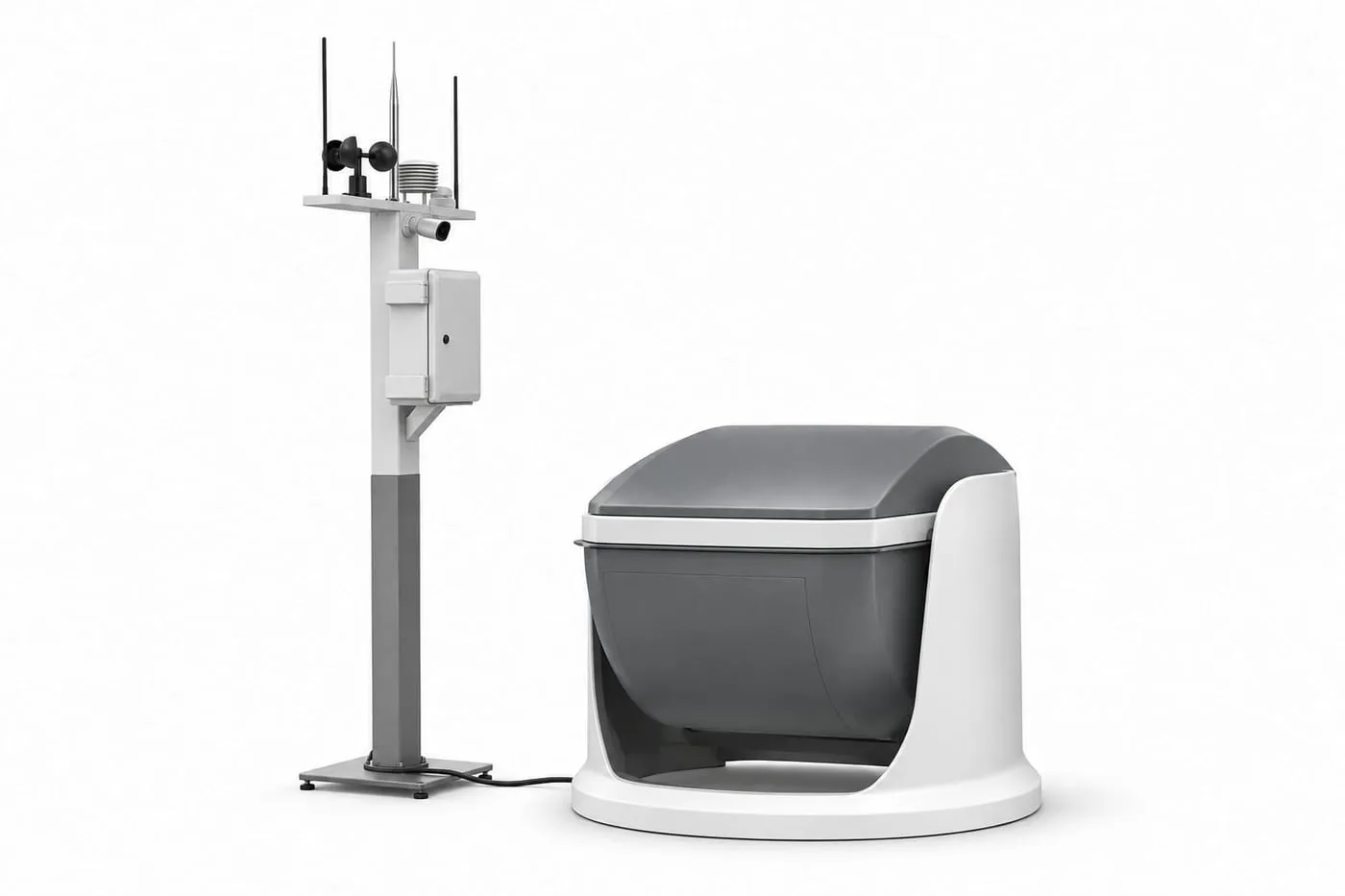
- Dock 1: a drone-in-a-box station for routine flights without a pilot on site, on quotation; read drone-in-a-box for sale before you commit.
What will a utility ask for before it awards work?
The requirements belong to each utility and each country, so follow the utility and the local aviation authority rather than a general list. Expect to be asked for the following; confirm each item in the tender documents.
- Proof that the aircraft and each pilot are registered or approved by the civil aviation authority.
- Insurance that matches the utility’s own limits.
- A safety procedure for working near live conductors, set by the utility.
- A data format and report layout, often with defect coordinates.
- References: a first utility often prefers a small pilot section before a full award.
Buyers who plan to resell to such contractors can find the commercial terms on the dealer program page; the minimum order is one unit.
Questions dealers ask
- What is the best drone for power line inspection?
- A long-endurance multirotor with a stabilised zoom camera and a thermal sensor. The Vision 4 flies 63 minutes with a 3 kg payload and the Vision 9 flies 120 minutes with 5 kg, so line crews choose by how far they must travel between take-off points.
- How much does an inspection drone cost?
- The reference range for the Vision 4 and Vision 4X is US$3,900–11,400 FOB, and the Vision 9 is US$5,200–11,400, before payload, spare batteries and training. Final prices depend on configuration and quantity.
- How much should I charge per km of line?
- There is no single market rate. Utility projections run from about US$124 to US$186 per km for BVLOS work, and one operator reports about US$38 per km as cost. Price from your own cost per crew-day, as in the example above.
- Do I need beyond-line-of-sight permission?
- Most routine line work in many countries is still flown within visual line of sight with extra observers. BVLOS needs approval from the civil aviation authority, as in the Belgian trial, where a cross-border approval was obtained.
- Can drones replace helicopters completely?
- No. One guide notes that helicopters can stay cost-competitive on very long transmission corridors above roughly 1,000 km in a single mobilisation. Drones fit the broad middle: distribution lines, short transmission lines and follow-up checks.
References
- [1]Ameren's latest drone use demonstrates future of transmission line monitoring. Utility Dive, 2018.
- [2]Elia power line inspection with Avy (BVLOS case). Avy.
- [3]BVLOS Drone Infrastructure Inspection: 77 Mile Case Study. LIDAR Magazine.
- [4]Remote drones could save one third of powerline inspection costs. Construction Management.
- [5]Drone powerline inspection guide. SPH Engineering.