Guides
Mosquito Control Drones: Who Buys Them and What the Evidence Shows (2026)
Who buys mosquito spraying drones in 2026? Buyers, the Rwanda and Zanzibar trial results, WHO's position and a flying-hours example for a 2,000 ha rice scheme.
- Prepared by
- DEWKITE Sales Team
- Published
- Reading time
- 4 min
- Sources
- 5
Key takeaways
- 1Mosquito-control drone buyers are municipalities, mosquito-control districts, malaria programmes and their contractors, not farmers.
- 2A drone only places a registered larvicide on small or scattered water; it does not kill mosquitoes by itself.
- 3A Rwanda rice-field trial reported 74.6% fewer anopheline larvae and 99.6% fewer pupae over ten months, but it was not randomised.
- 4In Zanzibar, drone larviciding cost about the same per person per year as ground crews, and malaria incidence did not differ from the control area.
- 5WHO treats larval source management as a supplement to nets and indoor spraying, and no WHO drone-specific guide was found.
Contents
Short answer: In 2026 the buyers of mosquito-control drones are public health bodies and their contractors: mosquito-control districts, municipalities, national malaria programmes and irrigation schemes. A drone is a delivery tool for a registered larvicide on small, hard-to-reach water; it does not kill mosquitoes itself. Trials show real effects on larvae, but also that cost was close to ground crews. Follow the product label and local public-health rules on every job.
How many flying hours does a 2,000 ha rice scheme need?
Hours tell you how many machines a contract needs. The rates are reference values from our product listings, not a programme design.
| Drone | Rate (ha/h) | Hours per round | Days of 8 h |
|---|---|---|---|
| Agri 30 | 10 | about 200 | about 25 |
| Agri 50 | 22 | about 91 | about 11 |
Example: 2,000 ha ÷ 22 ha/h = 90.9 flying hours per round. If the programme wants every round finished in a week, three Agri 50 machines flying 8 hours a day give 3 × 7 × 8 = 168 hours, which is more than enough. Real larviciding is limited by water, not whole-field coverage, so most rounds treat only the wet patches.
Who buys mosquito-control drones?
| Buyer | Typical task | Where the drone fits |
|---|---|---|
| Mosquito-control district (US example: Collier, Florida) | Larvicide on marshes and small ponds | Collier has flown drones since 2018 across more than 700 square miles, with two treatment drones carrying 40 lb (about 18 kg) of larvicide and mapping drones, one bought with federal public-health funds |
| Private mosquito-control contractor | Municipal, estate and industrial sites | Plots under about 20 acres where aircraft are too large (a US operator’s description) |
| National malaria programme | Breeding sites near villages and rice | Supplement to nets and indoor spraying |
| Irrigation or rice scheme | Large flooded areas | The Rwanda and Zanzibar trials |
Public-health purchases usually go through a tender or a service contract. Ask the buyer which products and aircraft its rules allow before you bid.
Do drones work for larviciding in rice fields?
| Study | Setting | What it reported |
|---|---|---|
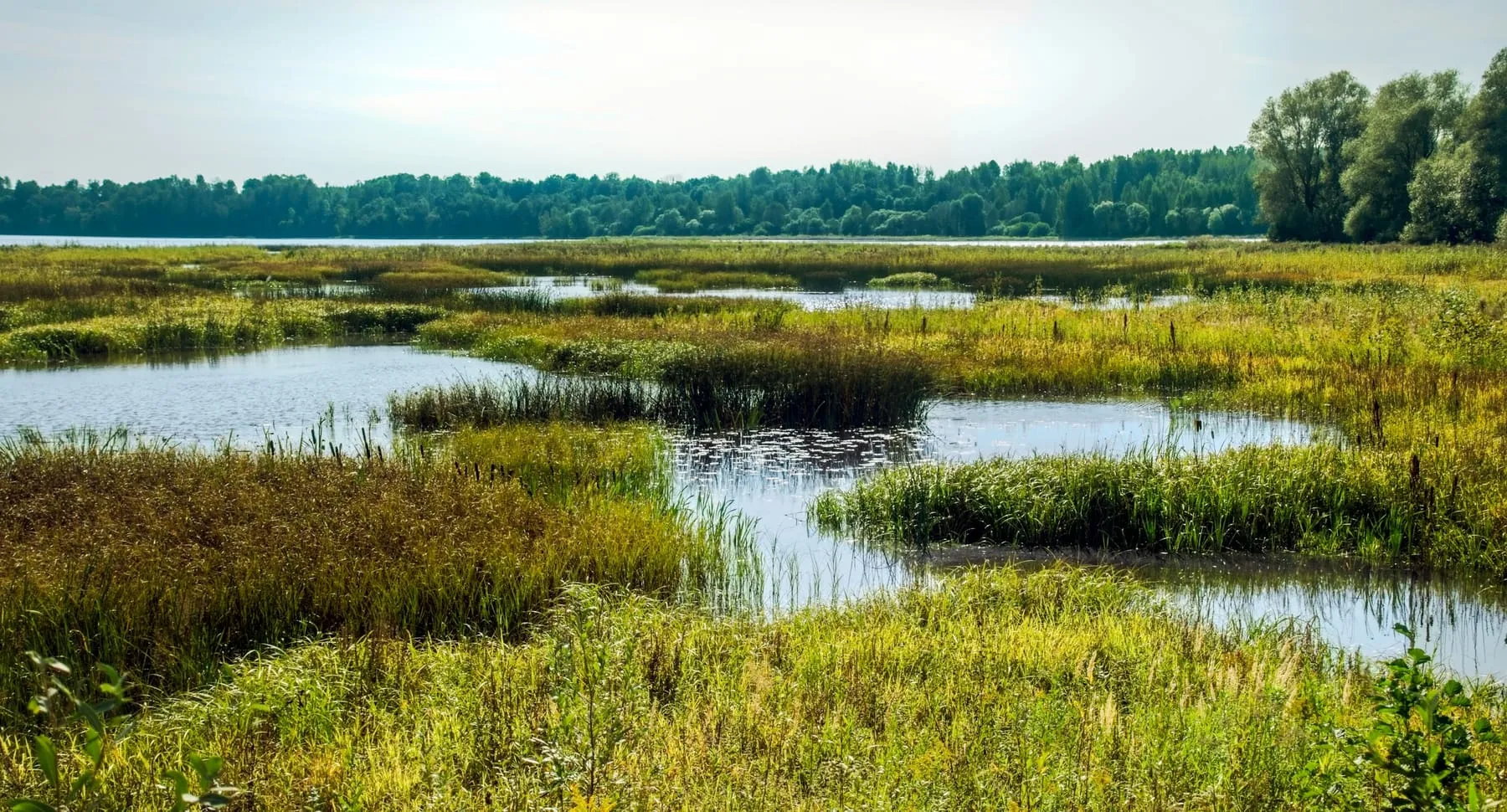
| Malaria Journal, 2024 | Rice fields near Kigali, Rwanda; Bti (Vectobac WDG) from a multi-rotor; ten months | All larvae down 68.1%, anopheline larvae down 74.6%, pupae down 99.6%, adults caught in light traps down 60.6%, Anopheles gambiae down 80%; malaria incidence differed between treated and control sites (p = 0.023). Not randomised |
| Drones, 2022 | Rice fields, Zanzibar; surface-film product at 1 and 5 mL/m² | Larvae and pupae fell significantly, more than 90% fewer emerging adults, effect lasted at least five weeks |
| Malaria Journal, 2023 | Zanzibar; drones plus smartphone mapping; four months | Breeding sites found correctly 60% of the time against 18% for the standard method; cost US$ 3.94 against US$ 3.69 per person per year; malaria incidence did not differ from the control |
Read it as follows: larval numbers fall. Cost is about equal. Proof that drones cut malaria cases is mixed. Do not sell drones as a malaria cure.
Does WHO recommend drone larviciding?
WHO’s operational manual calls larval source management a supplementary measure, not a substitute for bed nets or indoor residual spraying. We found no WHO document written about drones, and the manual’s page shows no publication year here, so quote it only as WHO’s operational manual. The Zanzibar authors argue the drone results deserve a fresh look at the usual limits on where larviciding is advised. That is their view, not a WHO policy.
What kit and approvals do you need?
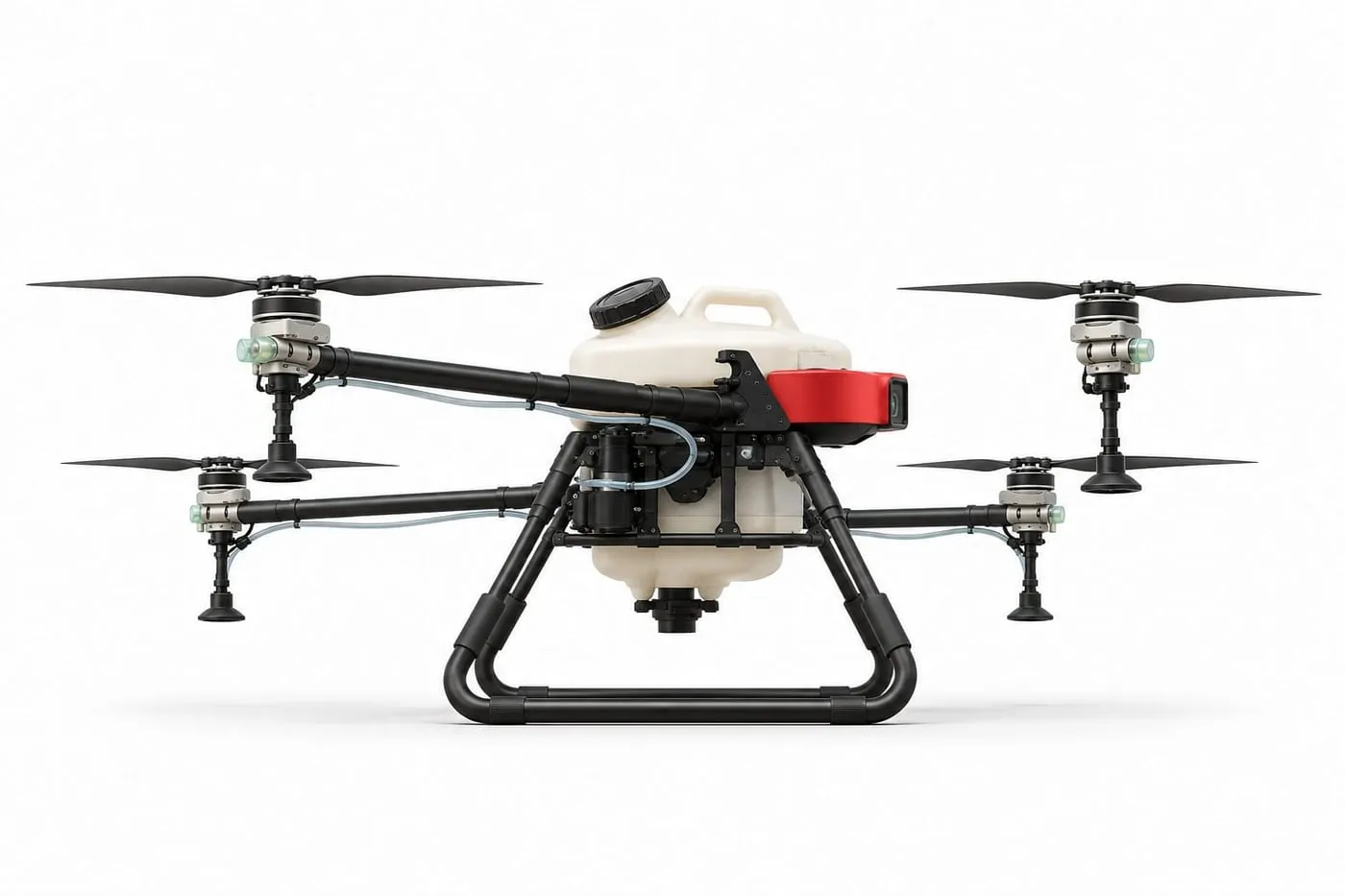
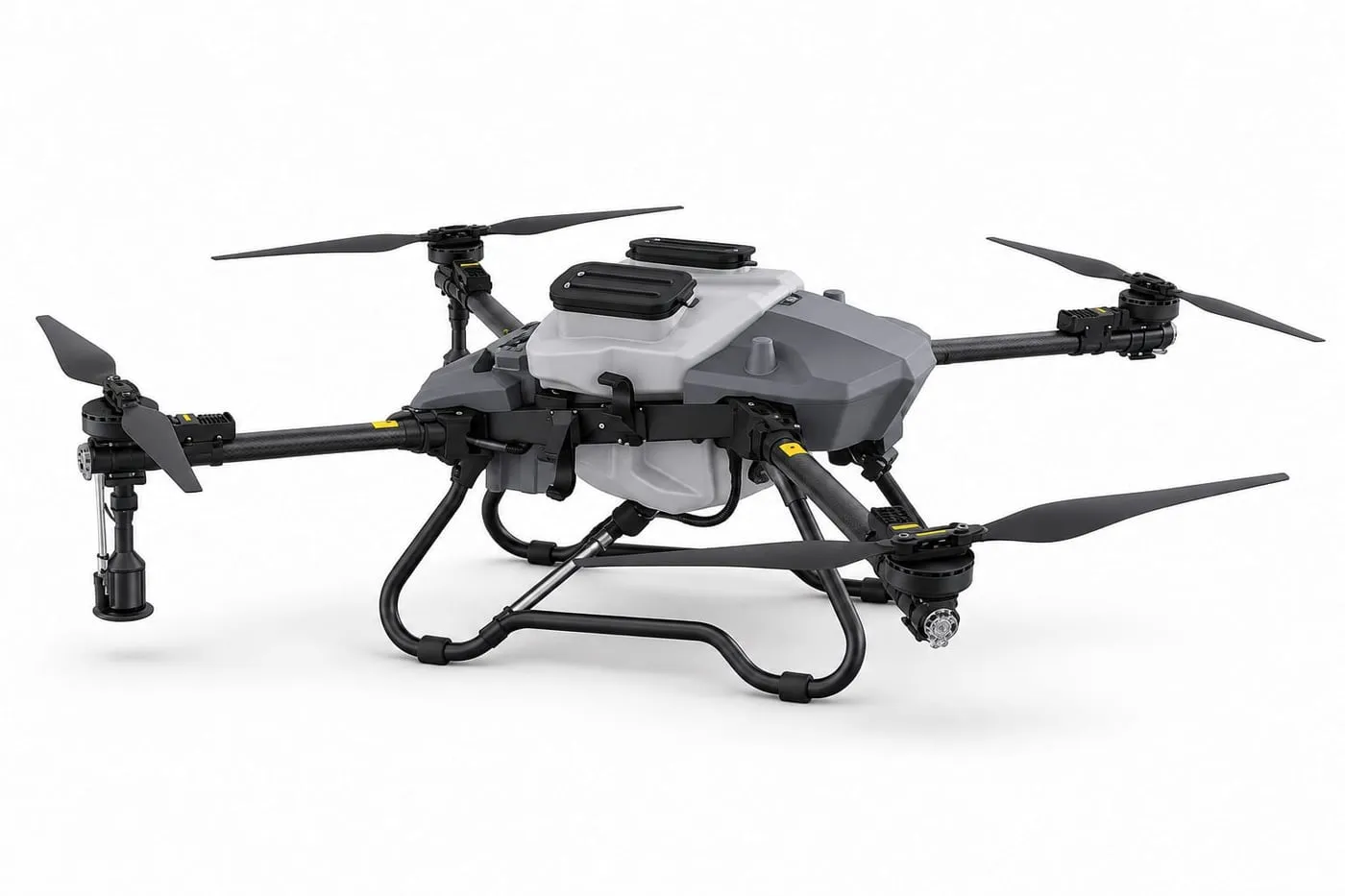
For trials in ditches and small paddies, an Agri 30 with 8–12 ha/h reference work rate is enough. If you handle both liquid and granular products, look at the Agri 30R and Agri 50R. Confirm tank material and pump compatibility with the manufacturer and the label of the larvicide.
On approvals, an American contractor says its pilots hold FAA licences and its products are EPA-registered. That is one operator’s account. Elsewhere, ask the ministry of health or vector-control authority which products and aircraft are allowed, and the civil aviation authority which pilot and drone permits apply.
What should a dealer do first?
Partner with an existing vector-control contractor, run a pilot on one rice scheme, and let the programme’s own staff measure the result. Demo units and training come through the dealer programme; this service guide helps with round pricing. Rice growers may buy too: see drones for rice paddies.
Questions dealers ask
- Is there a drone that kills mosquitoes?
- No drone kills mosquitoes by itself. A spraying or spreading drone applies a registered product, usually a larvicide such as Bti, to breeding water. The product, dose and area must follow the label and local public-health rules.
- Can I buy a mosquito drone?
- You buy a spraying or spreading drone and a registered larvicide separately. Buyers who need liquid and granular products on one airframe often choose the R-line (Agri 30R or 50R). Confirm tank and pump compatibility with the manufacturer and the product label.
- What does a mosquito-control drone cost?
- The machine is a spraying drone: reference FOB prices start near US$ 3,000 for a 30 L class unit and reach about US$ 21,100 for a 50 L class unit, depending on configuration. Larvicide, permits and training are extra, and only a quotation fixes the price.
- Do drones work for larviciding in rice fields?
- Two trials say yes for larval numbers: Rwanda with Bti and Zanzibar with a surface-film product. Whether a drone is cheaper or reduces malaria cases more than ground crews is not shown.
- Does WHO recommend drone larviciding?
- WHO says larval source management is a supplementary measure and must not replace core tools. We found no WHO guidance written specifically for drones, so do not say WHO recommends them.
References
- [1]Larval source management: a supplementary measure for malaria vector control (operational manual). World Health Organization.
- [2]The impact of Bti (Vectobac WDG) larvicide sprayed with drones in rice fields of sub-urban Kigali, Rwanda. Malaria Journal (2024).
- [3]Cost and quality of operational larviciding using drones and smartphone technology. Malaria Journal (2023).
- [4]Drones for Area-Wide Larval Source Management of Malaria Mosquitoes. Drones (MDPI, 2022).
- [5]Drones: A Valuable Tool in CMCD's Fight Against Mosquitoes. Collier Mosquito Control District.