Guides
100 Liter Agricultural Drone: Is It Worth It for Your Business? (2026)
When a 100 L spray drone pays off and when a 50 L machine is the better buy: refills, hectares per day, batteries, power and a 2026 fleet account.
- Prepared by
- DEWKITE Sales Team
- Published
- Reading time
- 3 min
- Sources
- 3
Key takeaways
- 1A 100 L agricultural drone carries twice the liquid of a 50 L machine, so it lands half as often for refills at the same spray rate.
- 2At 15 L/ha one 100 L load covers about 6.7 ha; a 50 L load covers about 3.3 ha.
- 3It pays off for contractors and large farms with open blocks; on small, broken fields the extra tank is rarely used.
- 4Plan the whole system: a 7 kW-class charger, a matching generator, several battery sets and a vehicle that carries the folded drone.
- 5Fleet example: two 100 L drones cover about 130 ha a day with two pilots; three 50 L drones cover a little more on paper but need three pilots and land twice as often.
Contents
Short answer: A 100 liter agricultural drone is worth it when you spray large, open blocks every day of the season, which usually means spray contractors and large farms. It halves the number of refill landings compared with a 50 L drone and needs fewer pilots per hectare. On small or broken fields, or for a farm that sprays a few days a year, a 50–65 L machine is the better buy.
The fleet account: two 100 L drones or three 50 L drones?
This 2026 example compares two ways for a contractor to cover a large block in one spray day. All figures are planning assumptions.
| 2 × 100 L class | 3 × 50 L class | |
|---|---|---|
| Effective swath (planning) | 10 m | 8 m |
| Planning output per drone | ≈ 10.8 ha/h | ≈ 8.6 ha/h |
| Real spraying hours per day | 6 | 6 |
| Hectares per day, fleet (planning rule) | ≈ 130 | ≈ 155 |
| Refill landings per 100 ha at 20 L/ha | ≈ 20 | ≈ 40 |
| Pilots and helpers | 2 + 2 | 3 + 2 |
| Generators and chargers | 2 | 3 |
| Fleet price at mid reference range, FOB | ≈ US$ 52,000 | ≈ US$ 45,000 |
Planning output comes from our cautious rule in the hectares-per-hour guide: effective swath × 6 m/s × 50 % field efficiency, which already leaves room for normal refills. The three smaller drones cover more ground on paper, but they land twice as often, need one more pilot and one more generator, and lose more time when the spray volume goes up. The pair of 100 L drones wins when people and fuel cost more than equipment, and on high-volume jobs where the small tanks spend too long on the ground.
Refills decide the real output
| Spray rate | 50 L tank covers | 100 L tank covers | 150 L tank covers |
|---|---|---|---|
| 10 L/ha | 5.0 ha | 10.0 ha | 15.0 ha |
| 15 L/ha | 3.3 ha | 6.7 ha | 10.0 ha |
| 20 L/ha | 2.5 ha | 5.0 ha | 7.5 ha |
| 30 L/ha (some fungicides) | 1.7 ha | 3.3 ha | 5.0 ha |
Each refill and battery change costs a few minutes on the ground. At higher spray volumes the big tank’s advantage grows, because a 50 L drone spends a large share of its day landing.
What else you need with a 100 L drone
- Power. Heavy drones use high-power chargers. The Agri 150 lists a 7,200 W charger; plan a generator of matching size and fuel for a full day.
- Batteries. Two or three sets per drone keep it flying while the others charge.
- Transport. Folded, the Agri 150 measures about 1.45 × 1.15 m; plan a pickup or small trailer with tie-down points.
- Water and mixing. A 100 L load every few minutes means a mixing tank and a transfer pump at the field edge.
- Approvals. Check the take-off weight category in your country; heavy machines can need extra operator approval.
When not to buy one
| Situation | Better choice |
|---|---|
| Fields under 5 ha, many trees or power lines | 30–50 L class, e.g. Agri 50 |
| Terraces, orchards, steep ground | 30–65 L, easier to handle |
| One farm that sprays a few days a year | Hire a contractor or buy a mid-size drone |
| No generator or vehicle for heavy equipment | Start with a lighter machine |
Which DEWKITE models are in the class
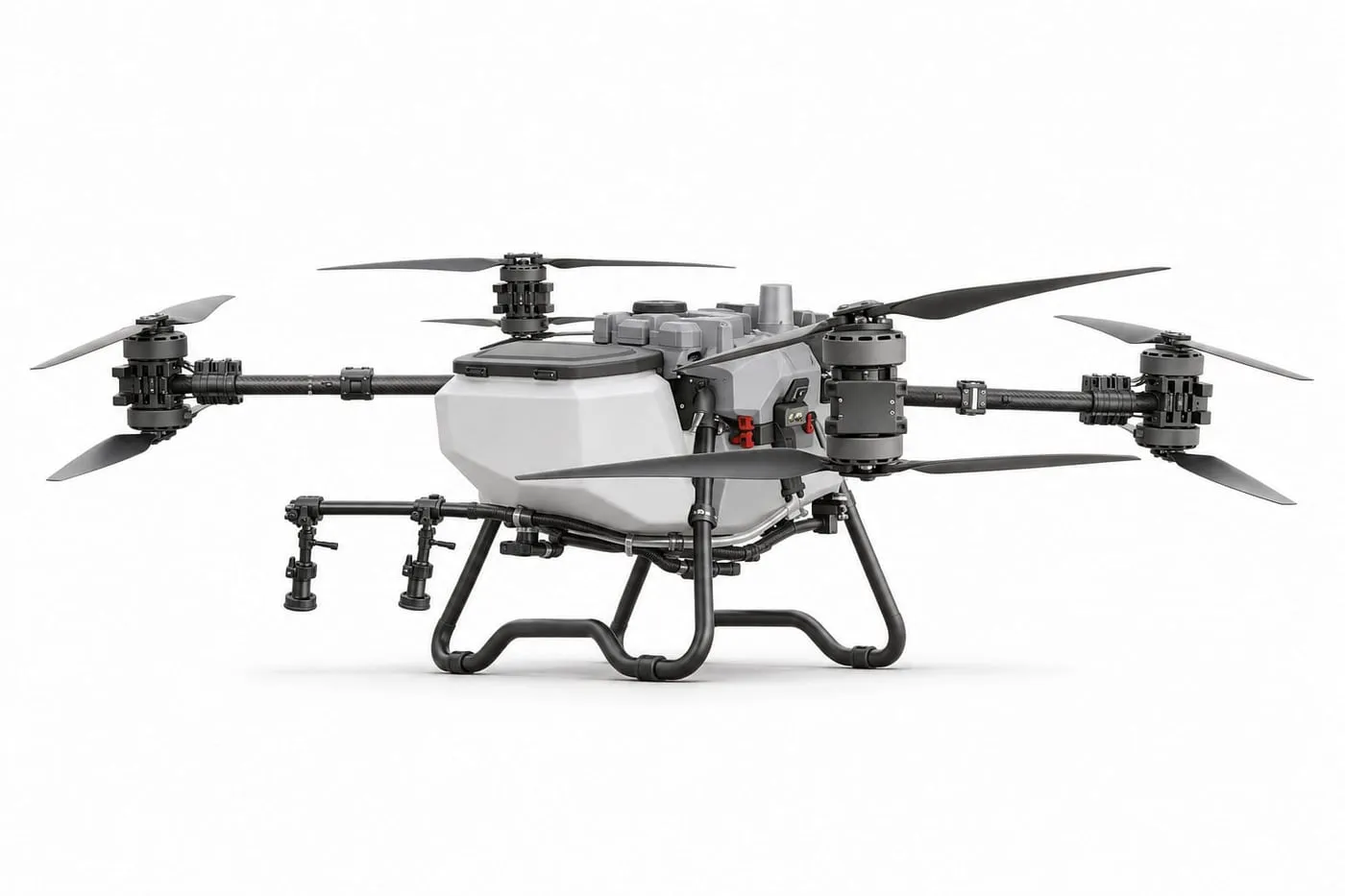
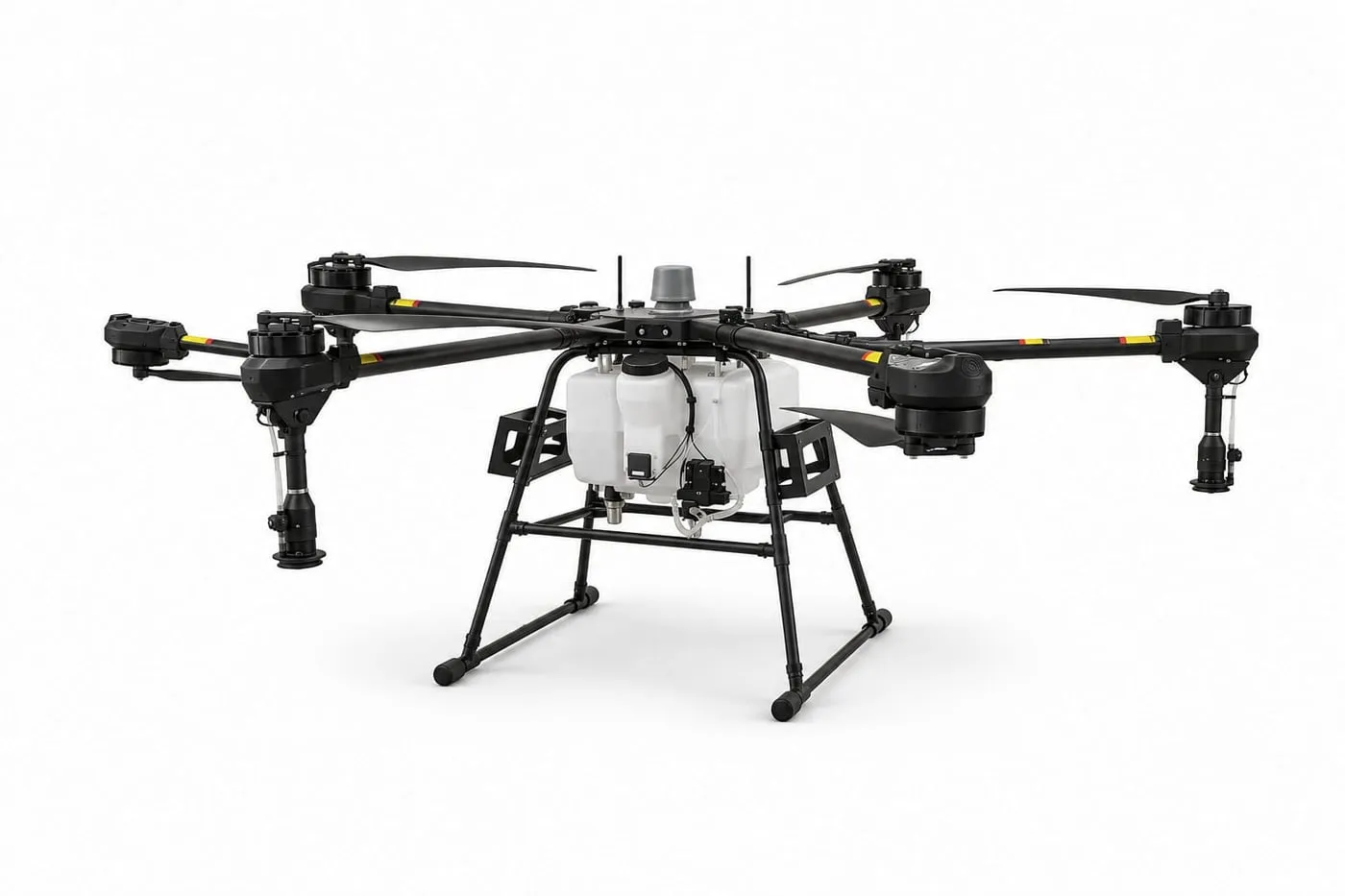
The Agri 100 carries 100 L on eight rotors and spreads up to 120 kg of granules; the Agri 92 sits just below in the 90 L class; the Agri 150 is the largest. For dealers, a 100 L demo machine is the strongest argument with contractors, while 50–65 L machines sell to more farms. Our dealer program can start with one unit of either.
Questions dealers ask
- What is the price of a 100 L agricultural drone?
- Public FOB listings for the 100 L class run from about US$ 22,700 to 29,100 per set (2026 reference range), depending on batteries and configuration. The final price is always on a quotation, and the landed cost in your country is higher.
- How many hectares can a 100 L drone spray per day?
- With a 10 m effective swath and our cautious planning rule, about 10–11 ha per hour of real spraying, so roughly 60–65 ha in a 6-hour spray day. Brochures quote up to 35 ha/h for ideal conditions.
- What is the largest agricultural drone?
- In the DEWKITE range it is the Agri 150 with a 150 L spray tank and a 210 L spreading tank. Machines of this size are for estates and large contractors.
- Do I need a special licence for a 100 L drone?
- Heavy drones often fall into a higher weight category, which can mean extra operator approval. Check the take-off weight rules of your aviation authority; the Agri 100 lists a maximum take-off weight of 254 kg.
References
- [1]G1274 Economics of Drone Ownership for Agricultural Spray Applications. University of Missouri Extension.
- [2]AEN-174 Drone Sprayer Sizing for Agricultural Applications. University of Kentucky Cooperative Extension.
- [3]Drones for Spraying Pesticides – Opportunities and Challenges. The Ohio State University CFAES.